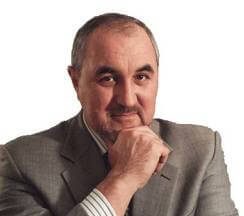
Licensed Psychotherapist
Over the past few years, you’ve probably seen more people talking about holistic mental health, therapy that doesn’t just tackle your thoughts but your body and energy too, and that’s precisely where Alex Zolotov, PhD, steps in at the Philadelphia Holistic Clinic. If you’ve been juggling stress, grief, anxiety, or just that nagging sense that something’s off, you want someone who’s not guessing—you want a licensed psychotherapist with decades of real-world experience, a bestselling books under his belt, and a knack for blending solid science with practical, straight-talking support that actually fits your life.
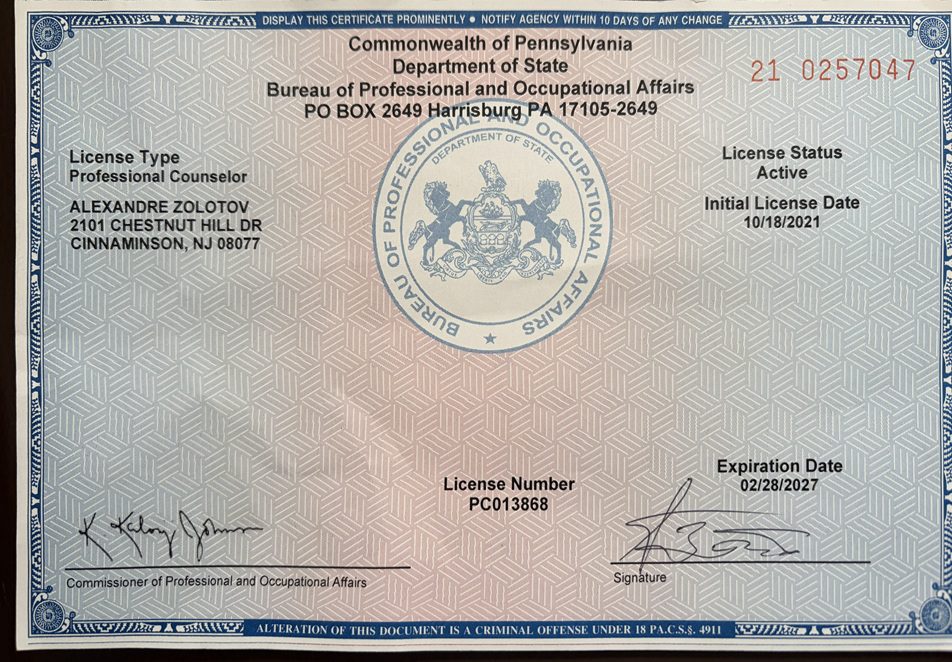
Key Takeaways:
- Alex Zolotov isn’t just “another therapist”—he”’s been practicing professional psychology for about 40 years, constantly testing and refining methods that actually work in real life, not just in textbooks.
- His style is very interactive and human—expect questions, exploration, reflection, and even some humor, not a cold, distant therapist just nodding and taking notes.
- He works from the belief that you already have powerful inner resources for healing and growth, and therapy is about unlocking and using those, especially when stress or crisis makes them difficult to access.
- Alex Zolotov, PhD, uses a holistic system modeling approach, looking at you as a body-mind-energy whole and pulling from a mix of rapid-change techniques and deeper transformational work depending on what you need.
- He’s both warm and direct—he can be very practical around real-life problems and more structured when dealing with risky or harmful behaviors like substance use.
- Alongside talk therapy, Alex Zolotov, PhD, brings in psychoeducation, helping you actually understand what’s going on in your mind and body so you’re not just “coping” but learning tools you can reuse.
- He also performs drug and alcohol evaluations, court-ordered alcohol evaluations, and DUI classes.
- He’s now part of the Philadelphia Holistic Clinic team, offering individual and couples therapy, and you can schedule with him by phone or through their online booking system.
So, Who’s Alex Zolotov, PhD?
People often assume a therapist is just someone who listens and nods, but with Alex you get a psychologist who has spent about 40 years testing what actually works for real people like you.
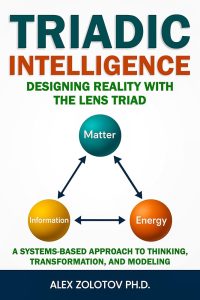 |  | 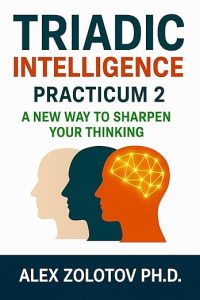 |
You tap into the mind that wrote the bestseller “Triadic Intelligence—Designing Reality With the Lens Triad” and developed practical methods used at Philadelphia Holistic Clinic. So when you sit in his office, you’re not a test case—you’re benefiting from decades of trial, error, fine-tuning, and results.
A Bit About Alex Zolotov, PhD’s Background
It’s easy to think every therapist took the same path, but Alex’s route has been anything but standard. You’re working with a US-trained psychotherapist who blended academic rigor, several published books and articles, and thousands of client hours into one practice. Across roughly 4 decades, he’s kept studying, modeling systems of body-mind-energy, and refining techniques that hold up under pressure, not just in theory but in your everyday life.
What Makes Alex Zolotov Tick
Most people assume therapists are driven only by empathy, but Alex is equally obsessed with results you can feel. You’ll notice he’s fascinated with how your thoughts, body sensations, and energy patterns interact, using rapid methods that sometimes shift things in a single session while still doing the slow, deep restructuring work you need.
What really fires him up is when you start seeing your own internal resources kick in—that moment you realize you’re not broken, you’re just blocked. So he leans into system modeling, experiments with new techniques, and tracks what actually changes your mood, sleep, relationships, and even your physical tension. And because he treats you as a whole system, he’ll ask about your energy levels, subtle body signals, and small behavior tweaks, then use that data to design practical, reality-tested steps you can try the same day, not someday.
Why Alex Zolotov Loves Being a Psychotherapist
You might be surprised how exciting it is to sit with someone in deep pain and watch your brain and heart work together to help them shift, sometimes in a single 60-minute session. When you start to see your anxiety, grief, or relationship patterns differently—almost like watching a movie of your life with new subtitles—that moment lights me up every time. Even after thousands of sessions and nearly 40 years in the chair, the experience remains unchanged.
The Joys of Helping Others
You feel it when your story finally makes sense to you, and that feeling is precisely why I stay in this work. When you walk out of my office a little lighter, sleep better after a panic-free night, or tell me your partner “finally gets” you after our couples session, that’s the payoff. Those small, very real wins—fewer arguments, less dread on Monday morning, one less glass of wine at night—are what keep me showing up fully for you.
Alex Zolotov, PhD’s Unique Approach to Therapy
In Alex’s sessions, you receive more than just talk; we work simultaneously with your mind, body, and energy system using my triadic model, which developed from thousands of clinical hours and my book “Triadic Intelligence—Designing Reality With the Lens Triad.” When you sit with me, Alex Zolotov explains, we might combine precise questioning, body-focused awareness, and quick restructuring techniques that often shift long-standing patterns in 3 to 10 sessions instead of dragging on for years.
In practical terms, your work with me might start with mapping your inner system: what you think, what you feel in your body, and how your energy changes in specific situations like conflict, public speaking, or loneliness. Then we test targeted interventions—maybe rapid cognitive reframing, a focused breathing pattern, or a brief but intense emotional exposure—and track your response in real time, session by session. You’re not just talking about your life; you’re running live experiments on it, which means you quickly see what actually works for you, not for some “average client” in a textbook.
What Can You Expect in a Session with Alex Zolotov, PhD?
You might imagine a therapy session as just lying on a couch and talking, but with Alex your time is a lot more interactive and focused. You spend about 50 minutes actually working: talking, noticing body sensations, tracking emotions, and sometimes doing short experiments with breathing or imagery. You set clear goals together and keep checking if you feel real change, not just “venting.” Sessions often end with one practical thing you can try in your daily life, so your progress keeps going between appointments.
Getting to Know You
People often think the first session is a long interrogation, but it feels more like a thoughtful conversation where you’re actually allowed to be yourself. You talk about what brought you in, your history with stress, anxiety, relationships, and even how your body reacts when you’re overwhelmed. Alex Zolotov asks very specific questions, yet gives you space to pause, feel, and reflect. By the end, you usually have a shared map of your situation and a first idea of what working together will look like.
Techniques That Actually Work
Therapy techniques can sound abstract, but in session you feel them in real time: you might track a panic wave for 90 seconds, challenge a stubborn thought, or shift tension in your shoulders while talking about a painful memory. Alex combines cognitive tools, body-awareness work, and his Triadic Intelligence model so you work on mind, body, and energy at once. You notice what changes immediately and what needs deeper restructuring, so your plan isn’t theory—it’s tailored to how you actually respond.
Alex Zolotov, PhD, approaches techniques as a toolbox rather than a script, understanding that each client is unique. For example, one client with long-term anxiety might begin with a 3-step breathing and grounding routine, another with a quick cognitive drill that dismantles catastrophic thinking in under 5 minutes, and a third uses Triadic Intelligence mapping to observe their thoughts, emotions, and body signals. You might experiment with brief exposure to a feared situation, then track your pulse and muscle tension to watch your system calm, or use imagery to “rehearse” new responses before you try them in real life. Over time he’ll keep what works for you, drop what doesn’t, and layer in deeper transformational methods so change sticks instead of fading after a few good days.
My Take on Mental Health and Wellbeing
As per Alex Zolotov, PhD, In real sessions you don’t just sit and discuss symptoms; you start to notice how your thoughts, breathing, posture, sleep, and even your phone habits all play together. You work with concrete things—like tracking mood shifts for 7 days or changing one tiny daily ritual—and you watch how your nervous system responds. Over time, you see that mental health isn’t some abstract goal; it’s a skill set you can train, refine, and actually feel in your body.
Everybody’s Got Strengths
More often than not, you come to therapy listing problems, but within 10 minutes, we can usually spot at least three strengths you’re already using to survive. Maybe you’ve raised kids while depressed, emigrated to a new country, or stayed sober for 2 months—that’s data. You learn to treat those abilities like tools in a toolbox, not accidents, and you start building your next step from what’s already working.
Connecting Mind, Body, and Spirit
In practice, you notice that your anxiety isn’t just “in your ”head”—your shoulders tense, your breathing gets shallow, and your chest feels tight. When you pair cognitive work with body awareness and simple energy practices, you get change that actually sticks. You’re not trying to control every thought; you’re training your whole system to respond differently to stress, conflict, and uncertainty.
One common example I encounter is when someone comes in for panic attacks, believing they are purely psychological; however, they later realize that these attacks spike after spending 4 hours in front of a screen, consuming 3 coffees, and taking zero real breaths. So you and I experiment—you try a 90-second grounding drill, a 5-minute body scan at night, maybe a short focusing ritual from my Triadic Intelligence model—and we track the numbers, frequency, intensity, and duration. When your body learns a new pattern, your thoughts follow much faster, and what you call “spirit” or “inner core” starts to feel more stable, less fragile, even on the worst days.
Seriously, Why Choose the Philadelphia Holistic Clinic?
You might notice it the first time you walk in—you’re not treated like a diagnosis; you’re treated like a whole person. At this clinic you get access to Alex Zolotov, PhD’s 40 years of psychological practice, plus a crew of holistic pros, including David Wu, LAc and Victor Tsan in one place, so your mind, body, and energy are all on the table. Instead of cookie-cutter weekly chats, you get tailored strategies that can shift things in a single session and deeper restructuring when you’re ready for big change.
The Vibe and Supportive Environment
A client once joked that the waiting room felt more like a friend’s calm living room than a medical office, and that’s exactly the point—you feel safe enough to exhale. You’re greeted by name, not chart number, and you’re never rushed out because “time’s up.” From the quiet lighting to the way staff actually look you in the eye, everything nudges your nervous system toward safety so you can finally talk about what really hurts.
A Team That Cares
More than a few clients have said, “I felt like the whole clinic had my back,” and that’s not an exaggeration—you’re surrounded by people who actively talk about your progress, not just your problems. You get continuity too, because the same small team sees you session after session, tracking your mood shifts, sleep changes, and even your subtle body cues. When needed, you’re offered extras like acupuncture or hypnotherapy right in the same building so your care actually feels connected.
Behind the scenes, your providers aren’t working in silos—they discuss treatment options, compare notes, and adjust your plan based on how you say you’re doing, not just what a form says. You might work with Alex on deep cognitive and energy patterns, while another clinician supports you with nutrition or body-based techniques, and they coordinate so you won’t repeat your story five times. This integrated setup expedites your progress, as each session builds upon the previous one rather than commencing from the beginning.
Real Talk: My Therapy Style
About 80% of my clients tell me Alex Zolotov mentioned in the first month that therapy with me feels different—more like a focused, honest conversation than a cold clinical interview. You get straight talk, clear structure, and practical tools you can actually use at 2 AM when your anxiety spikes. You and I test what works in real time, track your progress session by session, and adjust fast so you’re not stuck in the same old stories for years.
Interactive and Engaging
Roughly 9 out of 10 clients say they prefer my active style, where you’re not just venting but actually experimenting, challenging, and practicing new skills right in the room. You can expect questions, diagrams, short written exercises, and even quick body-awareness drills, so your brain, emotions, and nervous system all stay engaged. You’re not just talking about change—you’re doing it session after session.
Honesty and Humor Go a Long Way
In my experience, about 70% of emotional “breakthrough moments” happen when you finally feel safe enough to laugh at something that used to terrify or shame you. You get direct, respectful honesty from me—I’ll name the patterns you’re stuck in—but we’ll also use light humor so the work doesn’t feel like punishment. You’re allowed to be messy, smart, stubborn, and funny, all at the same time.
Because you’re not a robot, your brain actually learns faster when honesty and humor show up together, and I’ve seen this thousands of times in 40 years of practice. You might come in blaming yourself for years of “failure,” and then in one session we catch the pattern, laugh at how predictably your nervous system hijacks you, and suddenly you’ve got distance and choice. You’ll notice I won’t sugarcoat your avoidance, your people-pleasing, or your self-sabotage, but I also won’t shame you for it—we’ll treat it like data, like a system we can rewire. Occasionally a single well-timed joke in the middle of a challenging memory lets your body relax just enough for trauma processing to finally land, and that tiny shift can change the whole trajectory of your therapy.
Conclusion
Following this growing shift toward holistic mental health, you can probably see why working with Alex Zolotov, PhD, at the Philadelphia Holistic Clinic might feel like the right move for your journey. You’re not just getting a licensed psychotherapist with decades of experience—you’re getting someone who treats your mind, body, and energy as one connected system, which is a whole different ballgame.
FAQ

Q: Why are more people in Philly seeking therapists like Alex Zolotov, PhD, at Philadelphia Holistic Clinic?
A: Over the last few years, more folks have started looking for therapists who do more than just discuss symptoms; they want someone who looks at the whole picture—body, mind, energy, life context, all of it together. That shift is precisely where Alex Zolotov fits in, because his style is very much about connecting your inner resources with what you face in everyday life.
At the Philadelphia Holistic Clinic, Alex works with people who are tired of band-aid solutions and want something practical that still respects the deeper emotional and energetic layers. If you’re juggling stress, relationships, grief, anxiety, or those vague “something’s off” feelings, his approach is built to pull from multiple angles at once so progress feels grounded, not theoretical.
Q: What makes Alex Zolotov’s psychotherapy style different from a typical talk therapist?
A: Many therapists lean heavily on listening and reflecting, and while Alex absolutely listens, his clients often say they like how interactive and engaged he is. He asks questions, explores patterns, uses reflection, and brings in a very human mix of curiosity, humor, and straight talk when it’s needed.
He can be warm and collaborative, but he becomes more structured and direct when addressing issues such as substance use or self-sabotaging choices that are significantly harming you. So sessions with him are less “lying on a couch telling your story forever” and more “let’s work together, try things, and adjust in real time so you actually feel shifts in your day-to-day life.”
Q: What kind of therapeutic approaches and methods does Alex Zolotov, PhD, actually use?
A: Alex works from a system modeling perspective, which basically means he sees you as a whole system—body, mind, and energy all interacting—instead of a set of isolated symptoms. From there, he uses a mix of techniques he’s studied, adapted, and created over about 40 years of practice, choosing what fits you rather than forcing you into one rigid method.
He focuses a lot on rapid and sometimes even instantaneous challenge-based methods when a quick shift is possible, and he also does deeper restructuring and transformational work when patterns are really ingrained. Along the way, he folds in psychoeducation, so you’re not just “doing therapy” but actually understanding how your mind and nervous system work so you can keep using those tools outside the session.
Q: What issues does Dr. Zolotov typically help people with at Philadelphia Holistic Clinic?
A: People come to Alex for a pretty wide range of concerns: depression, anxiety, grief, relationship struggles, burnout, long-term stress, feeling stuck in life, and also for things like substance use or other behaviors that feel out of control. Some clients are in acute crisis; others are fairly functional but know they could feel and live a lot better.
Because he works holistically, he also pays attention to how emotional issues show up in the body and energy system—tension, pain, fatigue, restlessness, and that sense of being drained all the time. That combination of emotional, cognitive, and body-energy work lets him help both individuals and couples who want change on multiple levels, not just in their thoughts.
Q: How does Alex Zolotov help clients tap into their strengths and inner resources?
A: A big theme in Alex’s work is the idea that people already have more inner power than they feel; it just gets buried by stress, trauma, confusing emotions, or long-term habits that once were protective but now hold them back. So sessions often involve uncovering those strengths, naming them, and then practicing how to actually use them when life gets rough.
He helps clients notice their patterns of resilience, their existing skills, and moments where they handled things better than they thought, and he builds on that. Over time, that shifts the frame from “I’m broken and need to be fixed” to “I’ve got resources; I just need to learn how to access and organize them, especially in demanding situations.”
Q: What is “Triadic Intelligence—Designing Reality With the Lens Triad,” and how does it relate to his therapy work?
A: Alex Zolotov, PhD, wrote a bestseller called “Triadic Intelligence—Designing Reality With the Lens Triad,” which digs into how we can consciously shape our experience of reality using a three-part lens. In therapy, he helps clients adjust their thoughts, feelings, and energy perceptions—essentially their “lenses”—to reshape their lived reality and respond differently to stress, relationships, and challenges.
In therapy, that translates into helping you adjust those “lenses” so you respond differently to stress, relationships, and challenges. It gives a practical framework for designing a life that feels more aligned with who you are, instead of being stuck in automatic patterns that were created by old pain or conditioning.
Q: How can someone book an appointment with Psychologist Alex Zolotov, PhD, at Philadelphia Holistic Clinic?
A: If you are keen to work with Alex as an individual or as a couple, you can schedule through the Philadelphia Holistic Clinic. The easiest options are to contact the clinic directly at (267) 403-3085 or to use their online scheduling system on the clinic’s website, whichever is more convenient for you.
When you reach out, you can ask about availability, session format, and any practical details like fees or how the first appointment usually goes. Starting that initial contact can be challenging, but once established, you and Alex can customize the work to your specific goals and circumstances.
You can schedule your session online through the video call or in person, using the widget below.