Ataxia
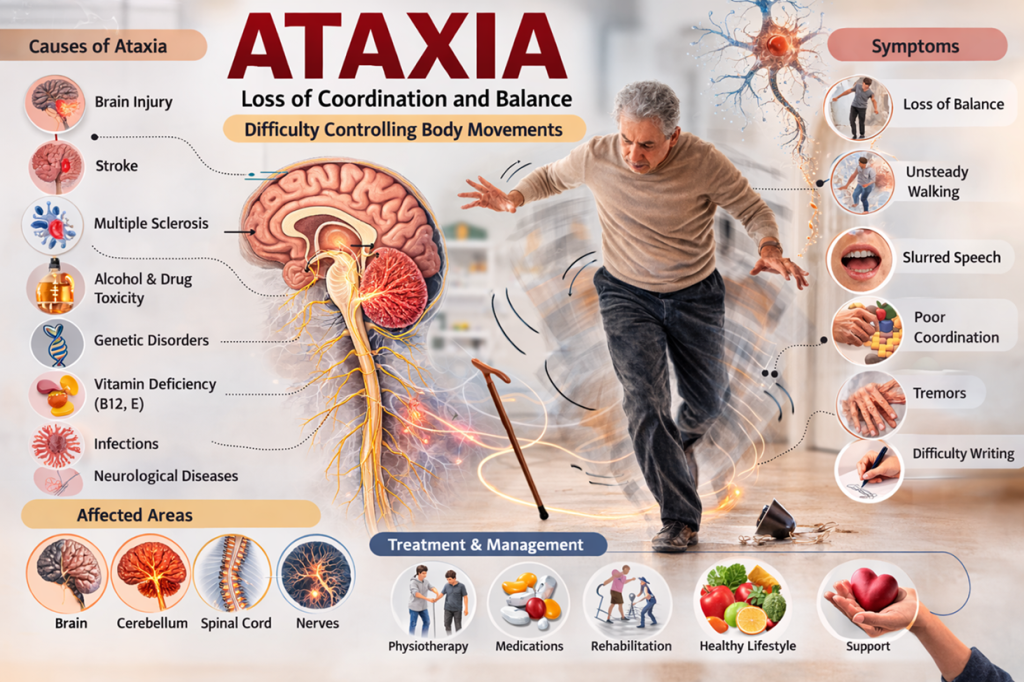
Ataxia, also known as motor coordination disorders, is a neurological condition causing poor muscle control, leading to clumsy, uncoordinated movements, particularly affecting gait, speech, and eye movement. Treatment for motor coordination disorders focuses on managing symptoms and improving quality of life. You will discover what ataxia is, a neurological condition affecting coordination, balance, and speech. Understanding its diverse types, underlying causes, and varied symptoms is vital. This post will guide you through current treatment approaches.
 Key Takeaways:
 Key Takeaways:
* Ataxia describes a group of neurological disorders causing impaired coordination, balance, and speech, resulting from damage to the cerebellum or its connections.
* Motor coordination disorders can show up in different ways, such as Friedreich’s ataxia (a genetic, progressive type), cerebellar ataxia (damage to the cerebellum), and sensory ataxia (loss of proprioception).
* Causes of ataxia are diverse, ranging from genetic mutations (e.g., spinocerebellar ataxia, ataxia-telangiectasia) to acquired factors like stroke, multiple sclerosis, brain tumors, vitamin deficiencies, and alcohol abuse.
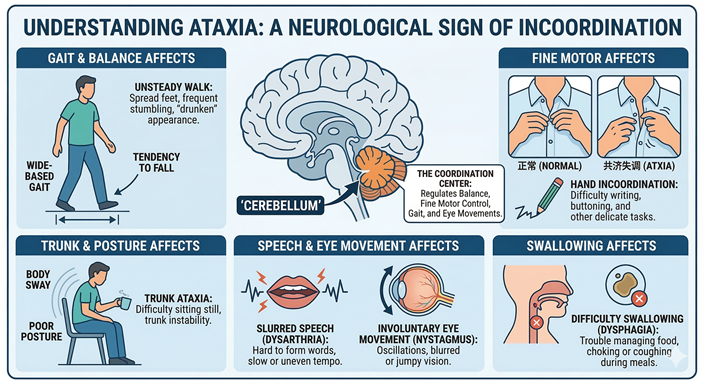
* Symptoms often include unsteady gait, difficulty with fine motor skills, slurred speech (dysarthria), eye movement abnormalities (nystagmus), and swallowing difficulties.
* Diagnosis involves neurological examination, imaging (MRI/CT scans), genetic testing, and blood tests to identify the underlying cause and type of ataxia.
* Treatment primarily focuses on managing symptoms and improving quality of life, as there is no cure for many forms of ataxia; therapies include physical, occupational, and speech therapy, along with medications to address specific symptoms.
* While conventional treatments are the primary approach, some individuals explore complementary therapies like acupuncture or homeopathic remedies, though scientific evidence for their effectiveness in treating ataxia is generally limited.
Primary Classifications and Types of Motor Coordination Disorders
Understanding the different classifications of ataxia is imperative for accurate diagnosis and management. Ataxia manifests in various forms, each with unique underlying causes and symptomatic presentations. This complex neurological disorder primarily affects coordination, balance, and speech, but its specific impact can vary significantly depending on the type. Ataxia can be broadly classified into hereditary and acquired forms, with numerous subtypes falling under these categories. For instance, Friedreich’s ataxia is a well-known hereditary type, while cerebellar ataxia often refers to a broader category of motor coordination disorders affecting the cerebellum, which can be either hereditary or acquired. Identifying the specific type of ataxia is a critical step towards understanding its progression and potential treatment options. Knowing the distinct characteristics of each type of ataxia will help you grasp the full scope of this condition.
* Friedreich’s ataxia
* Cerebellar ataxia
* Ataxia telangiectasia
* Spinocerebellar ataxia
* Episodic ataxia

| Friedreich’s ataxia | A hereditary, progressive neurodegenerative disorder affecting coordination and heart function. |
| Cerebellar ataxia | Refers to ataxia caused by damage or dysfunction in the cerebellum, impacting balance and coordination. |
| Ataxia telangiectasia | A rare, progressive, inherited disease affecting the nervous system, immune system, and other body systems. |
| Spinocerebellar ataxia (SCA) | A group of hereditary ataxias characterized by progressive degeneration of the cerebellum and spinal cord. |
| Episodic ataxia | A group of rare genetic disorders characterized by recurrent attacks of ataxia, often triggered by stress or exertion. |
Hereditary and Degenerative Disorders
You should be aware that many forms of motor coordination disorders stem from genetic mutations passed down through families, leading to progressive degeneration of neurological pathways. Friedreich’s ataxia, for example, is the most common inherited ataxia, typically presenting in childhood or adolescence and causing progressive damage to the nervous system, including the spinal cord and peripheral nerves. This progressive nature means symptoms worsen over time, significantly impacting a person’s mobility and quality of life. Another significant hereditary type is Ataxia Telangiectasia, a rare and severe disorder affecting multiple body systems beyond just coordination. People with Ataxia Telangiectasia have progressive ataxia, a weak immune system, and a higher chance of getting cancer. This description shows how some genetic ataxias can affect the whole body. The intricate interaction of genetic factors determines the particular neurological structures impacted and the overall advancement of the disease. Spinocerebellar ataxia (SCA) encompasses a substantial cohort of unique hereditary ataxias, each attributable to distinct genetic mutations. These SCAs are characterized by the progressive degeneration of the cerebellum and spinal cord, leading to a wide range of symptoms that vary depending on the specific SCA subtype. Understanding these hereditary forms is crucial, as genetic testing plays a significant role in diagnosis and family planning.
Cerebellar and Episodic Variants
You will observe that cerebellar ataxia specifically points to damage or dysfunction within the cerebellum, the brain region primarily responsible for coordinating voluntary movements, balance, and speech. This type of ataxia can arise from various causes, including genetic predispositions, stroke, tumors, or chronic alcohol abuse, making it a broad category that encompasses many different etiologies. The resulting symptoms, such as an unsteady gait, difficulty with fine motor skills, and slurred speech, directly reflect the cerebellum’s critical role in motor control. Individuals experiencing episodic ataxia present with a distinct pattern of recurrent attacks of motor coordination disorders, rather than continuous, progressive symptoms. Specific factors such as stress, excitement, caffeine, or even certain medications often trigger these episodes, which can last from minutes to hours. Between these episodes, individuals may experience normal or near-normal neurological function, which differentiates it significantly from the continuously progressive nature of many other ataxias. Episodic ataxia is a fascinating example of how genetic mutations can lead to intermittent neurological dysfunction, with several distinct genetic types identified. Understanding the triggers and patterns of these episodes is key to managing the condition and improving quality of life.
Clinical Manifestations and Specific Variants of Ataxia
Sensory and Gait Impairments
You may observe that one of the most noticeable signs of ataxia involves difficulties with balance and walking. Gait ataxia, for instance, manifests as an unsteady, wide-based walk, making it challenging to maintain a straight line or turn smoothly. This particular variant often leads to frequent falls, significantly impacting your independence and daily activities.
Another common presentation is sensory ataxia, where the brain receives insufficient or inaccurate information about your body’s position in space. This impairment stems from damage to the peripheral nerves or the dorsal columns of the spinal cord, which transmit proprioceptive signals. As a result, you might rely heavily on vision to compensate for the lack of sensation, especially when walking in dim light or on uneven surfaces.
Observing your posture and movements can provide clues to the type of ataxia present. For example, a person with sensory ataxia might exhibit a characteristic “stamping” gait, lifting their feet higher than necessary to feel the ground. These sensory and gait disturbances are often among the earliest and most debilitating symptoms you might experience.
Coordination Issues in Limbs and Vision
You might experience a range of coordination difficulties affecting your limbs and even your vision. Limb ataxia, for example, directly impacts the precision and smoothness of your arm and leg movements. This ability can make everyday tasks, such as buttoning a shirt or picking up a small object, incredibly challenging and frustrating.
Another distinct manifestation is optic ataxia, a fascinating condition where you struggle to accurately reach for or grasp objects under visual guidance. Despite having normal vision and motor strength, the disconnect between what you see and how your hand moves becomes apparent. This specific variant highlights a complex breakdown in the brain’s ability to integrate visual and motor information.
Your ability to perform coordinated actions often depends on the cerebellum’s health, as it plays a central role in motor control. Affected cerebellum can cause tremors during precise movements, a condition known as intention tremor. These coordination issues can greatly affect your quality of life, making even simple actions feel like a monumental effort.
Optic ataxia, in particular, affects the spatial localization of objects. You might see an object clearly but struggle to direct your hand to its correct position in space. This impairment is not a problem with your vision itself nor with the strength of your muscles, but rather a disruption in the brain’s “where” pathway, which processes spatial information for action.
Substance-Induced Motor Dysfunction
You should be aware that certain substances can directly lead to or worsen ataxic symptoms. Alcoholic ataxia, for instance, is a well-documented form of substance-induced motor dysfunction resulting from chronic alcohol abuse. This type of motor coordination disorders primarily affects the cerebellum, leading to a progressive deterioration of balance and coordination over time.
The neurotoxic effects of alcohol on the cerebellum can cause irreparable damage, even if alcohol consumption ceases. You might notice a worsening of gait instability, slurred speech, and difficulties with fine motor skills. The severity of alcoholic ataxia often correlates with the duration and intensity of alcohol exposure, highlighting the importance of early intervention.
Understanding the link between substance use and ataxia is critical for both diagnosis and treatment. Identifying and eliminating the causative substance is often the first and most important step in managing these symptoms. While some improvements might be seen with abstinence, certain long-term damages, particularly to the cerebellum, can be irreversible, underscoring the serious nature of substance-induced neurological conditions.
Alcoholic ataxia is characterized by a wide-based, unsteady gait, often accompanied by dysarthria (slurred speech) and nystagmus (involuntary eye movements). The damage to cerebellar Purkinje cells, which are highly sensitive to alcohol, is a key pathological feature. This specific variant of ataxia can significantly impair your ability to perform daily tasks and can lead to a considerable decline in your overall physical independence.
Etiology: Understanding What Causes Motor Coordination Disorders:
Understanding the origins of ataxia is necessary for effective diagnosis and management. You might wonder, what exactly causes this complex neurological condition? Ataxia results from damage or degeneration to parts of your brain that control movement, most notably the cerebellum, but also other areas like the brainstem and spinal cord. The specific cause determines the type of motor coordination disorders you experience, influencing their progression and potential treatments. Many factors contribute to the development of ataxia, ranging from genetic predispositions to acquired conditions. You will find that these causes can be broadly categorized into primary pathological triggers and environmental and genetic factors. Pinpointing the underlying cause is a critical step in your journey to understanding and addressing the condition, as it directly impacts the therapeutic strategies available. Identifying the specific etiology often requires a comprehensive medical evaluation, including neurological examinations, imaging studies, and genetic testing. You should know that sometimes, despite extensive investigation, the exact cause remains unknown, leading to a diagnosis of idiopathic ataxia. However, even in these cases, symptomatic treatments can significantly improve your quality of life. ### Primary Pathological Triggers Several distinct pathological processes can directly lead to ataxia. You might encounter cerebellar damage, a frequent culprit, where injury or disease impairs the cerebellum’s ability to coordinate voluntary movements. This damage can stem from various sources, each presenting unique challenges to your neurological system. Another common trigger involves neurodegenerative diseases, where brain cells gradually waste away over time. You should be aware that conditions like multiple sclerosis, stroke, cerebral palsy, and tumors can also directly impact the brain regions responsible for coordination, thereby causing ataxia. These diseases disrupt the delicate balance required for smooth, controlled movements. Occasionally, your body’s own immune system can mistakenly attack healthy brain cells, leading to inflammatory conditions that cause ataxia. You might also find that certain infections, such as chickenpox or HIV, can trigger temporary or permanent cerebellar dysfunction. After a thorough assessment, your doctor can determine the specific pathological trigger affecting you. ### Environmental and Genetic Factors Environmental exposures play a significant role in some forms of ataxia. You should consider that prolonged exposure to certain toxins, like lead, mercury, or some solvents, can damage your nervous system and lead to coordination problems. These environmental factors often present a preventable cause of the condition. Genetic mutations are a profound underlying cause for many types of ataxia, particularly the hereditary forms. You might inherit a faulty gene from your parents that predisposes you to developing the condition, even if they don’t exhibit symptoms themselves. There are over 100 known genetic causes of ataxia, making genetic testing a valuable diagnostic tool. Certain nutritional deficiencies, particularly a severe lack of vitamin E or B12, can also contribute to the development of ataxia. You should also recognize that alcohol abuse is a well-documented cause of cerebellar damage and subsequent ataxia, often reversible if alcohol consumption ceases. After a comprehensive review of your lifestyle and family history, your healthcare provider can identify relevant environmental and genetic factors. Considering the interplay of environmental and genetic factors, it’s clear that your individual susceptibility to ataxia can vary greatly. For example, some individuals with a genetic predisposition might only develop symptoms after encountering specific environmental triggers, while others with strong genetic mutations may develop the condition regardless of external factors. This complex interaction highlights the importance of a holistic approach to diagnosis and management, taking into account both your inherited traits and your lifestyle choices. After exploring these avenues, a clearer picture of your specific ataxia type often emerges.
Recognizing Clinical Symptoms of Ataxia
Identifying motor coordination disorders often begins with observing a range of distinct clinical symptoms that impact daily function. These symptoms can vary widely in their presentation and severity, depending on the underlying cause and the specific type of ataxia affecting an individual. You will notice changes in motor control, balance, and coordination, which are hallmark indicators of this neurological condition. Understanding these manifestations is a crucial step in obtaining an accurate diagnosis and initiating appropriate management strategies. Observing the subtle and overt signs of ataxia helps healthcare professionals distinguish it from other conditions that might present with similar symptoms. The progression of these symptoms can also provide valuable clues about the nature of the ataxia, whether it is inherited or acquired, and if it is part of a larger neurological disorder. You might experience difficulties with fine motor skills or more pronounced issues with gross motor movements, both of which point toward cerebellar dysfunction. A comprehensive evaluation of your symptoms is necessary for pinpointing the exact type of ataxia you might be experiencing. Doctors will assess your gait, speech patterns, eye movements, and overall coordination to build a complete clinical picture. You should be prepared to discuss any changes you’ve noticed in your physical abilities or cognitive function, as these details contribute significantly to the diagnostic process.
Physical Indicators of Lack of Coordination
You will likely notice your gait becoming unsteady, often described as a “drunken” walk, which is a primary physical indicator of motor coordination disorders. This instability makes maintaining balance challenging, leading to frequent stumbling or falls. The lack of coordination extends beyond walking, impacting your ability to perform everyday tasks with precision. Your fine motor skills may also deteriorate, making activities like writing, buttoning clothes, or eating with utensils difficult. You might observe a tremor, particularly when attempting purposeful movements, known as an intention tremor. This tremor worsens as your hand approaches its target, highlighting the disruption in coordinated muscle control. Speaking clearly can also become a challenge, as ataxia often affects the muscles involved in speech production, leading to dysarthria. Your speech may sound slurred, slow, or have an unusual rhythm, making it harder for others to understand you. These physical manifestations collectively paint a clear picture of impaired motor coordination.
Neurological Presentation
Your eye movements can become irregular, a condition known as nystagmus, where your eyes make repetitive, uncontrolled movements. This involuntary eye movement can affect your vision and make focusing difficult. The neurological impact of ataxia extends to various sensory and motor pathways within the brain, leading to symptoms such as impaired coordination, which can affect balance and movement, as well as difficulties in tasks like swallowing. Swallowing difficulties, or dysphagia, may also emerge, increasing the risk of choking or aspiration. This symptom arises from impaired coordination in the muscles involved in the swallowing process. You might discover yourself needing to take smaller bites or chew food more thoroughly to avoid discomfort. Cognitive changes, though less common than motor symptoms, can also occur in some forms of ataxia, affecting memory, attention, or executive functions. These neurological symptoms show how motor coordination disorders can affect many parts of the brain. The neurological manifestation of ataxia highlights the intricate interactions among various brain regions, especially the cerebellum, and their contributions to coordinated movement and other functions. You may notice a general feeling of clumsiness or a reduced ability to perform tasks that once felt automatic. These symptoms are not isolated; they often appear in combination, further emphasizing the systemic nature of neurological dysfunction in ataxia.
Treatments for Ataxia
- Targeted Therapy: For ataxia due to vitamin E deficiency, supplements are used.
- Medication for Symptoms: Medications can treat nerve pain, tremors, muscle cramps, and depression.
- Specific Conditions: Episodic ataxia may be managed with acetazolamide. For Friedreich’s ataxia, the drug omaveloxolone is approved
- Botox Injections: Used to treat muscle contractions or spasticity.
- Underlying Cause Treatment: Treating causes like tumors, infections, or metabolic disorders can alleviate ataxia.
- Physical Therapy: Exercises to improve coordination, balance, and muscle strength, including yoga or water therapy.
- Occupational Therapy: Training to assist with daily tasks, such as using modified utensils or specialized equipment.
- Speech Therapy: Techniques to improve speaking and swallowing.
- Assistive Devices: Canes, walkers, and wheelchairs for mobility.
- Dietary Changes: Avoiding triggers like high fructose corn syrup and caffeine.
- Psychological counseling for anxiety and depression.
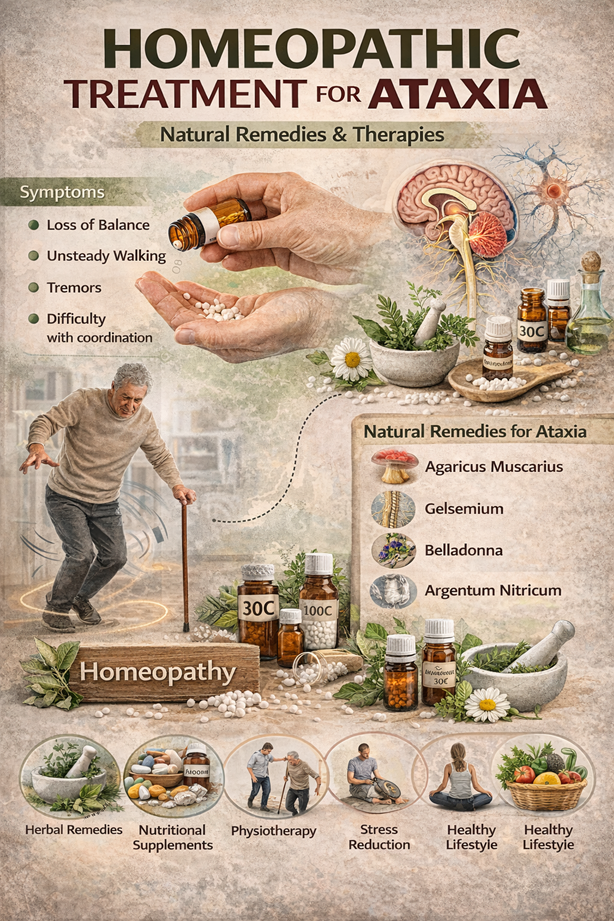
Homeopathic Treatment for Ataxia
Important Considerations
- Consult a Professional: It is crucial to consult a qualified healthcare provider before starting any new treatment, including homeopathy, to discuss potential benefits, risks, and interactions with existing medications.
- Focus on Symptom Relief: Homeopathy is generally considered to offer symptomatic or partial relief, especially in cases of chronic (long-standing) or hereditary ataxia, and is not a cure.
Commonly Mentioned Homeopathic Remedies
- Belladonna: Indicated in the first stage of the disease, particularly for sudden, sharp, lightning-like pains and a tottering gait.
- Nux Vomica: A useful remedy for the early stage of motor coordination disorders, where the patient drags their feet while walking or experiences a sudden loss of power in the extremities.
- Zincum Metallicum: Suggested for the early stages, especially for a stumbling or spastic gait that worsens in the dark or with closed eyes, and a sensation of insects crawling on the skin.
- Other substances mentioned as potential remedies in homeopathic practice include Alumina, Causticum, Gelsemium Sempervirens, and Heloderma, among many others.
Conventional and Complementary Management
- Physical and Occupational Therapy: Crucial for managing muscle control, improving gait, and using assistive devices like walkers or canes.
- Medications: Drugs like riluzole, amantadine, and acetazolamide are used to manage specific symptoms or types of ataxia.
- Supplements: Certain types of ataxia, such as ataxia with vitamin E deficiency, can be controlled or improved with vitamin E supplements. Researchers have looked into other supplements, such as coenzyme Q10, to see if they might help people with Friedreich’s ataxia. Some studies suggest that they might help improve mitochondrial function and lower oxidative stress in people who have the disease.
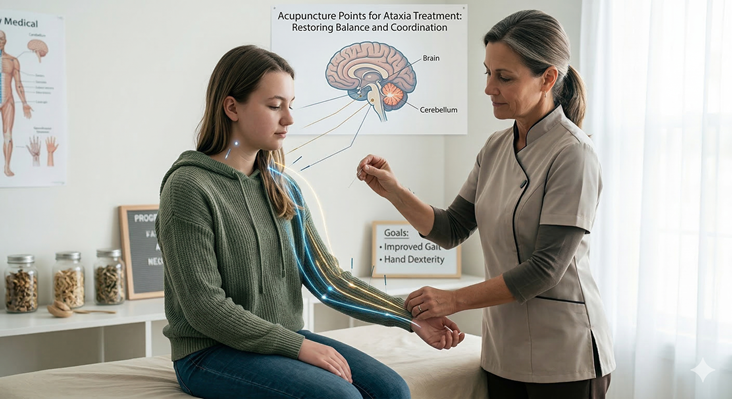
Acupuncture Treatment for Ataxia
Overview of Acupuncture for Ataxia
Common Techniques and Acupoints
- Scalp Acupuncture: This modern technique targets areas on the scalp corresponding to motor and sensory cortices in the brain. It is frequently used for neurological conditions and has shown promise in improving gait, balance, and speech.
- Body Acupuncture: The selection of body points often depends on the individual patient’s symptoms. Common points may include:
- Baihui (GV20)
- Yanglingquan (GB34)
- Zusanli (ST36)
- Yongquan (KI1)
- Electro-acupuncture: This method involves the use of electrical stimulation through the needles and may be applied to scalp motor lines and other areas to help reduce spasticity and erratic movement.
Efficacy and Evidence
- Improved Balance and Gait: Several case studies report improvements in the Scale for the Assessment and Rating of Ataxia (SARA) scores, with patients experiencing better balance and walking ability after treatment.
- Better Coordination and Speech: Patients have said that their speech is clearer, their lower body strength is better, and their overall motor coordination is better.
- Adjunctive Therapy: Acupuncture is typically used alongside conventional treatments like physiotherapy and occupational therapy. The combined approach may offer synergistic benefits, but it makes isolating the sole effect of acupuncture difficult, particularly in terms of understanding how much of the improvement in coordination and speech can be attributed specifically to acupuncture versus other therapies.
- Mechanism: Research suggests acupuncture may work by promoting neurogenesis and neural reorganization, enhancing connectivity between different parts of the brain, and modulating neurotransmitter levels.
Limitations and Considerations
- Further Research Needed: Controlled studies and randomized trials are warranted to confirm efficacy, determine optimal treatment guidelines, and compare outcomes against standard therapies.
- Safety: Acupuncture generally has minimal side effects, such as minor discomfort or bleeding at the insertion site.
- Individual Results Vary: The duration and severity of motor coordination disorders, as well as its underlying cause, influence treatment outcomes. Some patients may experience minimal improvement, while others see significant benefits, depending on factors such as the severity of their condition and their overall health status.
Final Words
Presently, you understand ataxia encompasses a spectrum of neurological disorders characterized by impaired coordination, ranging from Friedreich’s ataxia to cerebellar ataxia. Each type presents with distinct causes, whether genetic mutations or acquired conditions like stroke or autoimmune diseases. You’ve learned the symptoms often manifest as difficulties with balance, speech, swallowing, and fine motor skills, profoundly impacting daily life. While a definitive cure remains elusive for many forms, the treatment landscape is diverse, offering various approaches to manage symptoms and improve your quality of life. You will find standard care often involves physical therapy, occupational therapy, and speech therapy, all designed to help you maintain independence and mitigate the progression of symptoms. These conventional interventions focus on strengthening muscles, improving balance, and adapting to functional limitations. Beyond these established methods, you may also explore complementary and alternative therapies. Some individuals report benefits from treatments like acupuncture, which aims to stimulate specific points on the body, or homeopathy, which uses highly diluted substances to trigger the body’s healing response. The journey with ataxia requires a comprehensive and individualized approach to treatment. Your healthcare providers will work with you to develop a personalized plan that addresses your specific type of ataxia, its underlying causes, and the unique challenges you face. This plan will likely integrate both standard medical care and potentially complementary therapies, all with the goal of optimizing your well-being and managing your symptoms effectively. You have many options available to you, and informed decisions will lead to the best possible outcomes.
Here are detailed FAQs about Ataxia: Types, Causes, Symptoms, and Treatments.

Q: What is ataxia?
A: Ataxia describes a group of neurological disorders affecting coordination, balance, and speech. Individuals with ataxia experience impaired voluntary movements. This condition arises from damage to the cerebellum, the part of the brain responsible for coordinating movement, or to the pathways connecting the cerebellum to other brain regions. Ataxia can also happen when there are problems with the spinal cord or peripheral nerves, which send signals between the brain and muscles. The term “ataxia” is not a diagnosis itself but rather a symptom of an underlying condition.
Q: What are the main types of ataxia?
A: Ataxia presents in various forms, categorized by their underlying cause or affected brain region. Genetic ataxias, like Friedreich’s ataxia, spinocerebellar ataxias (SCAs), and ataxia-telangiectasia, are inherited and often progressive. Acquired ataxias develop due to external factors such as stroke, head injury, multiple sclerosis, or certain infections. Idiopathic ataxias have no identifiable cause. Cerebellar ataxia specifically refers to ataxia originating from cerebellar damage, manifesting as problems with balance, coordination, and often speech. Sensory ataxia occurs when there is damage to the nerves carrying sensory information from the body to the brain, leading to difficulty knowing where the limbs are in space. Gait ataxia, limb ataxia, and optic ataxia describe the specific manifestation of coordination problems in walking, limb movements, and eye-hand coordination, respectively. Episodic ataxia involves intermittent attacks of ataxia, often triggered by stress or fatigue, with periods of normal function in between. Alcoholic ataxia is a type of acquired ataxia caused by long-term alcohol abuse.
Q: What causes ataxia?
A: Ataxia can stem from a wide range of factors, both genetic and acquired. Genetic causes include mutations in specific genes, leading to conditions like Friedreich’s ataxia, spinocerebellar ataxias (SCAs), and ataxia-telangiectasia. These genetic forms often result in progressive degeneration of nerve cells. Acquired causes are diverse: stroke, head trauma, brain tumors, multiple sclerosis, cerebral palsy, and certain infections can all damage the cerebellum or its connecting pathways. Exposure to toxins, such as heavy metals or certain medications (e.g., some anti-seizure drugs), can also induce ataxia. Vitamin deficiencies, particularly of vitamin E or B12, sometimes lead to ataxia. Chronic alcohol abuse is a recognized cause of cerebellar damage and subsequent ataxia. In some cases, ataxia develops without a clear identifiable cause, termed idiopathic ataxia.
Q: What are the common symptoms of ataxia?
A: Ataxia symptoms primarily involve difficulties with coordination and balance. Individuals often experience an unsteady, broad-based gait, making walking challenging. Fine motor skills can be impaired, leading to problems with writing, eating, or buttoning clothes. Speech may become slurred or slow, a condition known as dysarthria. Eye movements can be jerky or involuntary, a symptom called nystagmus. Swallowing difficulties, or dysphagia, may also occur. Hand-eye coordination often deteriorates. The severity and specific combination of symptoms vary significantly depending on the underlying cause and the areas of the brain affected, such as whether the ataxia is due to genetic factors, stroke, or degenerative diseases.
Q: How is ataxia diagnosed?
A: Diagnosing ataxia typically involves a comprehensive neurological examination. A doctor will assess coordination, balance, gait, reflexes, and speech. Medical history is carefully reviewed, including family history of neurological conditions. Imaging tests, such as an MRI of the brain, are often performed to identify structural abnormalities, tumors, or signs of stroke in the cerebellum or other brain regions. Blood tests can verify a diagnosis for vitamin deficiencies, infections, or markers of autoimmune conditions. Genetic testing is frequently conducted, especially when a hereditary form of ataxia is suspected, to identify specific gene mutations. Electromyography (EMG) and nerve conduction studies may be used to evaluate peripheral nerve function in cases of suspected sensory ataxia.
Q: What treatments are available for ataxia?
A: Treatment for ataxia focuses on managing symptoms and addressing the underlying cause where possible. For acquired ataxias, treating the primary condition (e.g., removing a tumor, managing a vitamin deficiency, or discontinuing a causative medication) can sometimes improve or resolve the ataxia. For progressive genetic ataxias, there is currently no cure, but therapies aim to improve quality of life. Physical therapy is a cornerstone of treatment, helping individuals improve balance, coordination, and gait through specific exercises. Occupational therapy assists with adapting daily activities and using assistive devices to maintain independence. Speech therapy addresses dysarthria and swallowing difficulties. Medications may be prescribed to manage specific symptoms, such as muscle stiffness or tremors. Research into new treatments, including gene therapies, is ongoing for various forms of ataxia.
Q: Can alternative therapies like homeopathy or acupuncture help with motor coordination disorders?
A: Scientific evidence supporting the effectiveness of homeopathic treatments or acupuncture as primary treatments for motor coordination disorders. Homeopathy operates on the principle of “like cures like” and uses highly diluted substances. Strong clinical trials have shown that homeopathic treatments can either cure or greatly improve ataxia. Similarly, while acupuncture is used in traditional Chinese medicine to balance energy flow in the body, its specific efficacy for treating ataxia has been established through rigorous scientific studies. Some individuals report subjective benefits from these therapies for symptom management, such as stress reduction or pain relief, which might indirectly improve overall well-being. Individuals considering alternative therapies should discuss them with their doctor to ensure they do not interfere with conventional medical treatments and to understand the potential benefits and risks. Conventional medical care remains the recommended approach for managing ataxia.
Holistic Treatments for Motor Coordination Disorders in Philadelphia
If you live in Philadelphia and are looking for natural healing for neurological conditions in general and for motor coordination disorders in particular, google “Holistic Neurologist Near Me” and see Philadelphia Holistic Clinic at the top of the search page.
Contact the Philadelphia Holistic Clinic at (267) 403-3085 to schedule your appointment for a holistic evaluation.