
Costochondritis
Costochondritis, also known as chest wall pain syndrome, costosternal syndrome, or costosternal chondrodynia. Many individuals experience chest pain, and while it’s often concerning, it isn’t always heart-related. You might be experiencing costochondritis, an inflammatory condition affecting the cartilage that connects your ribs to your breastbone. This condition frequently results in sharp chest wall pain. Understanding costochondritis is imperative for managing your discomfort.

Key Takeaways:
That sharp chest pain? It might not be your heart acting up, but rather something called costochondritis. This condition involves inflammation of the cartilage connecting your ribs to your breastbone—the costochondral junctions, specifically. It’s benign, meaning it’s not life-threatening, but man, can it be painful and scary! The exact cause often remains a bit of a mystery, but we see a few common triggers. Occasionally, it pops up after a chest injury, like a direct blow, or even from repetitive strain from things like heavy lifting or intense coughing fits. Viral infections can also kick it off, making your chest feel achy and inflamed. You’ll usually feel a sharp, aching, or pressure-like pain right on the side of your breastbone, often radiating a bit. The big tell? If you press on the affected ribs, the pain usually gets worse—that’s a classic sign. It can sometimes mimic heart attack symptoms, which is why getting it checked out by a doctor is always a good idea. Doctors usually diagnose costochondritis based on a physical exam and by ruling out other more serious conditions. They’ll press on your chest to pinpoint the pain and ask about your symptoms. Don’t be surprised if they run a few tests, like an EKG or chest X-ray, just to be certain it’s not something else. Treating costochondritis typically involves managing the pain and inflammation. Often, the first line of treatment involves using over-the-counter anti-inflammatory medications such as ibuprofen or naproxen. Applying heat or ice packs to the area can also bring some relief and help calm things down. Rest is vital when you have costochondritis. Try to avoid activities that make the pain worse, especially anything that strains your chest or involves heavy lifting. Giving your body a chance to heal without constant irritation is key to getting back to normal. For some folks, complementary therapies like acupuncture can offer additional pain relief. It may lessen discomfort and tense muscles in the chest, but it is not a cure. Some people also explore homeopathy, but scientific evidence doesn’t widely support its effectiveness for treating costochondritis.
What’s actually going on at the costochondral joint and
Why does this specific spot hurt?
Understanding the precise location of your pain is key to comprehending costochondritis. The inflammation specifically targets the costochondral junction, which is the exact point where the bone of your rib meets the cartilage attached to the sternum. This junction represents a critical interface in your chest wall, designed for both flexibility and structural integrity. This particular area endures significant stress with every breath you take and every movement of your upper body. When inflammation strikes here, the normally smooth interaction between bone and cartilage becomes irritated and painful. You are experiencing discomfort at a highly active and mechanically loaded site. Imagine the constant motion this junction undergoes throughout your day; coughing, sneezing, laughing, or even simply turning your torso can exacerbate the tenderness. The localized nature of the inflammation at this specific point explains why the pain can be so sharp and distinct.
The anatomy of your chest wall
Your chest wall is a complex and dynamic structure, providing protection for vital organs while allowing for the mechanics of respiration. It comprises your sternum, ribs, and the cartilage connecting them, forming a protective cage around your heart and lungs. This intricate design allows for both rigidity and necessary flexibility. Each rib, a curved bone, extends from your spine and wraps around your torso, eventually meeting the sternum at the front. The connection between the bony rib and the sternum isn’t direct bone-on-bone; instead, it’s mediated by resilient cartilage, which is where the costochondral junction is found. This cartilaginous link is important for the expansive movements of breathing. The presence of cartilage at these junctions is a masterful design, allowing your rib cage to expand and contract with each breath without risking bone fracture. This flexibility is what allows your lungs to fully inflate, demonstrating the critical role these cartilaginous connections play in your overall respiratory function. This cartilaginous connection allows for a slight degree of movement, preventing the chest wall from being completely rigid. This elasticity is absolutely necessary for breathing, as your rib cage needs to expand and contract to facilitate the intake and expulsion of air.
What’s the real deal and what triggers costosternal chondrodynia?
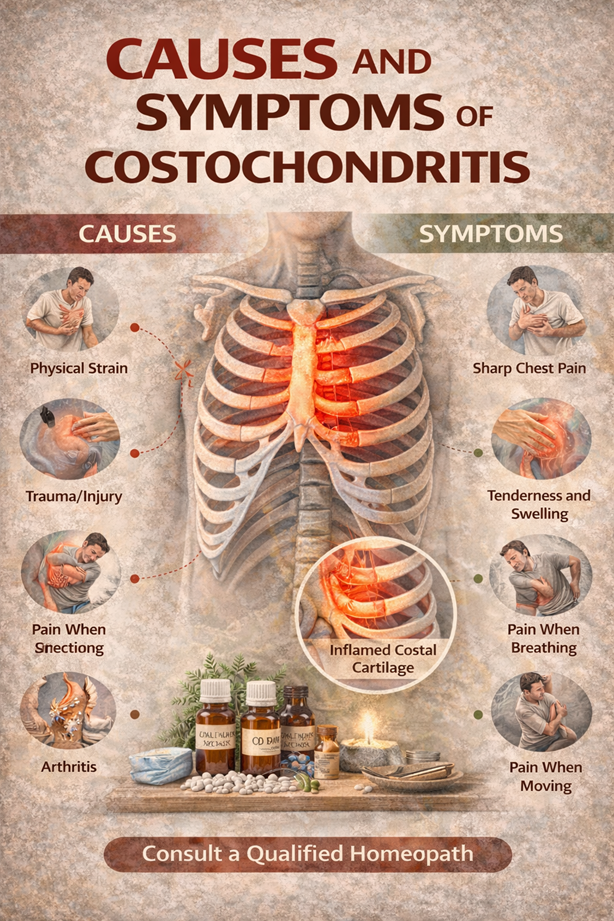
Understanding the triggers of costochondritis can be challenging, but several key factors often emerge as culprits. You might be wondering why your chest suddenly feels tight and painful, and the answer often lies in a combination of everyday activities and underlying health conditions. The causes range from simple physical exertion to more subtle infections, and they can impact anyone. Your body’s reaction to certain stressors can manifest as inflammation of the cartilage connecting your ribs to your breastbone. Knowing these potential triggers is the first step toward prevention and effective management. We’ll look at common causes to help you find and fix what’s making you uncomfortable. Many people find that their symptoms begin after a specific event, making the link between cause and effect clearer. Although we don’t always fully understand the exact mechanism, the patterns observed in numerous cases suggest distinct categories of triggers. Let’s break down these categories to give you a clearer picture of what might be happening within your body.
Physical strain and injuries
Physical trauma to the chest is a prominent cause of costochondritis, often resulting from direct impact or sudden, forceful movements. You might have experienced a fall, a sports injury, or even a car accident that put undue stress on your rib cage. These events can inflame the delicate cartilage, leading to the characteristic chest pain. Another common trigger is heavy lifting, especially when you fail to maintain proper form or push your body beyond its limits. Imagine straining to move a heavy piece of furniture or lifting weights that are too challenging; this kind of exertion can easily overstress the costochondral joints. The repetitive strain from such activities can gradually lead to inflammation. Everyday activities, even seemingly innocuous ones, can contribute to the development of costochondritis if they involve unusual or prolonged strain on the chest. You might find that a new exercise routine or a job requiring repetitive arm movements brings on symptoms. Recognizing these physical stressors is key to preventing future flare-ups.
Illnesses that make it worse
Respiratory infections can trigger costochondritis in many people, often surprising those who associate the condition primarily with physical injury.
When you experience a severe cough from an illness like bronchitis or pneumonia, the constant strain on your chest wall can inflame the costochondral joints. The persistent coughing action places significant stress on the cartilage. Viral infections, beyond just respiratory ones, are also known to sometimes precede the onset of costochondritis. Your immune system, working hard to fight off an infection, can inadvertently contribute to widespread inflammation throughout the body, including in the chest cartilage. This systemic response can make the rib joints more susceptible to pain and tenderness. Certain inflammatory conditions, though less common, can also predispose individuals to costochondritis or exacerbate existing symptoms. You might find that if you have an underlying autoimmune disorder, your risk of developing such inflammation is higher. These conditions create an environment where the body’s own immune response can attack healthy tissues, including the cartilage in your chest. You should consider any recent illnesses, especially those involving persistent coughing or widespread inflammation, when trying to pinpoint the cause of your costochondritis. The link between respiratory infections and the onset of chest pain is well-documented, highlighting the importance of managing these illnesses effectively to prevent secondary complications like costochondritis.
My take on how you can actually get some relief from costochondritis
Understanding the intricacies of costochondritis is the first step, but truly finding relief requires a proactive approach to managing your symptoms. You’ve learned about the causes and how it’s diagnosed, and now it’s time to explore the practical strategies that can help alleviate the discomfort and improve your quality of life. This section will guide you through both traditional medical interventions and various alternative therapies that many individuals find beneficial in their journey towards recovery. Finding a path to comfort often involves a combination of approaches tailored to your specific needs and the severity of your pain. Despite the lack of a universally applicable solution, you have a wide range of options to consider, ranging from conventional medical treatments to complementary practices. The key is to listen to your body, work closely with healthcare professionals, and be open to trying different methods to discover what truly works best for you. You’ll discover that managing costochondritis is a marathon, not a sprint, and patience is a virtue. The journey to relief might involve some trial and error, but with persistence and a well-rounded strategy, you can significantly reduce your pain and regain control over your daily activities. Let’s explore the various avenues available to help you on your way to feeling better.
Traditional ways to manage the costochondritis pain
Managing the discomfort of costochondritis typically begins with straightforward medical interventions aimed at reducing inflammation and allowing your body to heal. You will find that rest is a foundational component of recovery, providing your inflamed cartilage the necessary time to calm down without further irritation. Limiting activities that exacerbate your chest pain, especially those involving strenuous upper body movements, is often recommended. You can also rely on anti-inflammatories, which are a common first-line treatment for costochondritis. These medications, often available over-the-counter, work to decrease the swelling and pain in the affected area. Your doctor might prescribe stronger anti-inflammatory drugs if over-the-counter options aren’t providing sufficient relief. Following your doctor’s advice on dosage and duration for these medications is important. You might find that a consistent course of anti-inflammatories, combined with appropriate rest, significantly lessens the intensity and frequency of your chest pain. Please keep in mind, these treatments address the symptoms, creating an environment for your body to recover.
Trying out natural and alternative therapies for costochondritis
Many people seek additional support beyond traditional treatments, exploring natural and alternative options to further alleviate their costochondritis symptoms. You might be interested to know that individuals often look into acupuncture for costochondritis, a traditional Chinese medicine technique involving the insertion of thin needles into specific points on the body. This practice aims to rebalance energy flow and reduce pain. Homeopathy for costochondritis is another alternative therapy that some individuals find helpful. This approach employs highly diluted substances that, when administered in larger doses, mimic the symptoms of the illness under treatment. Many people report subjective improvements in their pain and overall well-being, despite the debated scientific evidence for homeopathy’s effectiveness. Exploring these alternative options can provide extra help in your journey to recovery, especially when traditional methods alone aren’t fully addressing your discomfort. You could consider consulting a qualified practitioner in acupuncture or homeopathy to discuss if these therapies might be a suitable complement to your current treatment plan. You might discover that incorporating practices like acupuncture or homeopathy into your routine offers a different perspective on pain management and contributes to a more holistic approach to your health. These therapies, while not always a primary treatment, can serve as valuable tools for some in finding further relief from the persistent pain associated with costochondritis.
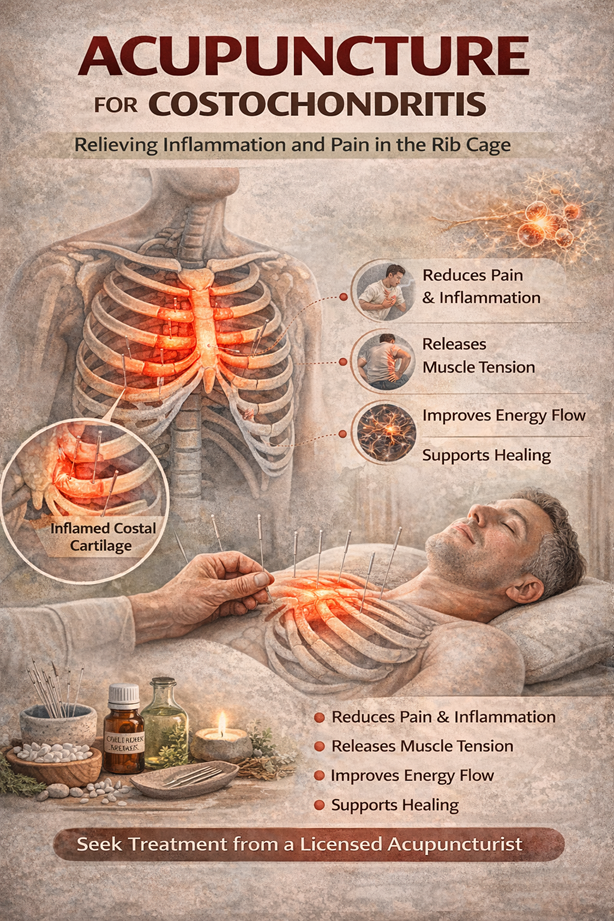
Acupuncture for costochondritis
Acupuncture is a safe, effective, and often rapid treatment for reducing pain from costochondritis, particularly for cases that do not respond to conventional therapies. It works by targeting trigger points in the chest and back to reduce inflammation, improve blood flow, and calm the nervous system.
- Effectiveness: Studies show significant pain reduction (e.g., from 8/10 to 3/10) after 6–8 sessions.
- Methods: Treatments often involve dry needling, electro-acupuncture, and manual therapy(such as massage or rib mobilization).
- Benefits: It helps decrease, or eliminate the need for, pain medication (NSAIDs).
- Application: It is used for both general costochondritis and the rarer Tietze’s syndrome.
Common acupuncture points used include local tender points on the chest, along with distal points such as P6 and LI4. It is recommended to seek treatment from a licensed practitioner who can combine these techniques with physical therapy or other supportive care.
Homeopathic Medicine for costochondritis
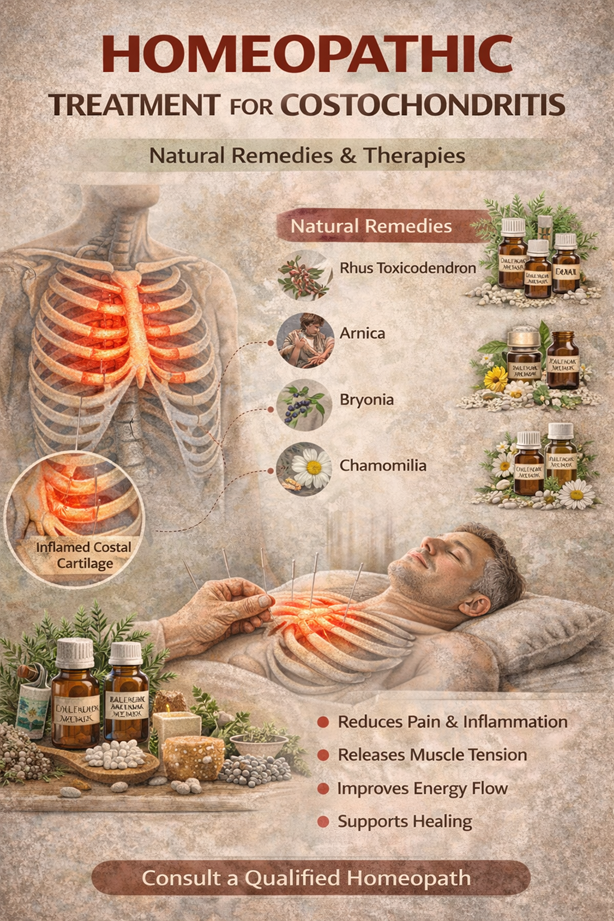
- Ranunculus bulbosus: Frequently recommended for shooting, stabbing, or aching pain between the ribs.
- Rhus toxicodendron (Rhus Tox): Indicated for pain that radiates to the shoulders, which often feels worse in cold, damp weather or upon initial movement.
- Bryonia alba: Used when the pain is sharp, stitching, or burning and is significantly worsened by movement, breathing, or coughing.
- Arnica montana: Recommended for chest soreness and pain, particularly if it feels bruised.
- Kali carbonicum: Often chosen for stabbing pains that may occur early in the morning.
- Rumex crispus: Used for sharp, raw, or stitching pain, sometimes accompanied by a cough.
- Stannum metallicum: Indicated for a feeling of weakness in the chest.
- Carbo vegetabilis: Used when the pain is accompanied by indigestion, gas, or bloating.
- Individualization: Homeopathic treatment is individualized, meaning the remedy is chosen based on the specific symptom profile rather than a one-size-fits-all approach.
- Effectiveness: Case studies have suggested that individualized homeopathy can provide significant symptomatic improvement.
- Complementary Approach: These remedies are often used alongside conventional, non-pharmacological treatments like rest, stretching, and heat/ice packs.
Summing up
Taking this into account, understanding the specific triggers and symptoms of costochondritis is the first step toward finding an effective treatment plan and getting back to your normal routine. You will find that recognizing chest pain associated with deep breaths, coughing, or even simple movements of your upper body can help you differentiate costochondritis from more serious cardiac issues. Knowing your body’s responses to activity or stress allows you to communicate more effectively with your healthcare provider, leading to a quicker and more accurate diagnosis.
You can manage costochondritis effectively once you clearly understand its causes and symptoms. Treatment often involves a combination of rest, over-the-counter pain relievers like NSAIDs, and applying heat or ice to the affected area. Your doctor might recommend physical therapy to improve posture and strengthen chest muscles, reducing the likelihood of recurrence. In some cases, steroid injections may be considered if conservative treatments are not providing sufficient relief.
You should prioritize consistent communication with your healthcare team throughout your treatment journey. Providing detailed accounts of your symptoms, how they change, and your response to different interventions will help tailor your care plan. By actively participating in your recovery, you empower yourself to regain comfort and return to your usual activities, ensuring your overall well-being.
FAQ

Q: What is costochondritis and where does the pain typically occur?
A: Costochondritis describes inflammation of the cartilage connecting ribs to the breastbone (sternum). This condition causes chest wall pain. People often feel the pain at the costochondral junction, the area where the rib cartilage meets the bony rib. Multiple costochondral joints can be affected, leading to localized tenderness and discomfort. The pain can vary from a dull ache to sharp, stabbing sensations.
Q: What are the common costochondritis causes?
A: The exact cause of costochondritis often remains unknown. Doctors sometimes refer to it as idiopathic. However, several factors can contribute to its development. Chest wall trauma, such as a direct blow or injury, can trigger inflammation. Repetitive strain from activities like heavy lifting, intense coughing, or vigorous exercise can also inflame the costochondral joints. Viral or bacterial infections, particularly those affecting the respiratory system, sometimes precede costochondritis. In rare cases, arthritis or tumors can cause similar symptoms, making a proper diagnosis important.
Q: How does costochondritis feel, and what are its symptoms?
A: The primary symptom of costochondritis is chest pain. This pain generally sharpens with deep breaths, coughing, sneezing, or certain movements of the torso and arms. Pressing on the affected costochondral junctions usually reproduces the pain. Pain can radiate to the back or abdomen in some individuals. The intensity varies, but many describe it as a pressure or tightness in the chest. This chest pain can mimic symptoms of a heart attack, necessitating medical evaluation to rule out more serious conditions.
Q: What exactly is Costochondritis, and what does it feel like?
A: Imagine waking up one day with a sharp, stabbing pain in your chest. It’s not a heart attack, but it certainly feels alarming. That’s often how people discover costochondritis. This condition involves inflammation of the cartilage connecting your ribs to your breastbone, specifically at the costochondral junction. It’s a common cause of chest pain, and while it can be scary, it’s usually benign.
The pain can range from mild to severe. It might feel like pressure, a sharp ache, or a burning sensation. You might notice it worsens with deep breaths, coughing, sneezing, or even certain movements, like twisting your torso. Sometimes, pressing on the affected areas of your chest can make the pain worse, which is a key diagnostic clue for doctors. It’s important to remember that this pain is localized and doesn’t typically radiate to other parts of your body, like arm or jaw pain would in a heart issue.
Q: What are the common costochondritis causes? What triggers this chest pain?
A: Pinpointing the exact cause of costochondritis can be tricky because it often develops without a clear reason. It’s like a mystery occasionally. However, doctors have identified several factors that seem to contribute to its onset. One common trigger is physical strain or injury to the chest wall. This injury could be anything from a direct blow to the chest, like from an accident, to repetitive movements that put stress on the rib cage, such as heavy lifting or intense exercise.
Respiratory issues can also play a role. A severe bout of coughing, perhaps from bronchitis or pneumonia, can strain the costochondral joints and lead to inflammation. Infections, both viral and bacterial, are another potential cause. Less commonly, certain types of arthritis, like ankylosing spondylitis or rheumatoid arthritis, can manifest as costochondritis. Even fibromyalgia, a chronic pain condition, can include costochondritis as one of its many symptoms. However, at times, it unexpectedly manifests, leaving you to question its cause.
Q: Where does the pain from costochondritis typically show up? Are there specific costochondritis pain locations?
A: When you have costochondritis, the pain usually centers around your breastbone, right where your ribs meet it. Doctors call these spots the costochondral junctions. You might feel the pain on one side of your chest or both, and it can affect one rib or several. Most often, people report pain in the second to fifth ribs, but any of them can be involved.
The pain is very localized, meaning you can often point directly to the spot that hurts. It’s not a diffuse, general ache; it’s specific. You’ll likely notice tenderness when you press on the affected areas. This tenderness is a hallmark of costochondritis and helps differentiate it from other causes of chest pain. It’s like your body is telling you exactly where the problem is.
Q: How do doctors diagnose costochondritis? What tests are involved?
A: Diagnosing costochondritis usually starts with a thorough physical examination and a detailed discussion about your symptoms. Your doctor will ask about your pain’s location, when it started, and what makes it better or worse. They’ll gently press on different areas of your chest to check for tenderness, particularly around the costochondral junction. If pressing on those spots reproduces your pain, it’s a strong indicator of costochondritis.
Because chest pain can be a symptom of more serious conditions, like heart problems, your doctor will likely perform tests to rule out those possibilities. This might include an electrocardiogram (ECG) to check your heart’s electrical activity, blood tests to look for markers of inflammation or heart damage, and occasionally a chest X-ray to rule out lung issues. These tests are mostly to ensure nothing else serious is going on. There’s no specific test that definitively diagnoses costochondritis; it’s more of a diagnosis of exclusion after other conditions have been ruled out.
Q: What are the main costochondritis treatments? How can I get relief?
A: The good news is that costochondritis often resolves on its own over time, but there are several things you can do to manage the pain and speed up recovery. Pain relief is usually the first priority. Over-the-counter pain relievers like NSAIDs (nonsteroidal anti-inflammatory drugs) such as ibuprofen or naproxen can be very effective in reducing inflammation and pain. Applying warm compresses or heating pads to the affected area can also provide soothing relief.
Resting the affected area is also important. This means avoiding activities that worsen your pain, like heavy lifting, strenuous exercise, or any movements that twist your torso. Gentle stretching exercises, once the initial acute pain subsides, can help maintain flexibility and prevent stiffness. Your doctor might also suggest physical therapy, where a therapist can guide you through specific stretches and exercises. In some cases, if the pain is severe and persistent, a doctor might recommend corticosteroid injections directly into the painful area to reduce inflammation.
Q: Can alternative therapies like acupuncture for costochondritis or homeopathy for costochondritis help?
A: Many people explore alternative therapies when dealing with chronic pain conditions like costochondritis, and some find relief through them. Acupuncture, for example, involves inserting thin needles into specific points on the body. Proponents believe it can help reduce pain and inflammation by stimulating the body’s natural healing responses. Some individuals report a decrease in pain and improved comfort after acupuncture sessions. It’s generally considered safe when performed by a licensed practitioner.
Homeopathy is another alternative approach that uses highly diluted substances to stimulate the body’s healing process. Despite the limited scientific evidence supporting its effectiveness for costochondritis, some individuals opt to try it and report positive outcomes. It’s always a good idea to talk to your doctor about any alternative therapies you’re thinking about. They can help you understand the potential benefits and risks and ensure these therapies won’t interfere with any conventional treatments you’re receiving. What works for one person might not work for another, so it’s about finding what brings you relief.
Q: How long does costochondritis usually last, and can it come back?
A: The duration of costochondritis varies quite a bit from person to person. For some, the pain might subside within a few weeks, especially if it was triggered by a specific event like a cold with lots of coughing. Others might experience symptoms for several months. It usually resolves on its own, which is reassuring. Patience and consistent pain management are key during this time.
Yes, costochondritis can absolutely recur. If you had it before, you may be more likely to get it again, especially if you do things that previously caused it or if you have a condition that makes you prone to inflammation. Taking preventive measures, like being mindful of heavy lifting techniques, avoiding prolonged periods of poor posture, and managing any chronic coughs, can help reduce the chances of it returning. Listening to your body and addressing pain early can also make a big difference.
Natural Treatment for Costosternal Syndrome in Philadelphia
If you are looking for natural treatment of costochondritis and ready to get rid of pharmaceutical painkillers and narcotics, you are in the right place. At the Philadelphia Holistic Clinic, Victor Tsan and associates provide various natural remedies for costochondritis, which proved to be effective and safe. For the costochondritis natural treatment, we commonly use acupuncture in combination with homeopathic remedies, and usually, our patients leave the clinic pain-free.

Even in the most stubborn cases of costochondritis, natural treatment is highly effective, and many patients treated at the center avoided aggressive medical interventions because the pain was gone. We keep records of our patients and follow up with them. At the center, acupuncture treatment is done by the licensed specialist, David Wu, LAc, who graduated from the most reputable acupuncture school in the United States—New Jersey Eastern School of Acupuncture and Traditional Medicine. established in 1958
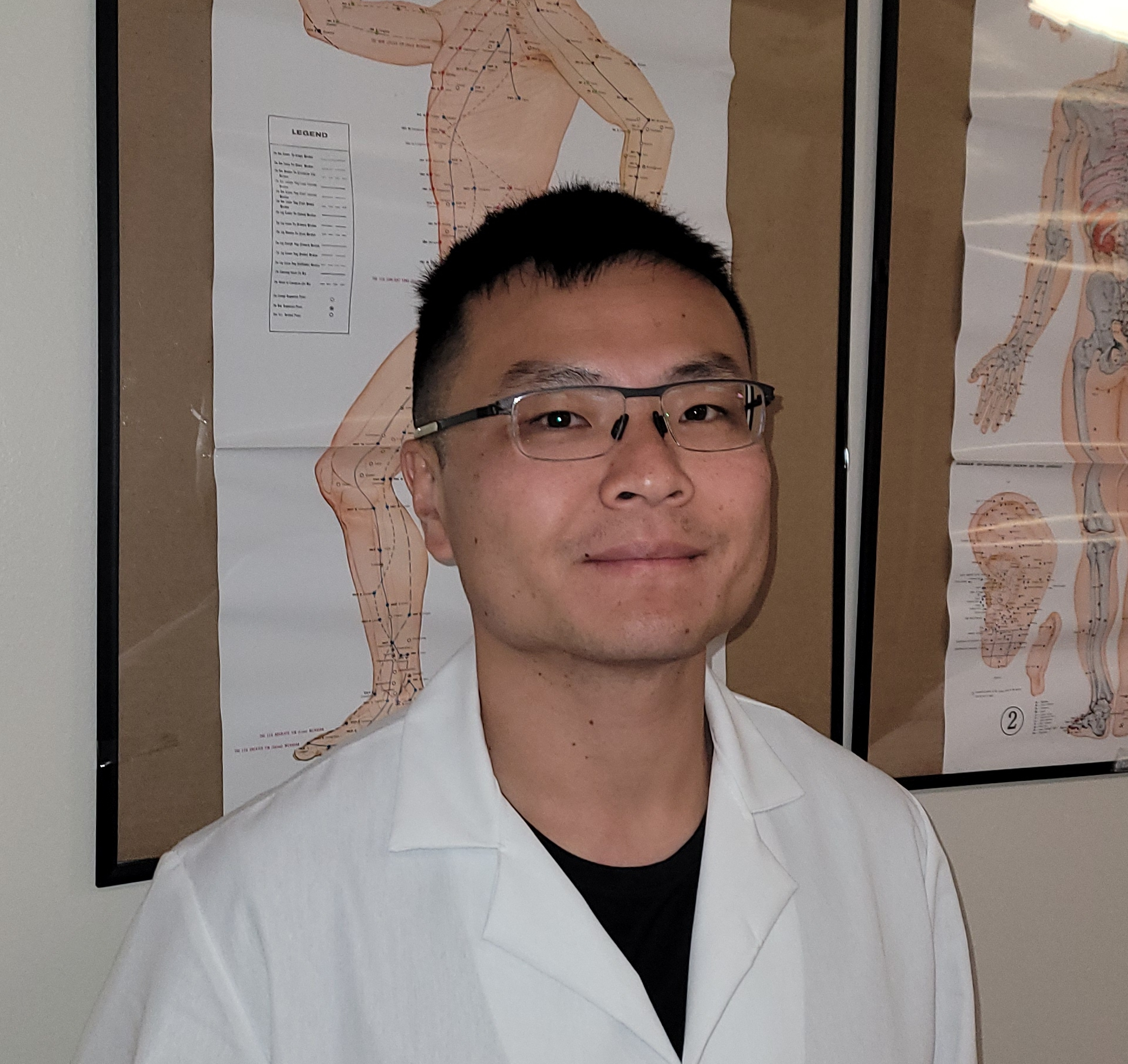
Victor Tsan—Medical Director of the Philadelphia Holistic Clinic has 40+ years of academic and clinical experience in medicine, surgery, and holistic medicine. Victor Tsan also graduated from The Graduate School of China Academy of Chinese Medical Sciences (GSCACMS), located in Beijing, and the academy of classical homeopathy in Greece.
To book your appointment with Victor Tsan and discuss further natural treatment for costochondritis, contact Philadelphia Holistic Clinic at (267) 403-3085 or use our automatic scheduling system