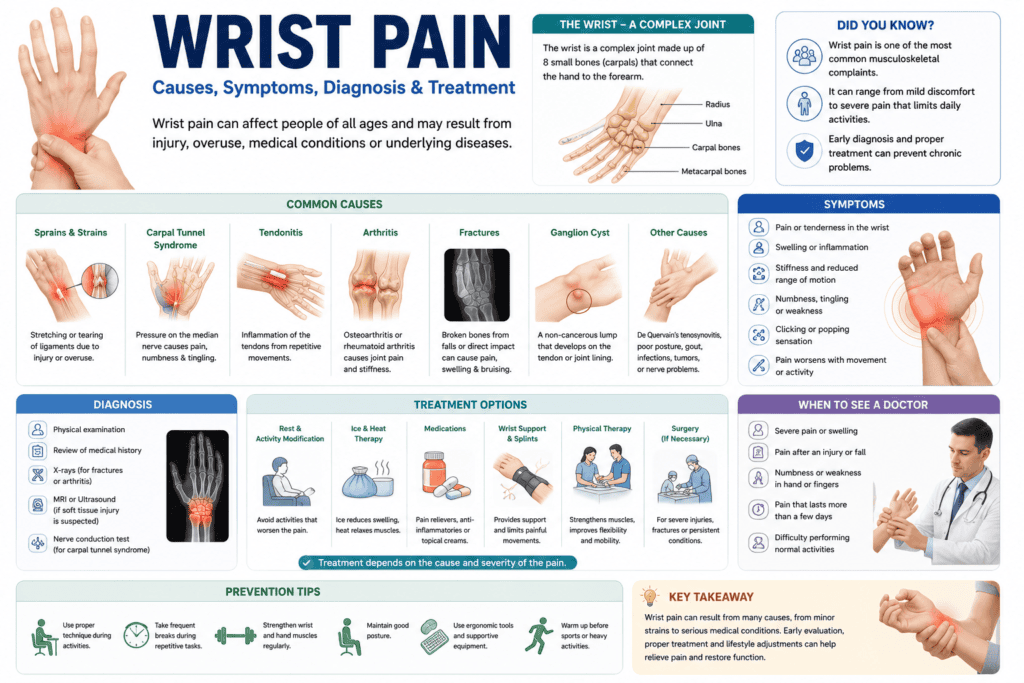
Wrist Pain
- Ulnar Wrist Pain: Discomfort on the outer (pinky) side of the wrist, often caused by ligament tears or ulnar-sided cartilage injuries.
- Radial Wrist Pain: Pain on the thumb side, commonly diagnosed as De Quervain’s tenosynovitis when the thumb tendons are inflamed.
- Carpal Tunnel Syndrome (CTS): Pain, tingling, or numbness caused by median nerve compression in the wrist canal.
- Wrist Sprain: A Medical term for overstretched or torn ligaments, usually resulting from a fall onto an outstretched hand.
- Injuries: Sprains, strains, sports trauma, and bone fractures from falls.
- Repetitive Strain: Carpal tunnel syndrome (nerve compression) and tendinitis from frequent typing or tool use.
- Medical Conditions: Osteoarthritis, rheumatoid arthritis, and fluid-filled ganglion cysts.
Differential Diagnosis for Wrist Pain by Anatomical Location
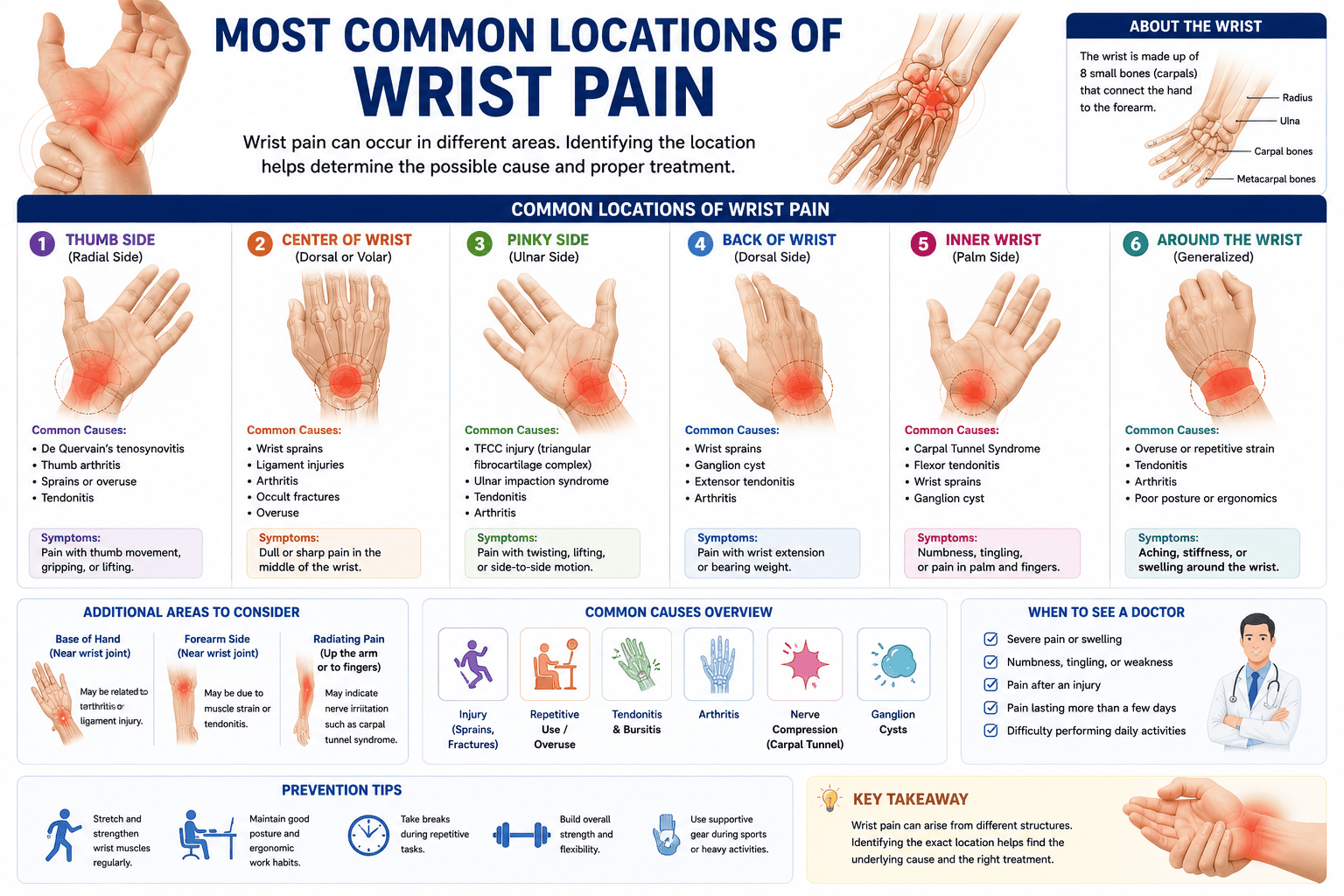
Radial and ulnar-sided symptomatic mapping of wrist pain
Radial-sided wrist pain, often described as sharp pain in the wrist below the thumb or wrist-thumb pain, commonly arises from de Quervain’s tenosynovitis or first carpometacarpal joint osteoarthritis. This discomfort typically intensifies with thumb movement or gripping actions, especially in repetitive use scenarios such as typing or lifting. A mid-sized SaaS firm reported increased cases among employees performing prolonged mouse use, highlighting occupational influence on radial-sided symptoms.
Ulnar-sided discomfort, recognized as wrist pain on the pinky side or outer wrist pain, may stem from triangular fibrocartilage complex (TFCC) tears, pisotriquetral arthritis, or ulnar impaction syndrome. These conditions frequently follow trauma or chronic overuse, particularly in racquet sports or weight-bearing activities. Physical examination often reveals tenderness at the ulnar styloid or during wrist rotation.
Accurate lateralization of symptoms guides imaging decisions, with MRI or arthrography confirming suspected TFCC pathology. Electrodiagnostic studies may be superimposed when nerve involvement overlaps with joint pathology. Symptom duration and response to initial conservative care further refine differential considerations.
Identifying dorsal wrist pain complications and posterior wrist pain
Pain in the back of the wrist frequently signals dorsal ganglion cysts, extensor tendonitis, or dorsal wrist synovitis, particularly in individuals performing repetitive wrist extension. These lesions often present as visible or palpable masses near the mid-dorsal aspect, occasionally fluctuating in size. A case series from an outpatient orthopedic clinic noted 60% of dorsal wrist masses were ganglion cysts, predominantly in patients aged 20-40.
Posterior wrist discomfort may also originate from dorsal capsular irritation or scapholunate ligament injury, especially after a fall on an outstretched hand. Swelling and localized tenderness over the dorsal radiocarpal joint are common, with pain exacerbated by hyperextension. Dynamic ultrasound can reveal abnormal ligamentous movement during stress maneuvers.
Occult fractures, like a dorsal rim fracture of the distal radius, can be missed on initial X-rays but often cause persistent pain in the back of the wrist after trauma. Advanced imaging like CT or MRI is often required for definitive diagnosis. Conservative management includes immobilization and activity modification, while symptomatic cysts may require aspiration or excision.
Dorsal wrist pain can also reflect inflammatory arthropathies, with rheumatoid arthritis commonly affecting the dorsal compartments of the wrist early in disease progression. Synovial hypertrophy in these regions compresses adjacent tendons, leading to crepitus and restricted motion. Early detection through clinical assessment and imaging helps prevent tendon rupture, particularly in the extensor pollicis longus.
Therapeutic Approaches for Wrist Pain Symptom Management
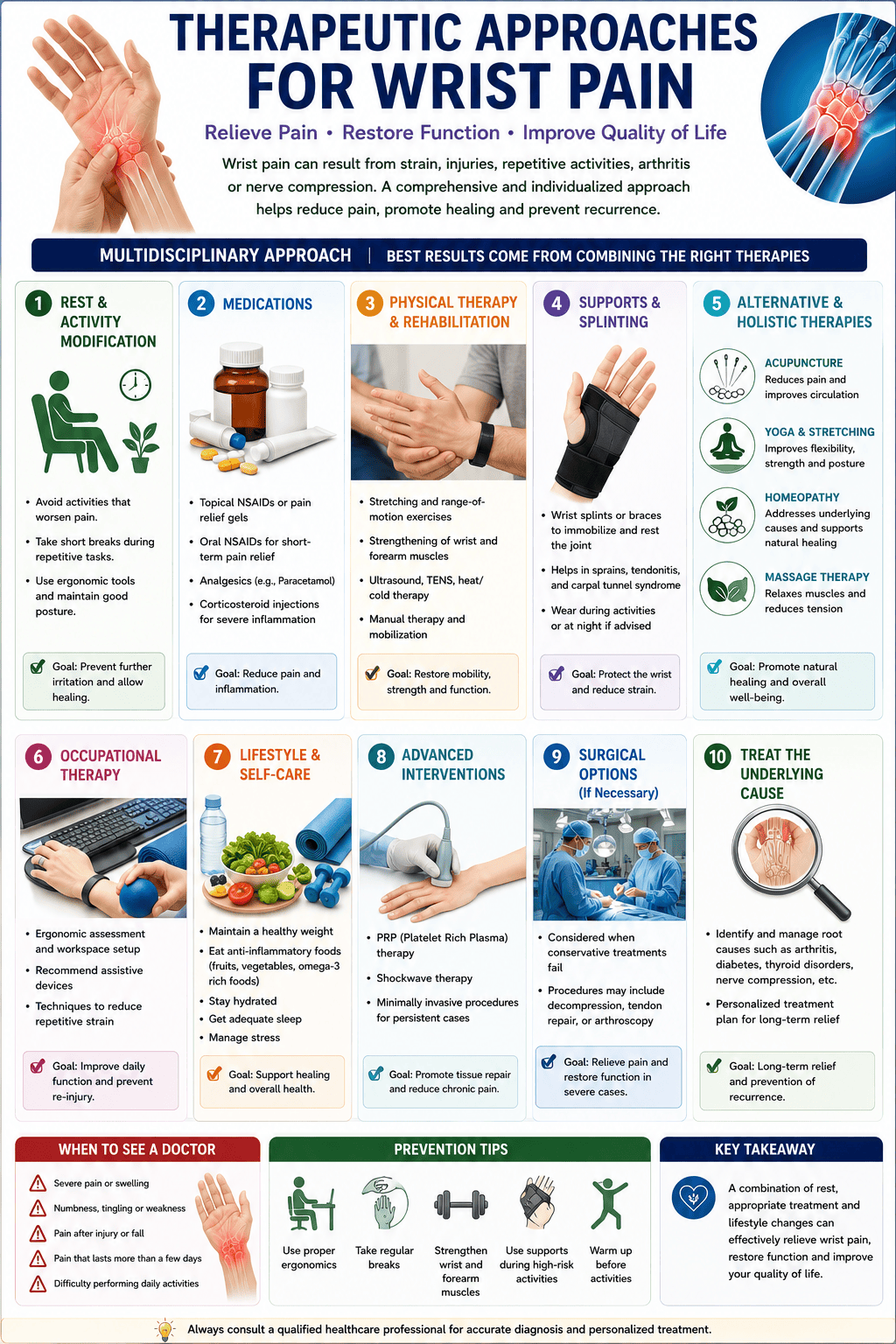
Clinical protocols and corrective interventions
Medical evaluation remains the foundation of effective wrist pain treatment, particularly when symptoms persist beyond a few days or interfere with daily function. A physician may recommend imaging studies such as X-rays or MRI to identify fractures, ligament tears, or degenerative changes contributing to discomfort. In cases of carpal tunnel syndrome, electrodiagnostic testing helps confirm nerve conduction abnormalities, guiding decisions about corticosteroid injections or surgical release. Conservative measures often precede invasive options, with splinting shown to reduce nocturnal symptoms in over half of patients with mild to moderate nerve compression. For repetitive strain injuries, modifying occupational tasks is often as impactful as medical intervention. Surgical correction, reserved for refractory cases, achieves high success rates in restoring function when structural pathology is clearly identified.
Rehabilitation protocols typically integrate targeted exercises prescribed by a hand therapist, focusing on restoring range of motion and strengthening supporting musculature. Post-surgical recovery may involve several weeks of structured therapy, with most patients regaining functional use within three to six months. Emerging evidence supports early mobilization in select cases, reducing stiffness without compromising healing. A mid-sized SaaS firm reported a 30% drop in wrist pain complaints from employees after introducing ergonomic keyboard setups and mandatory micro-breaks, illustrating the value of workplace adjustments. Compliance with prescribed regimens directly influences outcomes, especially in chronic overuse conditions.
Response to intervention varies widely based on etiology, patient adherence, and comorbidities such as diabetes or arthritis. Some individuals experience rapid relief with a single corticosteroid injection, while others require months of physical therapy and lifestyle modification. Patient education on proper wrist alignment during computer use plays a preventive role, reducing recurrence rates. Long-term success often depends on sustained behavioral changes rather than isolated treatments.
Strategies for immediate and long-term relief of carpalgia
Immediate wrist pain relief can often be achieved through a combination of rest, cold therapy, and over-the-counter anti-inflammatory medications like ibuprofen. Applying ice for 15 to 20 minutes every few hours during the first 48 hours helps minimize swelling and numbs acute discomfort. Wearing a supportive brace, especially at night, stabilizes the joint and prevents positions that aggravate symptoms, such as wrist flexion during sleep. For those working at desks, adjusting the keyboard height to keep the wrist in a neutral position reduces strain significantly. These simple steps form the frontline approach to fixing wrist pain without medical intervention.
Long-term management shifts focus toward prevention and structural support. Daily stretching routines, particularly for the forearm flexors and extensors, maintain tissue elasticity and reduce tension on tendons. Progressive strengthening with resistance bands improves joint stability, decreasing the likelihood of re-injury. Ergonomic tools, such as vertical mice or split keyboards, have been adopted by many office workers reporting sustained improvement. Consistent use of these strategies correlates with fewer flare-ups, especially in individuals with prior episodes of tendinopathy or nerve irritation.
Sustained relief often requires integrating both immediate and preventive techniques into daily routines. A data entry clerk with chronic wrist discomfort reported resolution of symptoms after six weeks of consistent bracing, stretching, and workstation adjustments, which avoided the need for injections. Such outcomes highlight the importance of early, multifaceted self-care.
Long-term success in wrist pain treatment depends on recognizing early warning signs and responding before inflammation becomes entrenched. Repetitive microtrauma, often unnoticed, accumulates over weeks or months, particularly in occupations involving fine motor tasks. Incorporating brief stretching intervals every hour disrupts this cycle and preserves joint health. Over-reliance on painkillers without addressing biomechanical causes tends to delay recovery. Those who combine medical guidance with daily ergonomic discipline typically achieve the most durable outcomes in wrist pain relief.
Wrist Pain: Physical Rehabilitation and Rehabilitative Movement
Rehabilitation plays a central role in restoring function and reducing recurrence in wrist pain, particularly when integrated early in the recovery process. Targeted wrist pain exercises improve neuromuscular control, enhance tissue resilience, and retrain movement patterns that may have contributed to injury. A structured program typically progresses from isometric contractions to dynamic resistance, ensuring tissues adapt without overload. Clinical guidelines emphasize patient adherence, with supervised sessions increasing compliance by up to 40% compared to home-only regimens. Movement re-education addresses compensatory mechanics, especially in individuals with repetitive strain histories such as data entry specialists or assembly line workers. Progression must align with tissue healing timelines, which vary by diagnosis—tendinopathy may require six to twelve weeks of consistent loading, while post-surgical protocols follow surgeon-specific milestones. Isolated wrist extensor and flexor strengthening, performed using resistance bands or light dumbbells (1-2 lbs), forms the foundation of most protocols. Eccentric loading, particularly for conditions like De Quervain’s tenosynovitis, has demonstrated improvements in pain and grip strength within four weeks when performed daily. Sensorimotor training, including grip modulation tasks on unstable surfaces, further enhances joint stability.
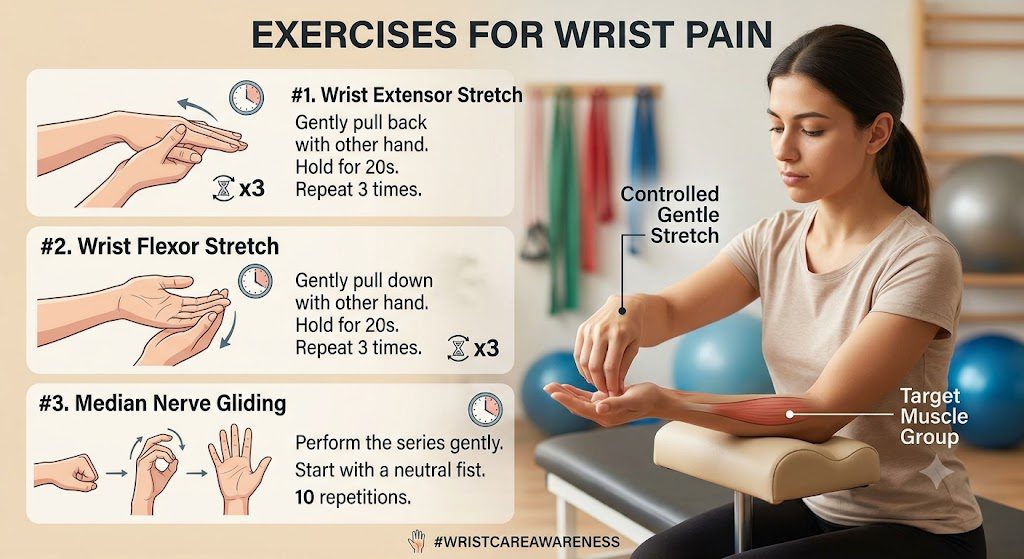
Strengthening Protocols for Joint Stability and Support
Resistance training designed for the wrist’s biomechanics improves joint congruency and reduces excessive strain on ligaments and tendons. Begin with isometric holds-pressing the palm up, down, or sideways against a fixed surface-for 10 seconds, completing three sets of ten repetitions daily. As tolerance increases, incorporate dynamic movements such as wrist curls and reverse wrist curls using a 1-pound weight or resistance band, performing 15 repetitions across three sets. Exercises targeting the forearm pronators and supinators, like resisted forearm rotation with a hammer handle, improve rotational control critical for tool use and fine motor tasks. A mid-sized SaaS firm reported a 30% reduction in work-related wrist complaints after introducing structured strengthening during ergonomic training.
Progressive overload remains important, with resistance increased only when pain-free execution is achieved for two consecutive days. Include intrinsic hand muscle strengthening through finger abduction exercises using a soft ball or therapy putty, which supports overall hand function. Electromyography studies indicate that ulnar deviation strengthening activates the extensor carpi ulnaris at 65-75% of maximal voluntary contraction, making it a key target for ulnar-sided wrist pain. Avoid excessive repetition; exceeding 200 wrist motions per session correlates with symptom exacerbation in tendinopathy cases.
Consistency yields measurable gains-patients performing wrist pain exercises five times weekly report improved grip strength by week six, with electromechanical biofeedback enhancing motor learning. Integrate functional tasks such as controlled cup lifting or keyboard simulation to bridge strength gains into daily use. Isolated strengthening alone is insufficient without integration into coordinated movement patterns, so combine exercises with posture correction and scapular stabilization drills.
Mobility and Range of Motion Training
Maintaining full, pain-free wrist motion prevents joint stiffness and supports fluid hand function during daily activities. Begin with active range of motion drills such as wrist circles, flexion-extension rocking, and radial-ulnar deviation sweeps, completing 10 repetitions in each plane twice daily. These wrist pain exercises preserve capsular mobility and are especially important post-immobilization, where stiffness commonly develops within 48 hours of casting. Use of a wrist pendulum—allowing the arm to hang and gently swing in circular motions—can reduce early post-injury rigidity without overloading healing tissues.
Progress to passive and active-assisted techniques once acute inflammation subsides, applying gentle overpressure at the end-range using the opposite hand or a strap. A dorsal glide mobilization, performed by stabilizing the forearm and shifting the hand dorsally, specifically targets volar capsule tightness linked to chronic flexion limitation. Incorporate tendon gliding exercises, which follow a sequential pattern from hook fist to full fist to straight finger extension, to prevent adhesions in carpal tunnel patients. These movements simulate natural tendon excursion and are recommended at least three times daily during recovery.
Dynamic joint mobilizations using tools like foam rollers or massage balls under the forearm can enhance soft tissue glide during motion. For individuals recovering from distal radius fractures, early mobilization protocols that include wrist pain exercises reduce the need for secondary interventions by up to 25%. Range consistency matters more than intensity—short, frequent sessions yield better long-term mobility than infrequent, prolonged ones. Track progress by measuring goniometric angles monthly, aiming for 80° flexion, 70° extension, and 20-25° in radial and ulnar deviation.
Holistic and Alternative Treatment Modalities for Carpalgia
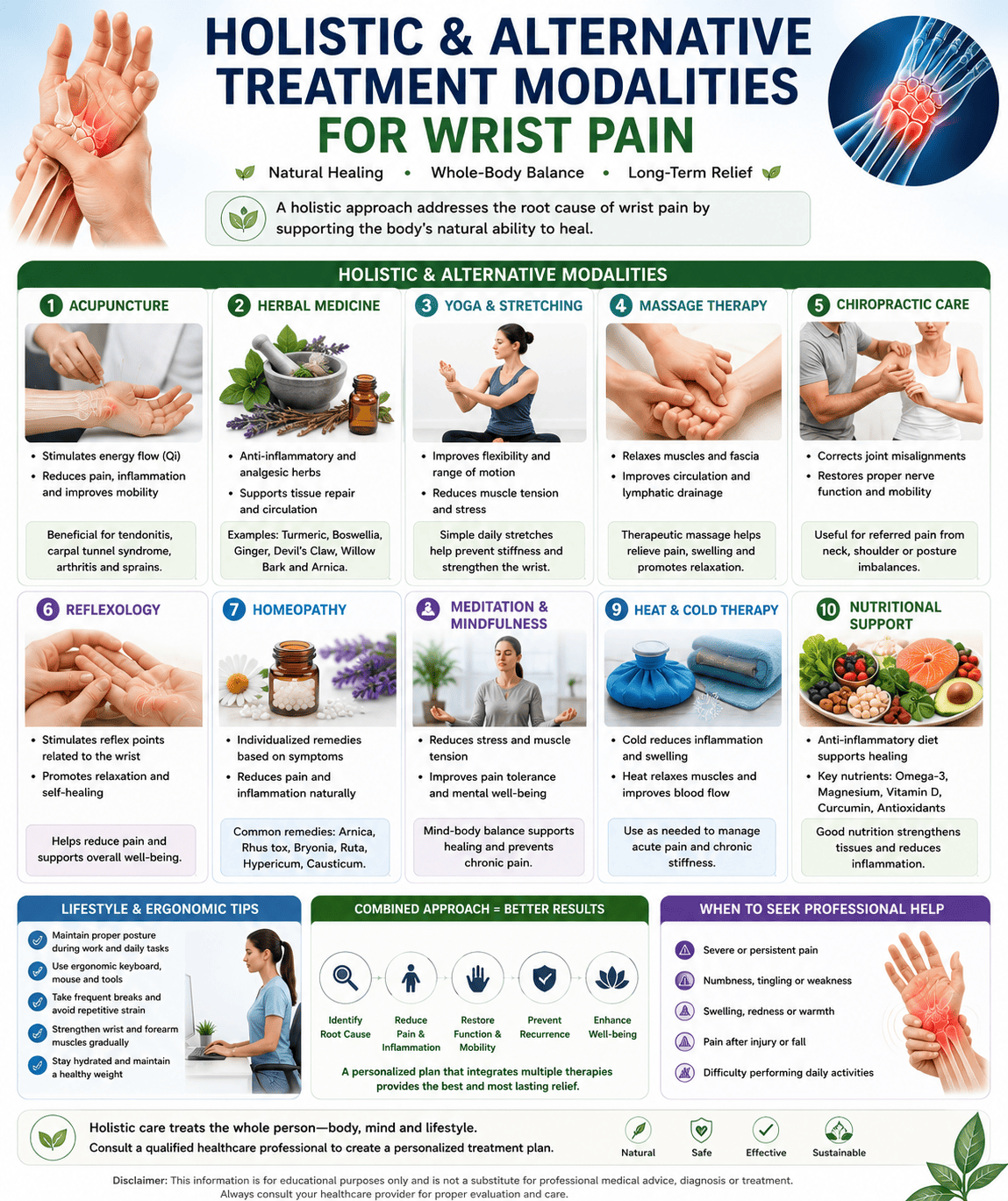
Traditional Chinese Medicine and needle-based therapy for pain in the wrist
Acupuncture for wrist pain is rooted in Traditional Chinese Medicine, where fine needles are inserted at specific meridian points to restore the flow of qi and alleviate discomfort. Clinical observations suggest that treatment protocols often target acupoints such as PC7 (Daling) and LI4 (Hegu), which are believed to influence hand and wrist function.
 Sessions typically last 20 to 30 minutes, with patients undergoing multiple visits over several weeks to assess response. Some individuals report reduced stiffness and improved range of motion following consistent application. The practice is generally well tolerated, with minimal side effects when performed by a licensed practitioner. Evidence from small-scale studies supports its role as a complementary option, particularly for chronic or recurrent symptoms unresponsive to conventional care.
Natural medicinal and homeopathic interventions for carpalgia
Homeopathic remedies for wrist pain are selected based on individual symptom profiles, such as Rhus toxicodendron for pain that improves with motion or Arnica montana for soreness following injury. These preparations are highly diluted and administered in pellet or liquid form, aligning with homeopathy’s principle of “like cures like.” Wrist pain homeopathic treatment emphasizes personalization, with practitioners considering emotional state, aggravating factors, and overall constitution. While scientific validation remains limited, anecdotal reports from integrative clinics describe symptom reduction in patients who integrate these remedies with lifestyle adjustments. Some users note improvements within days, though full effects may take weeks to manifest. 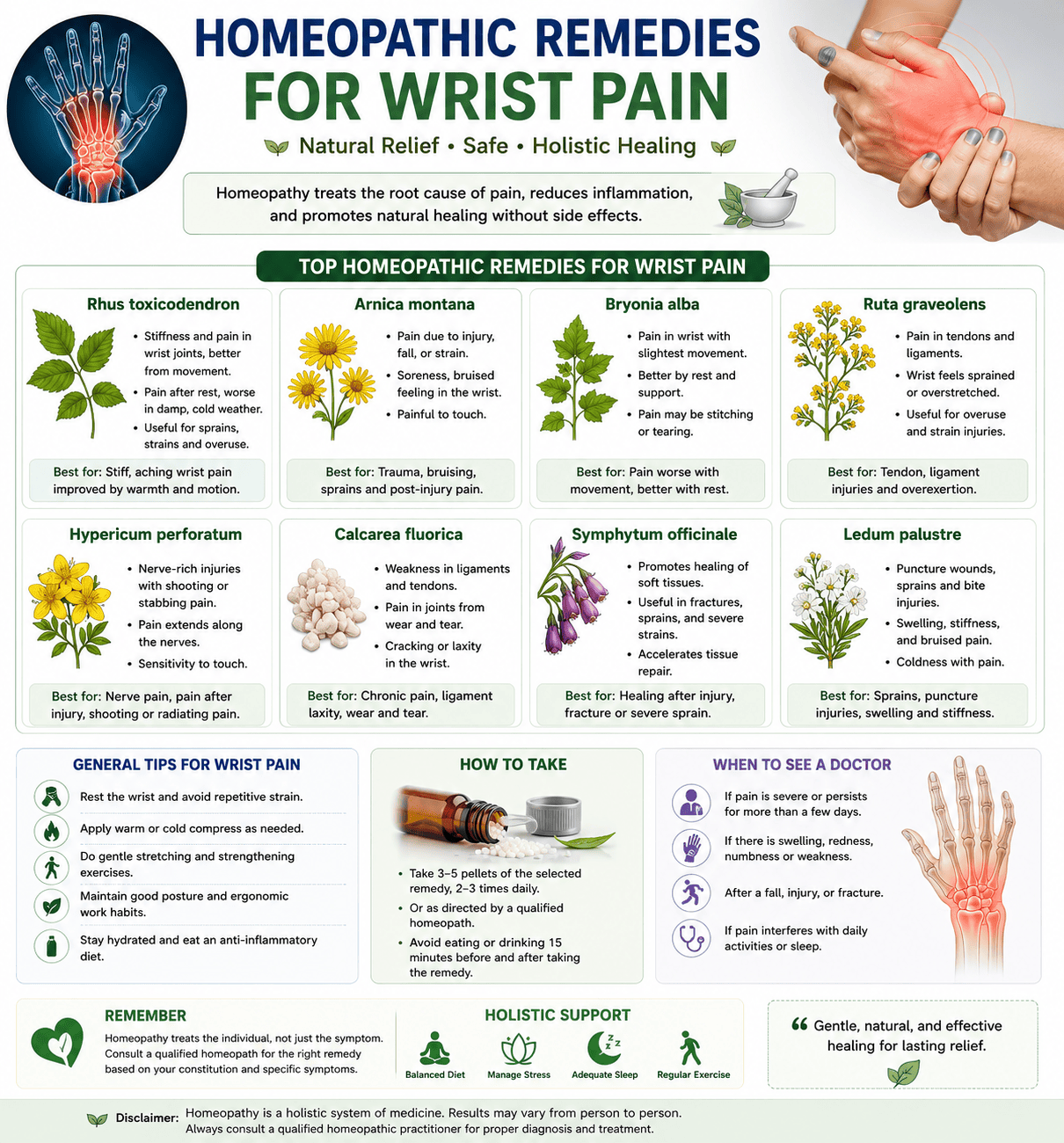
A mid-sized integrative health clinic in Boulder, Colorado, documented cases where patients combined homeopathic protocols with ergonomic modifications, observing sustained relief in select individuals over a six-month period. This approach does not rely on standardized dosing but instead adapts to evolving symptoms, requiring ongoing consultation with a trained homeopath. Common remedies include Bryonia for pain worsened by movement and Causticum for chronic stiffness with a history of overuse. Though not a substitute for medical evaluation, this modality offers an alternative for those seeking non-pharmaceutical support.
Final Words
Wrist pain often stems from repetitive strain, trauma, or underlying conditions such as carpal tunnel syndrome, de Quervain’s tenosynovitis, or osteoarthritis, with symptoms varying by anatomical location and nerve involvement. You may have dorsal wrist discomfort from extensor tendon inflammation, volar pain from median nerve compression, or radial-side tenderness from wrist drop or intersection syndrome. Diagnostic precision requires evaluating specific structures, such as the scapholunate ligament or TFCC, particularly after falls or chronic overuse.
Conservative management typically includes activity modification, splinting, and targeted physical rehabilitation, with exercises improving grip strength and wrist stability over weeks of consistent practice. You might benefit from ultrasound-guided corticosteroid injections for tenosynovitis or receive nerve conduction studies to confirm entrapment neuropathies like carpal tunnel syndrome.
Holistic approaches complement conventional care, incorporating acupuncture, yoga-based stretching, or ergonomic adjustments in daily tasks. A mid-sized SaaS firm reported reduced wrist complaints after introducing sit-stand workstations and biweekly movement breaks. You achieve lasting relief not through isolated interventions but through integrated, patient-specific strategies addressing biomechanics, inflammation, and lifestyle patterns.
FAQ
Q: What are the most common causes of wrist pain?
A: Repetitive strain from activities like typing, assembly line work, or playing musical instruments frequently leads to wrist pain. Overuse can inflame tendons, resulting in conditions such as de Quervain’s tenosynovitis or intersection syndrome. Trauma from falls onto an outstretched hand often causes sprains, fractures, or ligament tears. A mid-sized SaaS firm employee who types for eight hours daily may develop discomfort from sustained wrist extension. Underlying systemic diseases like rheumatoid arthritis or gout can also manifest with wrist involvement, requiring broader diagnostic evaluation.
Q: How does the location of wrist pain help identify the cause?
A: Pain on the thumb side, particularly at the base of the thumb, often points to de Quervain’s tenosynovitis or a scaphoid fracture. The scaphoid, due to its limited blood supply, is prone to avascular necrosis if untreated. Pain along the pinky side may indicate ulnar impaction syndrome or injury to the triangular fibrocartilage complex (TFCC). Dorsal wrist pain could stem from ganglion cysts, extensor tendonitis, or dorsal wrist synovitis. Localizing symptoms guides imaging decisions and targeted interventions.
Q: Can carpal tunnel syndrome be distinguished from other types of wrist pain?
A: Yes, carpal tunnel syndrome typically presents with numbness, tingling, or burning in the thumb, index, middle, and half of the ring finger areas supplied by the median nerve. Symptoms often worsen at night or after prolonged hand use. Unlike mechanical wrist pain, carpal tunnel often does not correlate with visible swelling or point tenderness. Phalen’s and Tinel’s tests are clinical tools used to provoke symptoms. Electromyography can confirm nerve conduction delays in the median nerve at the wrist.
Q: When should someone seek imaging for wrist pain?
A: Imaging is warranted when trauma is involved, especially if there is tenderness at the anatomical snuffbox, which raises concern for a scaphoid fracture. Standard X-rays may miss hairline fractures, so repeat imaging after 10-14 days or an initial MRI may be needed. For chronic or unexplained pain, MRI can reveal ligament tears, TFCC injuries, or early arthritic changes. Ultrasound is useful for evaluating tendon sheaths and detecting tenosynovitis in real time.
Q: Are there non-invasive treatments effective for chronic wrist pain?
A: Wrist bracing, particularly with a thumb spica for de Quervain’s or a carpal tunnel splint, can reduce strain during daily activities. Activity modification, ergonomic adjustments, and targeted rest often halt progression. Corticosteroid injections into the tendon sheath or carpal tunnel provide temporary relief in inflammatory conditions. A violinist with dorsal wrist pain from extensor tendon overuse may benefit from a brief period of immobilization followed by gradual return to practice.
Q: Can acupuncture help with wrist pain?
A: Some patients report reduced pain and improved function after acupuncture, particularly for chronic tendon-related conditions. Needles are placed at specific points along meridians believed to influence energy flow, such as LI4 (Hegu) or SJ5 (Waiguan). While mechanisms are not fully understood, acupuncture may modulate pain signals and promote local circulation. A clinical trial involving office workers with wrist discomfort noted subjective improvement after six weekly sessions, though placebo effects cannot be ruled out.
Q: What role do homeopathic remedies play in managing wrist pain?
Some individuals use homeopathic treatments like Rhus toxicodendron or Arnica montana for joint and soft tissue pain. These remedies are highly diluted and selected based on symptom patterns rather than anatomical diagnosis. While anecdotal reports exist, scientific evidence supporting their efficacy is limited. A person with wrist stiffness that improves with movement might try Rhus tox, whereas someone with bruise-like pain after injury might choose Arnica. Use should complement, not replace, conventional evaluation and care.
Holistic Treatments for Wrist Pain in Philadelphia
The treatment for wrist pain is mostly palliative. Home remedies for wrist pain are as effective as pharmaceutical drugs.
If you suffer from pain in your wrist and prefer to treat it naturally, contact the Philadelphia Holistic Clinic and schedule your first appointment with Victor Tsan. Victor Tsan will examine you and propose the most effective treatment customized for your form of pain.