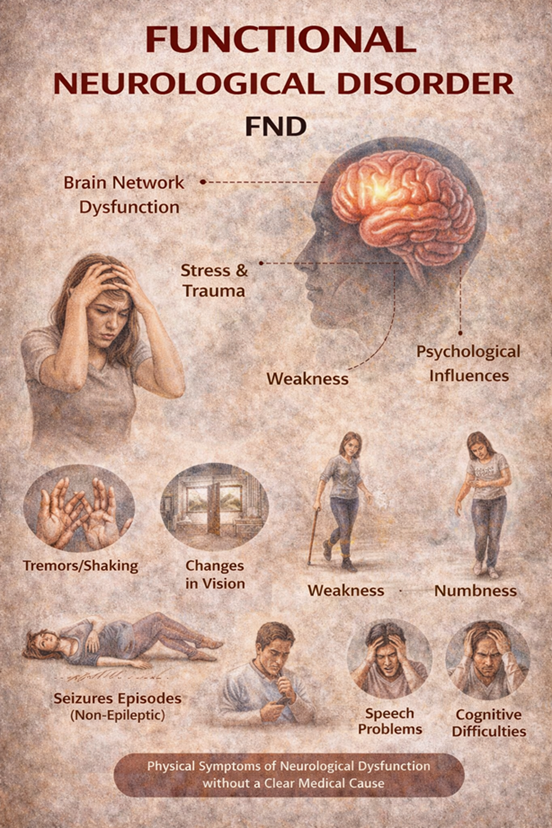
Functional Neurological Disorders
Functional Neurological Disorders (FND) is a common neurological condition, accounting for 5% to 15% of new outpatient neurological evaluations, making it the second most frequent reason after headaches. You experience FND as a real, involuntary, and disabling brain-based condition; functional MRI studies show a genuine brain-body disconnect. This disorder involves how your brain sends and receives information without structural damage.
Key Takeaways:
* FND is a common and severe neurological disorder, affecting hundreds of thousands in the US and UK. It is the second most frequent reason for new outpatient neurological evaluations, after headaches.
* FND is a “rule-in” diagnosis, identified by specific clinical signs such as Hoover’s Sign for leg weakness or tremor entrainment for functional tremor, rather than just ruling out other conditions.
* FND is a real, brain-based condition where the brain struggles to send and receive signals properly. Symptoms are involuntary, unconsciously controlled, and real, not just “all in your head.”
* Treatment for FND requires an individualized, multidisciplinary approach. This often involves physical therapy to “retrain the brain” and psychotherapy, like cognitive behavioral therapy (CBT), with strong communication between providers and patients being vital.
* FND significantly impacts patients’ lives, with a mortality rate 2.5 times higher than the general population and annual costs per US patient reaching $86,000 in medical bills and lost productivity.
* While psychological factors like stress and anxiety can trigger or worsen symptoms, FND is a complex neurological disorder. It can also co-occur with other neurological conditions like epilepsy or Parkinson’s disease.
* Research and understanding of FND are progressing, with a “renaissance of interest” in the medical community. Neuroimaging advancements are revealing measurable alterations in the brain, transforming FND from a poorly comprehended disorder to one with an expanding scientific foundation.
FND: Causes and Symptoms
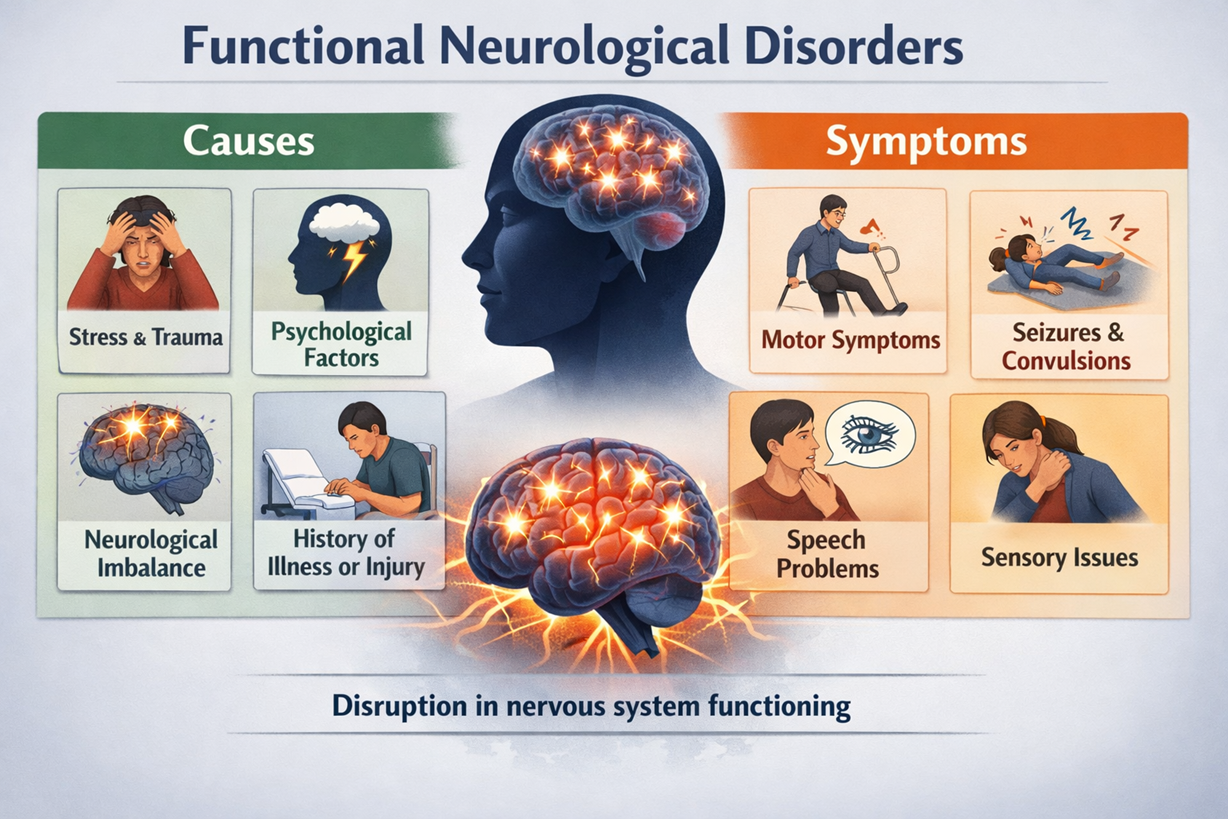
While the exact cause of Functional Neurological Disorders (FND) is complex and not fully understood, it is generally considered a problem with how the brain sends and receives signals, rather than a structural or disease-based issue. Here is a comprehensive overview of the potential causes and common symptoms:
Potential Causes and Risk Factors
FND is often viewed through a biopsychosocial model, meaning multiple interacting factors can play a role in its development:
Biological: This includes pre-existing neurological conditions, genetic vulnerabilities, and the way your brain processes information and signals. It can often be triggered by a physical event, such as an injury, surgery, or serious infection.
Psychological: Psychological stress and significant life events (both past and current) are well-documented contributors. For some, a history of trauma or difficult childhood experiences can be a factor.
Social: Social pressure, financial strain, and coping mechanisms derived from your social environment can influence vulnerability and how symptoms manifest.
Common Symptoms
Because FND is a problem with the function of the nervous system, symptoms can vary widely and mimic organic neurological diseases, but they are categorized based on the functional deficit:
Movement Disorders: These are the most prominent symptoms and include functional weakness, tremors (often with specific patterns like distractibility), dystonia (muscle spasms), and gait disorders (such as an unsteady or ‘drunken’ walk).
Sensory Symptoms: Patients may experience numbness or tingling in a limb (sometimes with a very specific, non-anatomical pattern), changes in hearing or taste, or blurred vision.
Weakness & Paralysis: FND can cause significant weakness that doesn’t follow typical nerve distributions, up to and including functional paralysis of a limb.
Seizure-like Episodes: Known as dissociative seizures (or non-epileptic seizures), these involve movements and loss of consciousness that can look identical to epileptic seizures but lack the abnormal electrical activity in the brain.
Cognitive & Other: “Brain fog,” severe fatigue, difficulty with concentration, and memory problems are very common associated symptoms.
It is important to remember that these symptoms are genuine and debilitating; they are not “all in the head” and often require a multidisciplinary treatment team.
Functional Neurological Disorders: Clinical Epidemiology and Demographic Impact
Global prevalence and incidence rates
You might be surprised to learn the sheer scale of Functional Neurological Disorders. In the United States alone, FND is estimated to affect between 250,000 and 500,000 individuals, while in the UK, the numbers range from 50,000 to 100,000 people. These figures highlight a significant population living with this complex condition, underscoring its widespread presence across developed nations.
The annual incidence rate further illustrates the ongoing emergence of new cases. FND diagnoses 10 to 22 new cases per 100,000 people annually. This consistent rate means a steady influx of individuals seeking diagnosis and treatment, putting pressure on healthcare systems to adapt and provide specialized care.
A recent 2022 study conducted in Aberdeen offered a revealing insight into FND’s prevalence within outpatient settings. Researchers discovered that a striking 15% of all new outpatients presented with symptoms consistent with Functional Neurological Disorders. This finding suggests FND is far more common in clinical practice than many might assume, often masquerading as other neurological conditions.
Socioeconomic burden and patient mortality
Understanding the demographic patterns of FND reveals a particular vulnerability among certain groups. The disorder primarily impacts young women, generally in their 20s and 30s, who frequently experience substantial disruptions in their lives during a critical phase of development. While this demographic is most impacted, a concerning trend shows that pediatric incidence is rising, with rates now at 1–18 per 100,000 children, indicating a growing challenge for younger populations.
The human cost of FND extends beyond daily symptoms, as patients face a mortality rate 2.5 times higher than the general population. This stark statistic underscores the serious implications of living with FND, suggesting that the condition, directly or indirectly, contributes to a shortened lifespan for those affected. This increased mortality calls into question comprehensive and early intervention strategies.
Beyond the personal toll, FND imposes a substantial financial burden on healthcare systems. The U.S. healthcare system alone shoulders an annual $2 billion cost attributed to FND. For individuals, the economic impact is equally staggering, with individual patient costs reaching up to $86,000. These figures demonstrate that FND is not just a medical challenge but also a significant economic one, demanding resources for diagnosis, treatment, and ongoing support.
The considerable financial drain on the U.S. healthcare system, reaching $2 billion annually, reflects the extensive medical interventions and long-term care required for FND patients. These costs encompass everything from specialist consultations and diagnostic tests to rehabilitation therapies and potential hospitalizations. The individual cost of $86,000 further illustrates the immense personal financial strain, often leading to lost income, increased medical bills, and reduced quality of life for patients and their families.
Pathophysiology and the Neuropsychiatric Interface of FND
Understanding the origins of Functional Neurological Disorders requires a deep examination of their complex pathophysiology. Progress in neuroimaging and neurophysiology has uncovered measurable alterations in brain network connections, offering definitive proof of the disorder’s biological foundation. This scientific progress directly challenges the historically constructed divide between neurology and psychiatry, firmly establishing Functional Neurological Disorders at the intersection of both disciplines. The intrinsic characteristics of FND necessitate a reevaluation of antiquated medical paradigms. This condition exemplifies the intrinsic connection between mental and physical health, illustrating that symptoms devoid of structural damage are not merely “psychosomatic.” Recognizing this interconnectedness is necessary for accurate diagnosis and effective treatment strategies. You will observe that the preferred terminology has significantly shifted over time, moving from the outdated label of “Conversion Disorder” to the more accurate and less stigmatizing “Functional Neurological Disorders.” This change reflects a more sophisticated understanding, one that embraces the biopsychosocial model and the theory of predictive processing to explain the intricate mechanisms at play.
Neuroimaging and brain network connectivity
Modern neuroimaging techniques offer compelling insights into the brain’s activity in individuals with FND. These sophisticated tools can detect quantifiable changes in brain network connections, demonstrating that the brain’s circuitry is indeed operating differently. Such findings provide objective evidence of neurological dysfunction, even in the absence of traditional structural lesions. Physiological studies further complement these imaging discoveries, revealing alterations in how the brain processes information and generates motor or sensory outputs. These measurable differences in brain function underscore the biological reality of FND, moving beyond previous assumptions that symptoms were purely psychological. This objective data helps validate the experiences of those living with the disorder. You can observe that these advancements in neuroimaging and neurophysiology are critical for destigmatizing FND. By showing concrete, quantifiable changes in brain network connections, researchers are building a stronger case for FND as a legitimate neurological condition, deserving of the same scientific rigor and medical attention as other disorders.
The biopsychosocial model provides a holistic framework for comprehending Functional Neurological Disorders, recognizing the interaction of biological, psychological, and social factors in their emergence and expression. This model moves beyond simplistic explanations, recognizing that FND is not solely attributable to a single cause but rather arises from a complex interaction of various influences. It helps explain why different individuals might present with similar symptoms despite diverse life experiences. Applying the theory of predictive processing provides a more profound understanding of the neurological mechanisms underlying FND symptoms. The theory suggests that FND disrupts the brain’s constant “best guesses” about sensory cues. The brain’s internal models of the body and the environment may be inaccurate, leading to a mismatch between expectation and actual sensory input or motor output. You will discover that this disruption in predictive processing can manifest as a variety of symptoms, from functional weakness and tremors to non-epileptic seizures. When the brain’s “best guesses” about sensory cues become disrupted, it can lead to a disorganization in how the brain controls movement or interprets sensations, ultimately resulting in the often perplexing and disabling symptoms characteristic of FND.
Risk Factors and Contemporary Influences of FND
To diagnose and treat Functional Neurological Disorders (FND) correctly, it is important to know what causes them. While the presentation of FND can vary widely, certain patterns and influences have emerged recently, shedding light on the complex interplay of biological, psychological, and social elements. You will observe that these influences can range from individual vulnerabilities to broader societal trends, all contributing to the disorder’s manifestation. Examining these risk factors provides a more comprehensive picture of FND. You will discover that a significant portion of patients have a history of prior psychiatric disorders, such as depression or anxiety, which can act as predisposing factors. However, the absence of such history in a substantial subset of individuals highlights the complexity of an FND, suggesting that other mechanisms are at play. Recent research has also identified contemporary influences that appear to be shaping the incidence and presentation of FND. These newer trends include both physiological events and widespread social phenomena. You will see how these modern developments are contributing to a “renaissance of interest” in FND, prompting further investigation into its underlying causes and potential triggers over the last two decades.
Psychological vulnerabilities and the trauma-free subset
You might expect a strong link between FND and psychological trauma, and while this connection certainly exists for many, it’s not universally true. Two-thirds of patients present with prior psychiatric disorders like depression or anxiety, indicating that these conditions can indeed act as significant psychological vulnerabilities. These pre-existing mental health challenges can create a fertile ground for FND symptoms to emerge. However, you should also be aware that 30% of patients have no history of trauma, challenging the singular focus on traumatic experiences. This substantial subset of individuals indicates that FND may develop through alternative mechanisms, potentially including chronic stress, genetic predispositions, or particular neurological vulnerabilities that are not inherently linked to a prior traumatic experience. This highlights the complexity of the disorder and the need for a broader understanding of its origins beyond a simple cause-and-effect relationship with trauma. Considering these statistics, you will recognize that psychological vulnerabilities extend beyond explicit trauma. Factors such as chronic stress, personality traits, and an individual’s coping mechanisms for life’s challenges can all play a role in the development of FND, even in the absence of a discernible traumatic history. This emphasizes the importance of a holistic assessment that considers an individual’s entire psychological profile.
Recent trends point to new and emerging triggers for FND, moving beyond traditional understandings. You will discover that FND has been observed co-occurring with migraine in some individuals, suggesting a potential shared neurobiological pathway or a heightened susceptibility in those prone to migraines. This association necessitates additional examination to elucidate the specific mechanisms at play. Another contemporary influence is the emergence of FND after COVID-19 vaccinations. While the exact link is still being researched, these cases represent a novel presentation of the disorder, prompting questions about the body’s response to immunizations and potential neurological sequelae. You will see that this phenomenon adds another layer of complexity to the understanding of FND’s triggers. Social media platforms, particularly TikTok, also present a concerning contemporary influence. There is evidence suggesting these platforms may contribute to the spread of FND symptoms among children and adolescents. This phenomenon, often referred to as “mass sociogenic illness,” highlights the power of social contagion in symptom manifestation. This social media influence is particularly pronounced among younger demographics, where the rapid dissemination of symptom presentations can lead to observational learning and the development of similar symptoms in susceptible individuals. The “renaissance of interest” in FND over the last two decades has, in part, been fueled by these modern triggers, drawing increased attention to the disorder’s evolving clinical picture.
Multidisciplinary Treatment for Functional Neurological Disorders and Therapeutic Interventions
Addressing Functional Neurological Disorders (FND) demands an individualized and comprehensive strategy, recognizing the disorder’s complex nature. This integrated approach brings together a team of specialists, including neurologists, psychiatrists, and a variety of therapists, all working in concert to develop a tailored treatment plan for you. The goal is to address the unique manifestations of your FND, ensuring that all facets of your condition receive appropriate attention. Effective treatment often combines traditional medical interventions with innovative therapeutic techniques. You will find that physical rehabilitation is a cornerstone for motor symptoms, while psychotherapy, particularly Cognitive Behavioral Therapy (CBT), proves highly effective for conditions like functional seizures. The collaboration among your care team ensures that your treatment evolves with your progress, continuously adapting to your specific needs and responses. Newer technologies and specialized therapies are also expanding your options. Digital therapy platforms and tele-physiotherapy are emerging as convenient and accessible tools, complementing in-person care. You might also explore specialized treatments such as naturopathic approaches, acupuncture, and hypnotherapy, which can offer additional avenues for managing symptoms and improving your overall well-being.
Physical rehabilitation and motor pattern retraining
Physical rehabilitation plays a central role in managing the motor symptoms of FND, focusing on a unique process of “retraining the brain.” This therapy specifically aims to help you unlearn the abnormal movement patterns that have developed due to your condition. Through targeted exercises and guided movements, your brain is encouraged to re-establish healthy, typical motor responses. Therapists will work closely with you to identify and correct dysfunctional movements, helping your body relearn how to move efficiently and without the interference of FND symptoms. This process is not just about strengthening muscles; it’s about re-establishing the correct neurological pathways for movement. You will find that consistent engagement in these exercises is key to achieving lasting improvements in your mobility and coordination. The personalized nature of physical rehabilitation means your program will be specifically designed to address your particular symptoms, whether they involve tremors, gait disturbances, or weakness. Your therapist will guide you through a series of progressive exercises, gradually challenging your system to reinforce proper movement and reduce the impact of FND on your daily life.
Psychotherapy, CBT, and digital health platforms for FND
Psychotherapy, particularly Cognitive Behavioral Therapy (CBT), stands out as an effective intervention for various manifestations of FND, especially for functional seizures. This therapeutic approach helps you understand the connection between your thoughts, feelings, and physical symptoms, providing strategies to manage and reduce the frequency and intensity of your episodes. You will learn coping mechanisms and techniques to reframe your responses to triggers. Emerging digital therapy platforms are now offering innovative ways to access psychotherapeutic support. These platforms can provide structured programs and exercises that complement in-person therapy, making consistent engagement more convenient for you. You can often access these resources from the comfort of your home, integrating therapy seamlessly into your daily routine. Tele-physiotherapy is another valuable tool that leverages technology to deliver rehabilitation services remotely. This allows you to receive expert guidance and support for your physical symptoms without the need for constant clinic visits. You can maintain your progress and receive real-time feedback from your therapist, ensuring continuity of care regardless of your location. You will find that the integration of digital health platforms and tele-physiotherapy significantly enhances the accessibility and flexibility of your treatment plan. These tools provide continuity of care and empower you to actively participate in your recovery journey, offering resources and support whenever and wherever you need them.
Acupuncture for FND
- Targeted Benefits: It may help manage chronic pain, tremor, and motor symptoms by focusing on specific nerve-stimulating acupoints.
- Treatment Approaches: Both traditional Chinese medicine and modern neurofunctional acupuncture (using scalp and limb points) are utilized.
- Role in Care:It is regarded as a holistic, complementary option—meaning it is best used alongside conventional treatments rather than as a primary replacement.
Efficacy: A Majority of patients report significant relief from sensory issues and pain.
- Multidisciplinary Approach: The best approach involves combining acupuncture with physiotherapy, occupational therapy, and cognitive-behavioral therapy.
- Individualized Care: FND symptoms vary widely, so treatment should be tailored by an experienced practitioner.
Homeopathic Medicine for Functional Neurological Disorders

- Individualized Remedies: Homeopathy focuses on the whole person, matching remedies to specific symptoms, such as Gelsemium for drowsiness or lack of coordination.
- Specific Remedies Mentioned: Studies have explored Hypericum perforatum for neuralgia and Gelsemium sempervirens for behavioral/neurological symptoms.
- Complementary Use: Homeopathy is listed alongside acupuncture and massage as a complementary option for retraining the brain in FND, which should be part of a tailored, multidisciplinary treatment plan.
Hypnotherapy for Functional Neurological Disorders
Hypnotherapy is a safe, effective, and evidence-based adjunct treatment for Functional Neurological Disorders (FND), often reducing symptom severity—such as motor symptoms, tremor, and pain—by helping patients re-engage with normal neural functioning. Studies indicate significant improvements for over 80% of patients, with many experiencing partial or complete resolution of symptoms through focused attention and suggestion.
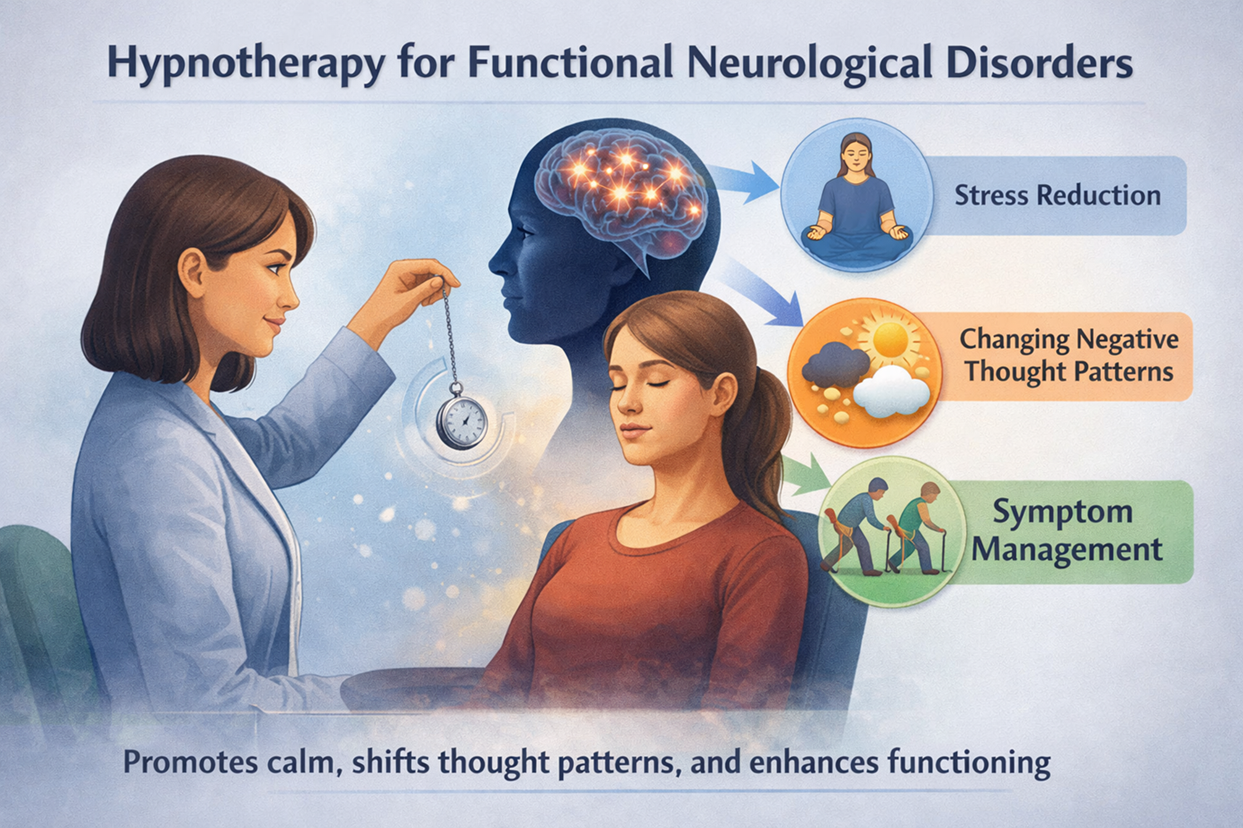
- Mechanism of Action: Hypnosis acts as a controlled attentional state, utilizing a voluntary, focused, or dissociated state to modify how the brain processes symptoms. It leverages “suggestion” to help the brain bypass malfunctioning pathways.
- Treatment Approach: Often, a combination of hypnosis and catalepsy induction (inducing muscular rigidity) is used to create a “competing” action that replaces the involuntary FND movement with a new, controlled movement.
- Effectiveness: Studies show high effectiveness, with one pilot study noting significant improvements in symptom severity (large effect size) after 10 sessions, whereas waitlist controls showed no change.
- Treatment Duration: While some cases have shown significant improvement in a single session, more lasting results often come from multiple sessions (e.g., 10-session protocols).
- Application Areas: Hypnotherapy is used to address a wide range of FND symptoms, including motor symptoms, pain, and anxiety associated with the condition.
- Rehabilitation Aid: It is often used as a tool to facilitate engagement with physical therapy and rehabilitation.PMC +8
- Limited Evidence: There is little experimental research supporting homeopathy for FND, and many studies lack placebo-controlled arms, making efficacy difficult to establish.
- Scientific Standing: Major health bodies (e.g., in Australia) have concluded that homeopathy is ineffective for treating health conditions and recommend against its use for serious or chronic illnesses.
- Safety Warning: It is crucial to consult a registered health practitioner and inform your doctor, as relying on homeopathy alone may delay effective, evidence-based treatments for FND.
Functional Neurological Disorders: Clinical Realities and Patient Misconceptions
Addressing the Myth of Voluntary Symptom Control
You might encounter the persistent misconception that FND symptoms are somehow fabricated or “all in your head.” This simply isn’t true. The reality is that FND symptoms are genuinely involuntary and entirely beyond your conscious control. Understanding this crucial fact is the first step towards dispelling the harmful stigma often associated with the condition. Medical science now definitively debunks the idea that you can simply “will away” your symptoms. Your body’s neurological pathways are experiencing a real, albeit complex, dysfunction. Acknowledging the involuntary nature of FND is crucial for both patients seeking help and medical professionals providing care. Recognizing this involuntary aspect helps shift the narrative from blame to understanding. You are not choosing to experience these symptoms; they are a genuine manifestation of a neurological disorder. This perspective is fundamental for compassionate and effective treatment approaches.
Long-Term Prognosis and Quality of Life Challenges for Patients with FND
Despite a recent surge in interest and research into FND, the long-term prognosis for many patients remains a significant challenge. You may find that even after various treatments, your condition either stays the same or, in some cases, even worsens. Such a situation can be a disheartening reality for individuals seeking recovery. The disability experienced by those with FND is often comparable to that found in other major neurological conditions. This characteristic can profoundly impact your daily life, affecting your ability to work, participate in social activities, and maintain your independence. We should not underestimate the severity of these challenges. Historically, the medical community has, unfortunately, failed many FND patients, leaving them without adequate support or understanding. However, there is a growing and vital emphasis on science-based support today, acknowledging that psychological factors are not relevant for all patients and focusing on the neurological underpinnings of the disorder. Many individuals with FND face ongoing struggles with their quality of life, including persistent pain, fatigue, and functional limitations that significantly impact their personal and professional lives. The path to managing FND is often long and requires a multifaceted approach to address the broad spectrum of challenges you might encounter.
Final Words
Drawing together the threads of understanding, you now see Functional Neurological Disorders not as a mystery, but as a condition rooted in real, physical changes within the nervous system. The evolving understanding of FND marks a profound shift toward science-based answers, finally removing the historical stigma that once shadowed those living with this disorder. This modern perspective allows for more accurate diagnoses and, importantly, paves the way for effective, evidence-based treatments that address the unique challenges you face. You play an active role in your recovery. Strong, two-way communication between you and your healthcare providers is necessary for navigating the complexities of FND. This collaborative approach ensures your concerns are heard, your symptoms are understood, and your treatment plan is tailored to your specific needs. You deserve to receive multidisciplinary support, encompassing therapies like physiotherapy, occupational therapy, and psychotherapy, all working in concert to help you manage your symptoms and improve your quality of life. The medical community is increasingly recognizing FND as a legitimate neurological condition, a recognition that directly benefits you. This changing medical landscape means you can expect a more empathetic and informed approach from healthcare professionals. You are not alone in this journey, and the ongoing advancements in research and clinical practice promise a future where individuals with FND receive the comprehensive care and understanding they need to live fulfilling lives.
Q: What are Functional Neurological Disorders (FND)?
A: Functional Neurological Disorders (FND) is a common neurological condition where the brain struggles to send and receive information effectively to and from different body parts. This occurs without any structural damage to the brain. FND is considered a neuropsychiatric disorder, existing at the intersection of neurology and psychiatry. It is not “all in your head”; symptoms are real, involuntary, and disabling. Functional MRI studies show a genuine brain-body disconnect in individuals with FND.
Q: How common is FND and who does it typically affect?
A: FND is quite common, accounting for 5% to 15% of new neurological consultations. In the U.S., an estimated 250,000-500,000 people live with FND, and in the UK, 50,000-100,000 are affected. The incidence is estimated at 10-22 cases per 100,000 people annually. FND symptoms are more likely to affect young women, though men can also develop the disorder. The average age for FND development is in the 20s and 30s. Pediatric FND incidence is estimated between 1 and 18 per 100,000 children.
Q: How is FND diagnosed, and what are some common misconceptions about it?
A: FND is a “rule-in” diagnosis, meaning it is made based on specific clinical signs rather than by excluding other conditions. Examples include Hoover’s Sign for functional leg weakness or tremor entrainment for functional tremor. Investigations, such as tremor analysis, can assist in a positive diagnosis and also help rule out other neurological conditions. A significant misconception is that FND is purely a psychological problem. While psychological factors like stress or anxiety can trigger or worsen symptoms, FND is a neurological disorder involving complex biological, psychological, and social mechanisms. Another common myth is that there is no treatment for FND, or that symptoms are voluntary; in fact, symptoms are involuntary, and many people improve with tailored multidisciplinary treatment.
Q: What are the recommended treatments for FND?
A: Treatment for FND requires an individualized, multidisciplinary approach. This team often includes neurologists, psychiatrists or psychologists; physiotherapists; occupational therapists; and speech and language therapists. Key treatment approaches include physical therapy and psychotherapy. Physical rehabilitation aims to “retrain the brain” to unlearn abnormal movement patterns and relearn normal ones. Psychotherapy, including mindfulness-based cognitive behavioral therapy (CBT), can be a main treatment for some patients, particularly those with functional seizures. Medications may also help with specific symptoms. Strong, two-way communication between healthcare providers and patients enhances understanding and active involvement in treatment.
Q: Do alternative treatments like naturopathy, homeopathy, acupuncture, or hypnotherapy help with FND?
A: The medical community primarily recommends evidence-based treatments for FND, such as physical therapy and psychotherapy. While some individuals investigate naturopathic treatments, homeopathic remedies, acupuncture, or hypnotherapy, there is multiple scientific evidence specifically supporting their effectiveness for FND. A biopsychosocial approach, which considers biological, psychological, and social factors, is the recognized framework for FND treatment. Patients considering alternative therapies should discuss them with their healthcare providers to ensure they do not interfere with established treatments and to avoid potential risks.
Q: What is the prognosis for someone diagnosed with FND?
A: While FND is not typically curable, many people experience significant improvement with tailored multidisciplinary treatment. Studies indicate that a majority of FND patients may remain the same or worsen after treatment, and they often experience disability and impaired quality of life comparable to other neurological conditions. The prognosis varies widely among individuals, depending on factors such as symptom duration, presence of other conditions, and access to specialized care. Early diagnosis and intervention are generally associated with better outcomes.
Q: How does FND impact the healthcare system and individuals?
A: FND creates a significant burden on the healthcare system, estimated at $2 billion per year in the U.S. Annual costs per U.S. patient for medical bills and lost productivity can reach $86,000. Individuals with FND face a mortality rate 2.5 times higher than the general population. The disorder also challenges the traditional division between psychiatry and neurology, highlighting the interconnectedness of physical and mental health. There has been a “renaissance of interest” in FND over the past two decades, with increasing recognition within neurology and a growing understanding of its complex mechanisms through advances in functional neuroimaging.
Natural Treatments for Functional Neurological Disorders in Philadelphia
While Western medicine doesn’t have a success rate in FND treatment, we at the Philadelphia Holistic Clinic perform treatment for functional neurological disorders using a combination of acupuncture, homeopathy, hypnotherapy, reiki, and ayurvedic herbal medicines. Our success rate is way above average in the industry.
To schedule an appointment for an evaluation and discuss the optimal POTS treatment plan for you with Victor Tsan, contact our clinic at (267) 403-3085 or use our automatic online application.