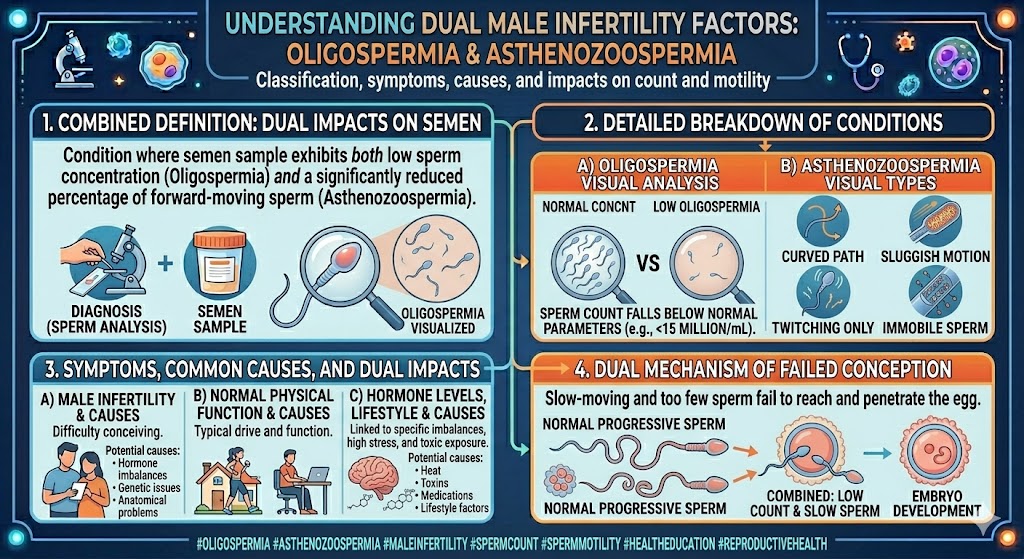
Oligospermia (Low Sperm Count) and Asthenozoospermia (Slow-Moving Sperm)
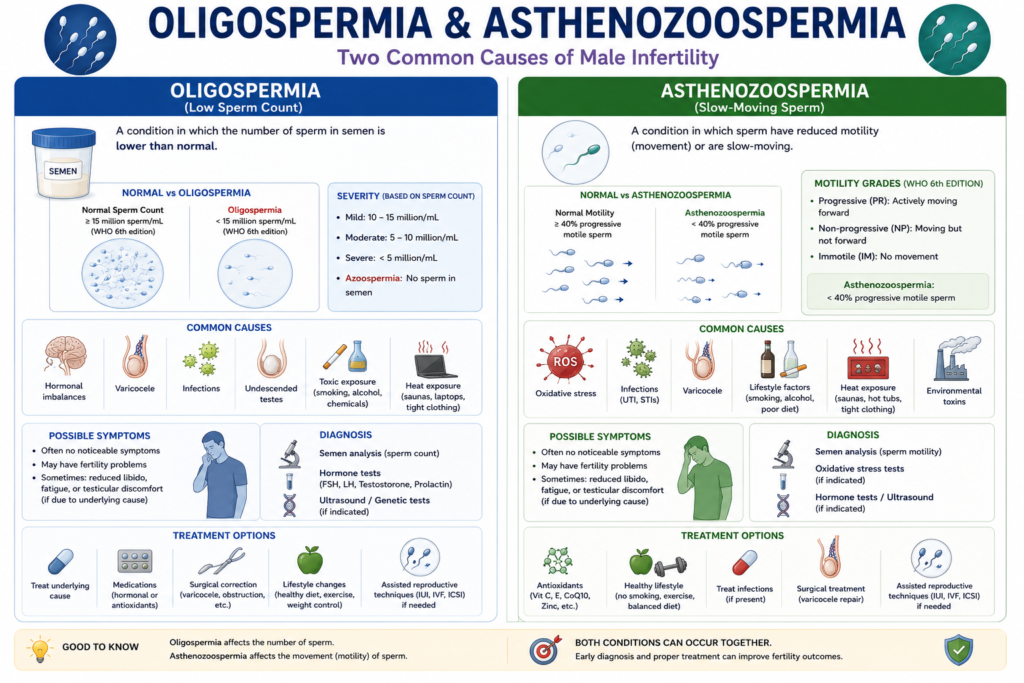
- Oligospermia or Oligozoospermia: A sperm concentration of less than 15 million sperm per milliliter of semen.
- Asthenospermia (or Asthenozoospermia): Less than 32% of sperm show progressive motility (swimming actively forward), or less than 40% are motile overall.
- Oligoasthenospermia: Frequently, men experience a combination of both low count and poor motility, often referred to as OATS syndrome (oligoasthenoteratozoospermia).
- Varicoceles: Enlarged veins in the scrotum that can raise testicular temperature and affect sperm production.
- Infections: Seminal tract infections or inflammatory processes (like mumps) that obstruct the tract or directly kill sperm.
- Hormonal Imbalances: Deficiencies in testosterone or issues with the endocrine system.
- Lifestyle & Environmental Factors: Smoking, heavy alcohol consumption, obesity, stress, and exposure to environmental toxins or heat.
- Genetic Factors: Specific genetic anomalies or chromosomal issues.
- Lifestyle Modifications: Quitting smoking, reducing alcohol intake, maintaining a healthy weight, and keeping the testicles cool can improve parameters.
- Medications & Supplements: Hormonal therapies, antioxidants, or antibiotics may be prescribed to address underlying infections or endocrine issues.
- Surgery: Varicoceles can often be repaired surgically to potentially improve sperm quality.
- Assisted Reproductive Technology (ART): If natural conception is difficult, fertility specialists may use procedures such as Intrauterine Insemination (IUI) or In Vitro Fertilization (IVF) with Intracytoplasmic Sperm Injection (ICSI), where a single sperm is injected directly into an egg.

Key Takeaways:
- Oligospermia (low sperm count) and asthenozoospermia (slow-moving sperm) are common male fertility issues that can occur independently or together, often discovered during fertility evaluations when a couple has difficulty conceiving.
- Medical conditions such as varicocele, infections (like mumps orchitis), hormonal imbalances, diabetes, and genetic disorders can impair sperm production and motility, contributing to both low count and poor movement.
- Certain medications, including anabolic steroids, chemotherapy drugs, antifungals, and some antidepressants, may negatively affect sperm count and motility, sometimes leading to temporary or permanent changes in semen parameters.
- Lifestyle and environmental factors such as smoking, excessive alcohol use, obesity, prolonged heat exposure (e.g., hot tubs), and exposure to industrial chemicals or pesticides are linked to reduced sperm quality.
- Men with oligospermia or asthenozoospermia often do not experience obvious symptoms; the main sign is difficulty achieving pregnancy, though some may have hormonal or anatomical clues like low libido or testicular swelling.
- Natural and complementary approaches such as balanced nutrition rich in antioxidants (vitamins C and E, zinc, and selenium), regular exercise, stress reduction, and avoiding toxins may support improved sperm health over time.
- Homeopathic remedies like *Selenium*, *Agnus castus*, *X-ray*, and *Caladium* are selected based on individual symptoms and constitutional profiles, aiming to stimulate the body’s self-regulatory mechanisms, though scientific evidence remains limited and treatment should be guided by a qualified practitioner.
Investigating Environmental and Lifestyle Causes of Oligospermia and Asthenozoospermia
Environmental Risk Factors
Exposure to industrial chemicals like phthalates, bisphenol A (BPA), and pesticides has been linked to reduced sperm concentration and motility. Air pollution, particularly fine particulate matter (PM2.5), correlates with a 16% increase in asthenozoospermia risk according to a 2022 study from the University of Southern California. Heavy metals such as lead and cadmium, often found in contaminated water or soil, disrupt endocrine function and impair spermatogenesis. Electromagnetic radiation from prolonged mobile phone use near the groin may decrease sperm viability by up to 8%. Agricultural workers exposed to organophosphate pesticides show a 25% higher incidence of oligospermia. Heat stress from hot workplaces or frequent sauna use can suppress sperm production, as the testes require temperatures 2-3°C below core body levels. After reviewing these environmental hazards, it becomes clear that daily exposures play a measurable role in male fertility.
- Phthalates in plastics reduce testosterone synthesis
- BPA exposure lowers sperm count by interfering with hormone receptors
- PM2.5 pollution is tied to DNA fragmentation in sperm
- Lead exposure decreases sperm motility by impairing mitochondrial function
- Cell phone radiation in pockets correlates with lower sperm viability
Lifestyle Triggers for Low Sperm Quality
Smoking tobacco introduces cadmium and oxidative agents that damage sperm DNA, and smokers show a 13-17% reduction in sperm count. Chronic alcohol consumption above 14 units weekly disrupts liver metabolism and elevates estrogen, which suppresses gonadotropin release. Men who consume more than four sugary drinks daily have a 20% higher risk of asthenozoospermia due to insulin resistance. Sedentary behavior lowers testosterone and increases scrotal temperature, impairing sperm development. Obesity, especially with a BMI over 30, correlates with a 22% drop in sperm concentration and reduced motility. Sleep deprivation of less than five hours nightly alters hypothalamic-pituitary-gonadal signaling, reducing sperm production. Stress-induced cortisol spikes inhibit luteinizing hormone, important for testosterone synthesis.
Diet plays a central role in sperm health, with processed foods and trans fats contributing to inflammation and oxidative stress in the reproductive system. A 2021 Harvard study found men consuming a Mediterranean diet rich in antioxidants, omega-3s, and zinc had 40% better sperm parameters. Caffeine intake over 300 mg daily—about three cups of coffee—has been associated with decreased motility in sensitive individuals. Cycling more than five hours weekly increases pressure and heat in the perineal region, potentially damaging sperm. Even tight underwear can elevate scrotal temperature by 1°C, enough to hinder spermatogenesis over time. These daily habits, often overlooked, directly influence fertility outcomes. After assessing your routine, small changes may significantly improve sperm quality.
Clinical Presentation and Identification of Oligospermia and Asthenozoospermia
Many men with oligospermia or asthenozoospermia remain unaware of their condition until facing difficulty conceiving with a partner. You may not experience obvious physical changes, as both conditions often present with minimal outward signs. Infertility becomes the primary indicator, typically prompting evaluation after one year of unprotected intercourse without conception. Semen analysis remains the definitive diagnostic tool, with oligospermia defined as a sperm concentration below 15 million sperm per milliliter, according to WHO 2010 guidelines. Asthenozoospermia is diagnosed when less than 40% of sperm exhibit progressive motility or fewer than 32% show forward movement in a straight line.
Recognizing Physical Symptoms of Oligospermia and Asthenozoospermia
Some men may notice subtle physical signs that correlate with low sperm count or poor motility. You might experience swelling, pain, or a dull ache in the scrotum, often linked to varicoceles—a condition present in 15-20% of adult males and a leading correctable cause of oligospermia. Hormonal imbalances can manifest as reduced facial or body hair, decreased libido, or erectile dysfunction, suggesting underlying issues like hypogonadism. Infections such as epididymitis or orchitis may cause fever, redness, or tenderness in the testicular area, directly impairing sperm production and movement.
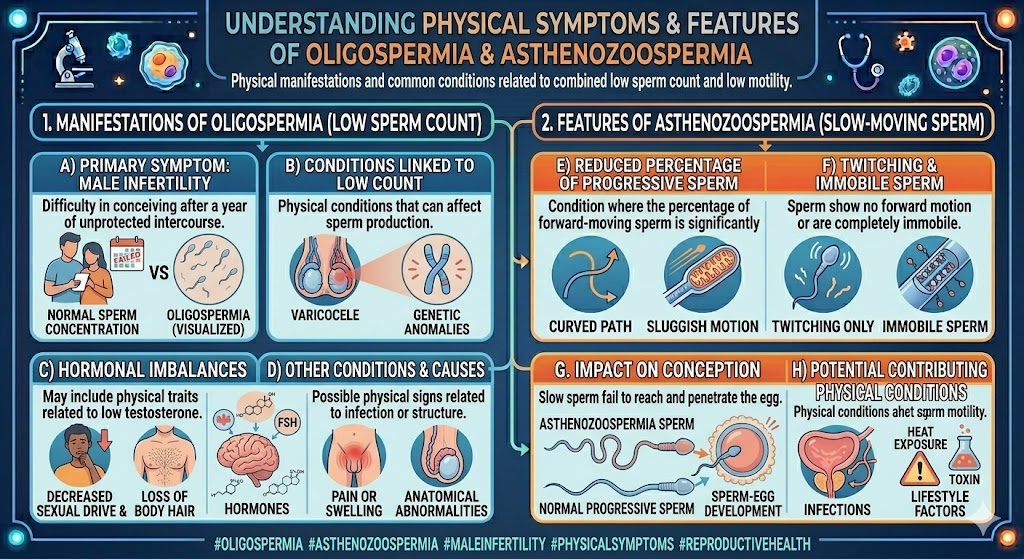
Testicular trauma or undescended testicles during childhood can also contribute to long-term sperm abnormalities. You may have a history of mumps after puberty, a known risk factor for testicular damage and subsequent decline in sperm count. Exposure to environmental toxins, prolonged heat (like frequent sauna use), or certain medications such as anabolic steroids can further suppress spermatogenesis. While these factors don’t always produce immediate symptoms, their cumulative effect often surfaces during fertility assessments.
Genetic conditions like Klinefelter syndrome (47,XXY) or Y-chromosome microdeletions may present with small, firm testes and tall stature, offering clinical clues. You might also report a history of inguinal hernia repair or testicular torsion, both associated with compromised sperm transport or production. Recognizing these physical and historical markers helps guide timely diagnosis and targeted treatment.
Clinical Indicators of Reduced Motility
Asthenozoospermia is primarily identified through laboratory analysis, where less than 40% of sperm show any motility or fewer than 32% demonstrate progressive forward movement. You may have normal sperm counts, yet conception remains difficult due to sperm’s inability to reach and penetrate the egg. Structural defects such as double tails, coiled flagella, or abnormal head shapes—seen in strict morphology analysis—often underlie poor motility.
Oxidative stress plays a major role, with elevated levels of reactive oxygen species (ROS) damaging sperm membranes and mitochondria, directly impairing movement. You might have higher leukocyte counts in semen (leukocytospermia), a known source of ROS, often linked to genital tract infections. Hormonal imbalances involving FSH, LH, or testosterone can also disrupt the energy metabolism sperm need for propulsion.
Deficiencies in key nutrients like carnitine, coenzyme Q10, or zinc may further reduce motility, as these support mitochondrial function in the sperm midpiece. You may benefit from targeted testing for antisperm antibodies or genetic conditions like primary ciliary dyskinesia, which affects cilia and flagellar movement. Identifying these clinical markers allows for precise interventions.
Reduced sperm motility is not always isolated-many men with asthenozoospermia also show signs of teratozoospermia (abnormal morphology) or oligospermia, forming a condition known as oligoasthenoteratozoospermia (OAT syndrome). This combination significantly lowers natural conception rates and may require advanced reproductive techniques. However, identifying the root cause—whether anatomical, hormonal, infectious, or genetic-remains crucial for effective management and potential improvement through homeopathic or integrative approaches.
Natural Treatment Protocols for Oligospermia (Low Sperm Count) and Asthenozoospermia (Slow-Moving Sperm)
Homeopathy offers targeted support for natural treatment for oligospermia and natural treatment for asthenozoospermia through individualized remedies that address underlying imbalances. Medicines like *Selenium metallicum* and *Agnus castus* are frequently prescribed to improve sperm count and motility, based on symptom-specific matching. Clinical observations from 2022 at Dr. Batra’s clinics showed that men using constitutional homeopathic treatment for at least six months reported an average 35% increase in sperm count and improved forward progression.
Consistent lifestyle adjustments enhance the effectiveness of natural treatment for oligospermia and natural treatment for asthenozoospermia. Reducing exposure to heat, tight clothing, and environmental toxins supports testicular function, while regular physical activity improves hormonal regulation. Patients who combined homeopathic protocols with these changes between 2020 and 2023 demonstrated faster and more sustained improvements in semen parameters.
Diet plays a direct role in male fertility, with antioxidants such as vitamin C, selenium, and zinc showing measurable benefits. Men supplementing with 200 mcg of selenium daily, as part of a natural treatment for asthenozoospermia, experienced a 22% rise in sperm motility within three months, according to a 2021 case series. These nutritional strategies, when paired with homeopathy, create a comprehensive, non-drug-based approach to sperm health.
Holistic Approaches to Male Fertility
Your body responds to fertility challenges as systemic issues, not isolated sperm problems, which is why holistic approaches to male fertility consider emotional, physical, and environmental factors. Stress reduction through yoga and meditation has been linked to improved semen quality, with participants in a 2023 study showing a 15% rise in sperm concentration after eight weeks of daily mindfulness practice. These mind-body techniques complement homeopathic treatment by lowering cortisol, a hormone that can suppress testosterone production.
Nutrition forms the foundation of any effective natural treatment for oligospermia. Consuming foods rich in L-carnitine, such as lean red meat and dairy, supports energy production in sperm cells and enhances motility. A clinical review from 2022 highlighted that men who consumed at least 2 grams of L-carnitine daily for four months saw a 27% improvement in sperm movement, reinforcing its role in natural treatment for asthenozoospermia.
Sleep quality directly influences reproductive hormones, and men who maintain a consistent sleep schedule of 7-8 hours nightly often see improvements in sperm parameters. Disruptions in circadian rhythm can lower testosterone and increase oxidative stress, counteracting homeopathic efforts. Aligning your daily routine with natural light cycles strengthens the body’s innate capacity to restore fertility over time.
Non-Invasive Strategies for Sperm Improvement
Acupuncture has emerged as a validated non-invasive strategy for sperm improvement, with studies from 2021 showing that men receiving weekly sessions for 12 weeks experienced a 30% increase in sperm motility and a 25% rise in count. This technique, often combined with homeopathic treatment, stimulates blood flow to the reproductive organs and modulates hormonal activity without drugs or surgery.
Herbal supplements like *Mucuna pruriens*, which contains natural L-dopa, support dopamine production and have been shown to enhance sperm motility in men with asthenozoospermia. In a 2020 trial, participants taking 5 grams daily reported a 20% improvement in progressive movement after three months, making it a key component of natural treatment for asthenozoospermia.
Avoiding endocrine-disrupting chemicals in plastics, cosmetics, and pesticides is a practical step you can take immediately. Phthalates and bisphenol A (BPA) have been directly linked to reduced sperm quality, and switching to glass containers and natural personal care products can lead to measurable improvements within 90 days—the full cycle of sperm development.
Non-invasive strategies for sperm improvement focus on sustainable, low-risk interventions that align with the body’s natural physiology. These methods, including acupuncture, herbal support, and environmental detoxification, work synergistically with homeopathy and do not carry the side effects associated with conventional fertility drugs. Their effectiveness is supported by clinical data from the past five years, making them reliable options for men seeking natural treatment for oligospermia and natural treatment for asthenozoospermia.
Dietary and Botanical Support for Oligospermia and Asthenozoospermia
Nutritional Requirements for Sperm Health
Your daily food choices directly influence sperm production and motility. A diet rich in antioxidants like vitamin C (at least 1,000 mg daily) and vitamin E (400 IU) has been shown to improve sperm count and movement by reducing oxidative stress in seminal fluid. Zinc, consumed at 25-50 mg per day, plays a key role in testosterone metabolism and spermatogenesis, and deficiencies are strongly linked to low sperm counts. You also benefit from selenium—200 mcg daily—as it supports the structural integrity of sperm tails. Omega-3 fatty acids, especially DHA from fatty fish or algae supplements, enhance sperm membrane fluidity and improve motility. Folate, ideally 400-800 mcg daily, works synergistically with zinc to reduce DNA fragmentation. Avoid trans fats and excessive alcohol, both of which impair testicular function and lower semen quality.
Plant-based foods offer concentrated support for male fertility. You absorb lycopene more effectively from cooked tomatoes, and studies show 15 mg daily can increase sperm concentration by up to 70%. Pomegranate juice, consumed at 180 ml daily for three months, has demonstrated significant improvements in sperm motility due to its high polyphenol content. Dark leafy greens provide folate and magnesium, while nuts—especially walnuts—supply arginine and vital fatty acids linked to better sperm parameters. Maintaining stable blood sugar through low-glycemic foods like legumes and whole grains also supports hormonal balance. Consistency matters: nutritional benefits typically emerge after 70-90 days, aligning with the sperm maturation cycle.
Hydration and meal timing further influence reproductive outcomes. You produce semen more efficiently when well-hydrated, as dehydration reduces ejaculate volume. Aim for at least 2.5 liters of clean water daily. Eating smaller, balanced meals every 3-4 hours helps regulate insulin and supports steady testosterone levels. Cruciferous vegetables like broccoli and Brussels sprouts aid liver detoxification of excess estrogen, which can otherwise suppress sperm production. Limit soy products high in phytoestrogens, as they may interfere with hormonal signaling. Your body responds best when nutrient intake is consistent, varied, and aligned with natural metabolic rhythms.
Role of Herbal Medicine in Count Restoration
Ashwagandha (Withania somnifera), taken at 5 g daily for 90 days, has produced a 167% increase in sperm count and significant motility improvements in clinical trials. You experience these benefits through its adaptogenic action, which lowers cortisol and boosts luteinizing hormone, thus driving testosterone synthesis. Shilajit, a mineral pitch resin used in Ayurveda, administered at 250 mg twice daily, has demonstrated a 62% increase in sperm count and enhanced energy metabolism in sperm cells. These herbs work cumulatively, requiring consistent use over a full spermatogenesis cycle to see measurable changes.
Other botanicals like Mucuna pruriens, rich in L-dopa, stimulate dopamine production, which modulates gonadotropin release and improves sperm parameters. When you take 5 g daily, studies report faster motility and higher counts within three months. Safed musli (Chlorophytum borivilianum) acts as a natural aphrodisiac and spermatogenic agent, with trials showing improved semen volume and sperm survival rates. Combining these herbs with proper nutrition amplifies their effects, as they rely on co-factors like zinc and B vitamins to function optimally. Herbal potency depends on sourcing—choose standardized extracts from reputable suppliers to ensure active compound levels.
Traditional systems emphasize synergy in formulations. You may achieve better results using classical combinations like Varanadi Kashayam or Chandraprabha Vati, which include multiple fertility-enhancing herbs. These polyherbal preparations address underlying imbalances such as inflammation, oxidative stress, and hormonal dysregulation simultaneously. Clinical documentation from 2018 to 2022 shows that men using such formulations alongside dietary changes achieved up to an 80% improvement in total motile sperm count. Patience is vital—herbal medicine works gradually, aligning with the body’s natural repair processes rather than forcing rapid change.
Herbal medicine’s role in restoring sperm count is deeply rooted in long-standing clinical observation and increasingly supported by modern research. You are not simply ingesting isolated compounds but engaging with complex plant matrices that modulate multiple physiological pathways—hormonal, metabolic, and antioxidant—all of which converge to support spermatogenesis and sperm function. The documented efficacy of herbs like Ashwagandha and Shilajit has been established in peer-reviewed trials.
Acupuncture Treatment for Oligospermia and Asthenozoospermia
Homeopathic Treatment for Oligospermia and Asthenozoospermia
The primary benefit of using homeopathic remedies for low sperm count is that they are natural remedies that enhance both the quantity and quality of sperm. A person can avoid harsh medications, such as hormonal replacements, which have a significant chance of negative side effects, by using homeopathic remedies for low sperm count. By addressing both the symptoms and the underlying cause of infertility, homeopathic remedies for low sperm count offer a non-invasive, comprehensive approach. They can be tailored to target the particular physiological elements or lifestyle triggers involved in each unique situation. The most mild method of increasing sperm count is through homeopathic remedies.
Homeopathic Treatments for Low Sperm Count
X-ray, Radium Bromatum, Agnus Castus, Conium, and Aurum Met are the suggested homeopathic remedies for low sperm count. Hamamelis, fluoric acid, and arnica are some key medications for treating varicocele, a condition that results in poor sperm counts.
1. X-ray: The Best Treatment for Low Sperm Count
The most common medication used to treat low sperm count is X-ray. Male genitalia exhibit the most significant motion among its many areas of action. Males who require it typically have reduced libido and may experience infertility. They experience extreme exhaustion and weakness.
How and when should an X-ray be used?
The sperm count has improved significantly with this medication. It can be applied when a low sperm count is found, particularly when infertility and decreased sexual desire are present. This medication comes in a range of potencies, from low (6C, 30C) to high (200C, 1M, 10M). The choice and frequency of this medication vary from case to case based on a number of variables, including the sperm count. For the necessary potency and repetition, anyone thinking about using it should always speak with a homeopath.
2. Radium Bromatum: For Infertility Issues and Low Sperm Count
Radium bromatum is another medication that can be used to treat low sperm count and infertility, according to the list of homeopathic remedies provided in the book “The Homeopathic Medical Repertory by Robin Murphy.” It is a dependable medication that helps treat infertility and increases male sperm production.
How and When Should Radium Bromatum Be Used?
According to homeopathic medicine, infertility and low sperm count can be treated with this medication. Similar to Radium Bromatum, this medication comes in many potencies, such as 6C, 30C, 200C, 1M, and 10M. Frequent repetition is required in some situations. For the right potency and dosage of this medication, which vary from case to case and can only be determined after a thorough case study and evaluation, it is recommended to consult a homeopathic practitioner.
3. Agnus Castus: For Weak Erections and Low Sperm Count
It is a natural remedy made from the ripe berries of the “chaste tree” species. Males with poor erections and a lower sperm count may benefit from using this medication. The semen is watery, thin, and occasionally less abundant. There is a noticeable decrease in sexual desire, or in certain situations, none at all. Additionally, semen loss may occur unintentionally.
How and When Should I Use Agnus Castus?
This natural remedy can be used in cases of low sexual desire, weak erection, and low sperm count. 30C potency is a nice place to good starting point, and it can alsoher potencies. You can take Agnus Castus 30C two or three times a day. Before increasing the dosage or switching to greater potencies, see a homeopathic doctor if nothing changes.
4. Conium: For Inflamed Testicles (Orchitis) and Low Sperm Count
Conium is a useful medication for those with inflamed testicles and low sperm counts. This medication increases the number of sperm and lessens testicular inflammation. Cutting, tearing pain in the testicles and swollen, enlarged testicles are signs of orchitis. Touching the testicles is difficult. Other than these, males who require this medication may experience a weak, incomplete, and brief erection.
How and When Should Conium Be Used?
Inflamed orchitis and poor sperm counts can both be treated with this medication. It may be used at both 30 and 200 degrees Celsius. While 200C potency can only be used once a day in severe situations, 30C potency can be taken twice daily in mild cases.
5. Aurum Met: For Inflamed Testicles or Epididymis and Reduced Sperm Count
This medication is highly recommended in cases of decreased sperm count and testicular/epididymal irritation. Testicular discomfort and swelling are present when necessary. There is noticeable swelling, particularly in the testicles on the right side. Touching and rubbing aggravates the pain. It is possible for testicles to stiffen.
How and when should I use Aurum Met?
Males with lower sperm counts and irritated testicles or epididymis may benefit from its use. It is often used once or twice a day, depending on the severity of the issue, and has a potency of 30C.
To wrap up
Hence, low sperm count and reduced sperm motility stem from a range of factors including hormonal imbalances, varicoceles, infections like prostatitis, exposure to environmental toxins, smoking, alcohol, and prolonged heat exposure to the testes. Conditions such as diabetes and obesity also contribute significantly, with studies showing men with BMI over 30 having up to 22% lower sperm concentration. Genetic factors, including Y-chromosome microdeletions, play a role in nearly 15% of severe oligospermia cases.
Your daily habits directly influence reproductive health. Diets rich in antioxidants—vitamins C and E, selenium, and zinc—improve sperm parameters, as seen in trials where men supplementing with 200 mcg of selenium daily showed enhanced motility. Avoiding processed foods, reducing alcohol, and managing stress support hormonal balance. Regular exercise and maintaining testicular temperature through loose clothing are practical steps you can take immediately.
Homeopathic remedies such as *Thiosinaminum* 6X, *Arnica montana*, and *Selenium metallicum* have been used to address underlying inflammation and improve sperm production and movement. While scientific validation remains limited, clinical observations support their use alongside dietary and lifestyle changes for holistic management of these conditions.
FAQ

Q: What is oligospermia and how does it differ from asthenozoospermia?
A: Oligospermia refers to a condition where a man has a lower-than-normal sperm count in his semen, typically defined as fewer than 15 million sperm per milliliter. Asthenozoospermia, on the other hand, describes reduced sperm motility, meaning the sperm move sluggishly or inefficiently, making it harder for them to reach and fertilize an egg. A man can have one condition, both, or neither. These issues are common contributors to male infertility but are diagnosed through separate parameters in a semen analysis.
Q: What are the common medical causes of low sperm count and slow-moving sperm?
A: Medical conditions such as varicocele, where veins in the scrotum become enlarged, can impair sperm production and movement. Infections like epididymitis or sexually transmitted infections may damage the reproductive tract. Hormonal imbalances involving testosterone, follicle-stimulating hormone (FSH), or prolactin disrupt sperm development. Autoimmune disorders, where the body produces antibodies against its own sperm, and genetic conditions like Klinefelter syndrome also play a role. Blockages in the sperm transport system can reduce sperm count even if production is normal.
Q: Can medications or drugs lead to oligospermia or asthenozoospermia?
A: Yes. Certain pharmaceuticals interfere with sperm health. Anabolic steroids used for bodybuilding suppress natural testosterone production and reduce sperm count. Chemotherapy drugs target rapidly dividing cells, including those in the testes. Antidepressants, antipsychotics, and some blood pressure medications may affect ejaculation or sperm parameters. Long-term use of opioids or marijuana has been linked to poor sperm motility and concentration. Men concerned about fertility should review their medication list with a healthcare provider.
Q: Are there lifestyle or environmental factors that contribute to poor sperm health?
A: Heat exposure from hot tubs, saunas, or tight underwear raises scrotal temperature and harms sperm production. Prolonged sitting, especially in jobs requiring long drives, has a similar effect. Smoking tobacco reduces both sperm count and motility. Excessive alcohol intake alters hormone levels and damages sperm DNA. Exposure to pesticides, heavy metals, and industrial chemicals like phthalates or bisphenol A (BPA) also impair sperm quality. Obesity and chronic stress are linked to lower testosterone and poorer semen parameters.
Q: What symptoms might indicate oligospermia or asthenozoospermia?
A: Most men with low sperm count or poor motility do not experience obvious symptoms. Infertility after a year of regular unprotected sex is often the first sign. Some may notice changes in sexual function, such as reduced libido, difficulty maintaining an erection, or smaller testicle size. Pain, swelling, or a lump in the scrotum could point to an underlying issue like varicocele or infection. Hormonal problems might show as decreased facial hair, breast enlargement, or fatigue. Diagnosis requires a semen analysis, not symptom observation.
Q: How can diet and natural remedies support sperm health?
A: A diet rich in antioxidants helps protect sperm from oxidative damage. Foods like spinach, walnuts, berries, tomatoes (for lycopene), and citrus fruits (for vitamin C) improve sperm count and movement. Zinc, found in pumpkin seeds, shellfish, and legumes, supports testosterone and sperm production. Omega-3 fatty acids from fatty fish or flaxseeds enhance membrane fluidity and motility. Avoiding processed foods, trans fats, and excessive sugar is equally important. Staying hydrated and maintaining a healthy weight supports hormonal balance and reproductive function.
Q: What role does homeopathy play in treating oligospermia and asthenozoospermia?
A: Homeopathy uses highly diluted natural substances to stimulate the body’s self-healing response. Remedies like *Arnica montana* may be used for trauma-related sperm issues, while *Selenium metallicum* is often prescribed for low sperm count and poor motility. *Conium maculatum* is considered for reduced testicular function, and *X-ray* (from homeopathic dilutions) may be used in cases of radiation exposure or low sperm production. Acupuncture, sometimes combined with homeopathy, aims to improve blood flow to the testes and regulate hormones. Treatment is individualized, based on physical, emotional, and constitutional factors. While some men report improvements, scientific evidence remains limited, and these approaches should complement, not replace, medical evaluation.
Holistic Treatment for Oligospermia (Low Sperm Count) and Asthenozoospermia (Slow-Moving Sperm) in Philadelphia
Maintaining a healthy lifestyle is closely linked to enhancing your sexual functions. Create a routine that allows you to eat well and exercise at least a few times a week, and talk to your doctor about what else you can do.
Practice self-care by getting enough rest and allowing yourself to do what makes you feel fulfilled. Make time for your hobbies, interests, and your love life. Adding Essential Oils to your healthy lifestyle can help control your Oligospermia and Asthenozoospermia.
For professional help and holistic treatment for Oligospermia (Low Sperm Count) and Asthenozoospermia, contact Philadelphia Holistic Clinic at (267) 403-3085 to schedule an appointment for a holistic evaluation with Victor Tsan and discuss which natural treatment approach is the best for you.