Learning Disabilities
Please consider the question: what precisely defines a learning disability? You might be wondering how these conditions affect an individual’s ability to acquire and use information. Understand the core aspects of learning disabilities to better comprehend their impact.
What are Learning Disabilities
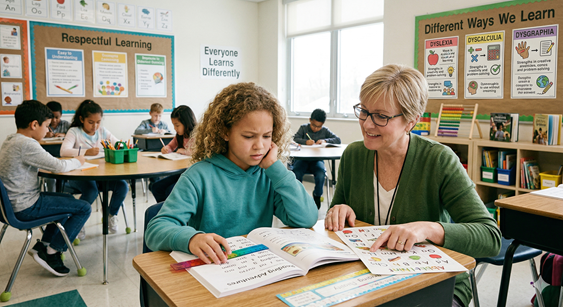
A learning disability is a neurological disorder that affects the brain’s ability to receive, process, store, and respond to information, impacting specific academic skills like reading, writing, and math. It is not related to intelligence—individuals usually have average or above-average intelligence—but rather how their brain processes information differently.
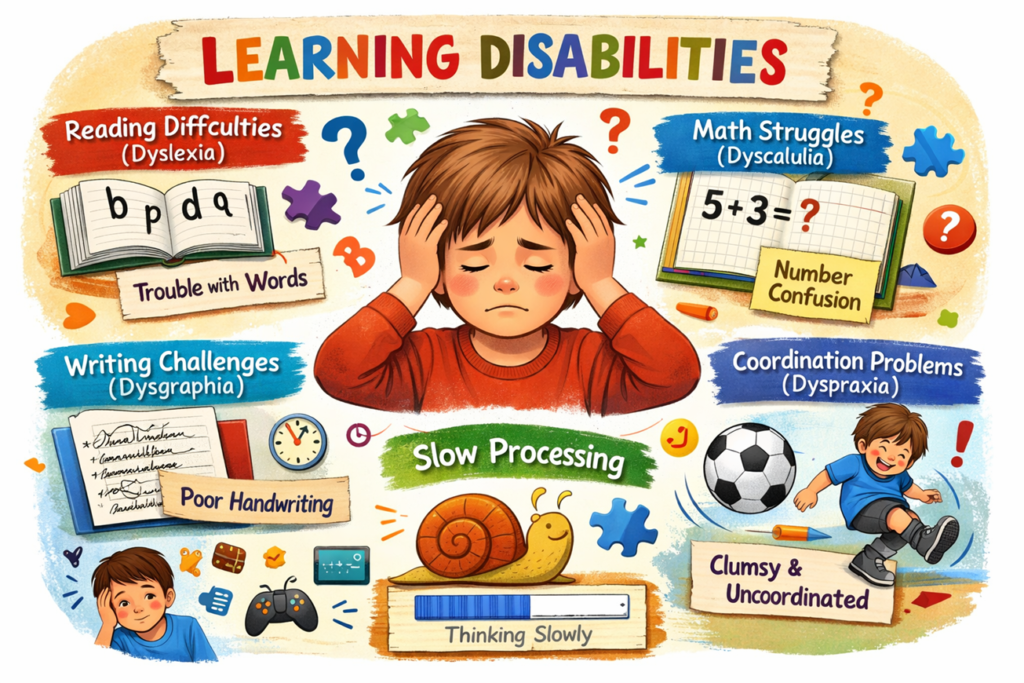
- Core Areas Affected: Commonly impacts reading (dyslexia), writing (dysgraphia), math (dyscalculia), listening, speaking, and reasoning.
- Lifelong Condition: It is a permanent condition, often present from birth (due to genetic or developmental factors), but may not be recognized until a child faces academic demands.
- This condition is not a reflection on IQ. People with learning disabilities can succeed, but they often need tailored teaching methods and support to manage their specific challenges
- Academic Challenges: Difficulty learning the alphabet, rhyming, reading accurately or fluently, spelling, and understanding math concepts.
- Cognitive Processing: Issues with short-term/long-term memory, following directions, organizing tasks, and poor time management.
- Subtle Indicators: Frequent restlessness, getting lost in the middle of instructions, or taking an exceptionally long time to complete schoolwork.
Defining Specific Learning Disabilities
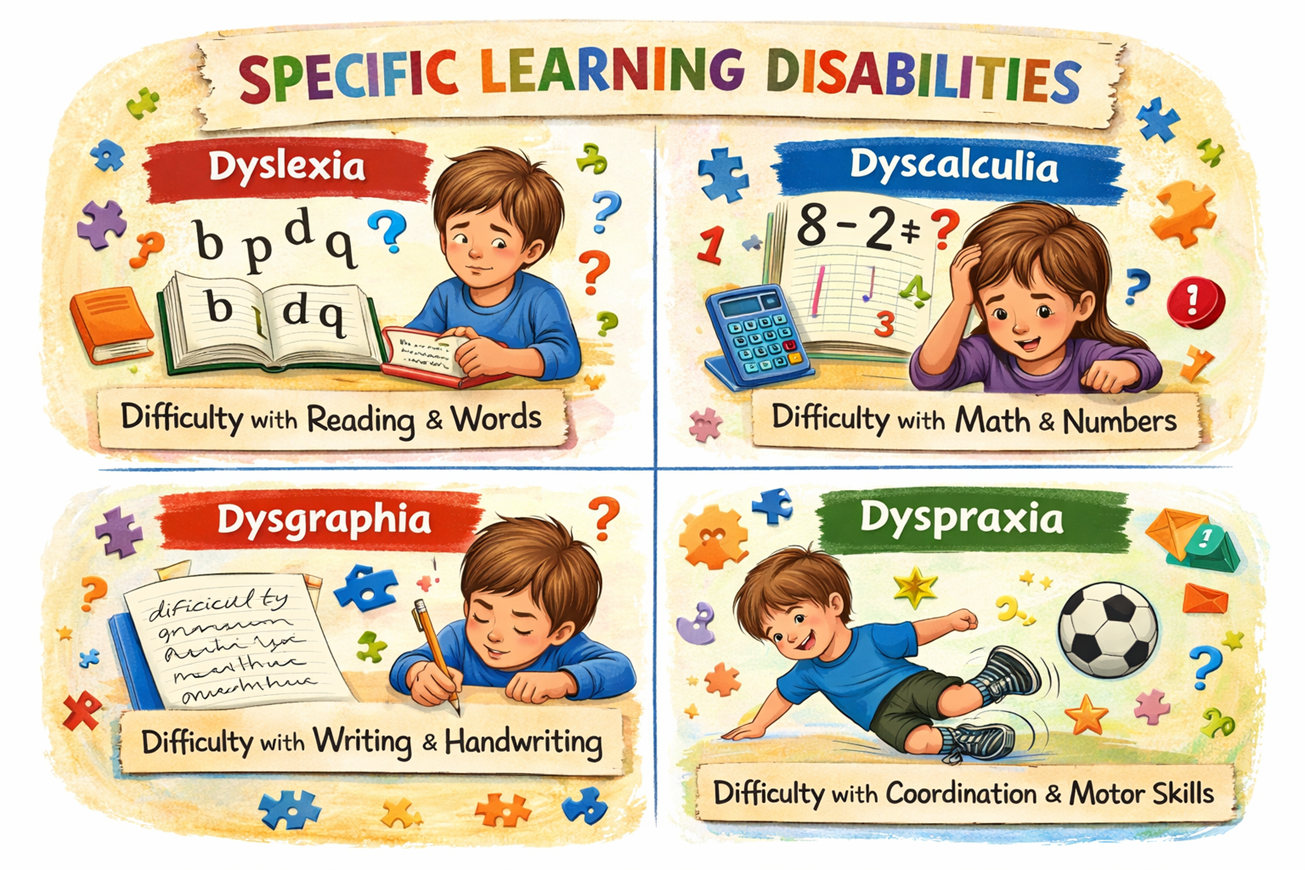
You might wonder what precisely constitutes a specific learning disability (SLD). A specific learning disability is a neurological disorder affecting the brain’s ability to receive, process, analyze, or store information, causing unexpected academic underachievement in individuals with otherwise average or above-average intelligence. This definition emphasizes a significant discrepancy between a person’s intellectual capacity and their actual academic performance in specific areas. The parameters of an SLD are distinct; they are not caused by visual, hearing, or motor disabilities; intellectual disabilities; emotional disturbance; or environmental, cultural, or economic disadvantage. Understanding the various categories of learning disabilities can clarify this complex area. You will observe that specific learning disabilities are often categorized by the primary academic area they impact. These categories include reading disabilities (dyslexia), writing disabilities (dysgraphia), and mathematics disabilities (dyscalculia). Each category represents a unique set of challenges in processing academic information, impacting different aspects of a student’s educational journey. This list of learning disabilities expands further to include nonverbal learning disabilities, which affect social skills and abstract thinking, and oral/written language disorders, which impact both spoken and written communication. You should recognize that each of these disabilities presents distinctive obstacles, requiring tailored educational strategies and support. Identifying the specific type of learning disability is the first step toward providing effective interventions and accommodations.
Clinical Identification and Assessment
Finding out what kind of learning disability someone has requires a thorough and multi-faceted assessment process. You will typically encounter a team of professionals, including psychologists, educational specialists, and speech-language pathologists, who collaborate to gather information. This team utilizes various standardized tests, observations, and interviews to evaluate cognitive abilities, academic achievement, and processing skills. The assessment aims to pinpoint the specific areas of difficulty and rule out other potential causes for academic struggles. You can expect the evaluation to include tests of intelligence, reading comprehension, writing fluency, mathematical reasoning, and various aspects of information processing, such as auditory processing or visual-motor integration. The goal is to establish a clear profile of strengths and weaknesses. Ultimately, the clinical identification process leads to a diagnosis that informs targeted interventions. You will receive a detailed report outlining the findings, including the specific type of learning disability identified and recommendations for educational support. This thorough assessment guarantees that the interventions align with your unique learning profile, thereby maximizing your potential for academic success.
Cognitive Processing and Educational Impact
Cognitive processing plays a central role in how a specific learning disability manifests in an educational setting. You will observe that an SLD affects how the brain processes information, leading to difficulties in specific academic skills despite adequate instruction and opportunity. These processing challenges can impact areas like phonological awareness, working memory, or processing speed, which are foundational for learning. The educational impact of these processing differences can be significant and varied. You might observe students struggling with decoding words, organizing thoughts for writing, or understanding mathematical concepts. These difficulties are not due to a lack of effort or intelligence but rather stem from neurological differences in how information is handled by the brain. Consequently, students with specific learning disabilities often require different instructional approaches and accommodations to succeed academically. You will discover that traditional teaching methods may not be sufficient, and personalized strategies are necessary to address the underlying cognitive processing deficits. These strategies might include multi-sensory instruction, extended time on assignments, or assistive technology. Students with specific learning disabilities often experience a disconnect between their intellectual potential and their academic performance due to these cognitive processing challenges. This can lead to frustration and a decline in self-esteem if not properly addressed with appropriate support and understanding.
Distinguishing Learning Disabilities from Other Conditions
You may wonder how true learning disabilities differ from other conditions that impact learning. It is important to understand that while many conditions can affect a student’s academic progress, not all are classified as learning disabilities. This section will help you differentiate between specific learning disabilities and other neurodevelopmental disorders that often present with overlapping characteristics.
You will discover that properly classifying these conditions is vital for securing appropriate support and interventions. Misclassifying a condition can lead to ineffective strategies and frustration for both students and educators. Our goal here is to provide clarity on these distinctions.
You can identify the specific criteria used to define a learning disability, particularly when considering conditions like dyslexia, autism, ADHD, or ADD. Understanding these classifications ensures you can advocate for the most beneficial educational path for any student facing learning challenges.
Dyslexia and Literacy-Based Challenges
Many people ask if dyslexia is truly a learning disability. You can be assured that dyslexia is indeed classified as a specific learning disability, primarily affecting an individual’s ability to read and spell. It is not a reflection of intelligence but rather a neurological difference in how the brain processes language.
You will often observe challenges in phonological awareness, decoding, and reading fluency in individuals with dyslexia. These difficulties are persistent and can significantly impact academic performance across various subjects, not just language arts. Early identification and targeted interventions are key for supporting individuals with dyslexia.
You might notice that a student with dyslexia struggles with tasks that seem simple to others, such as rhyming or sounding out words. These specific literacy-based challenges are the hallmark of dyslexia, distinguishing it as a primary learning disability requiring specialized educational approaches.
Differentiating Learning Disabilities and Neurodevelopmental Disorders
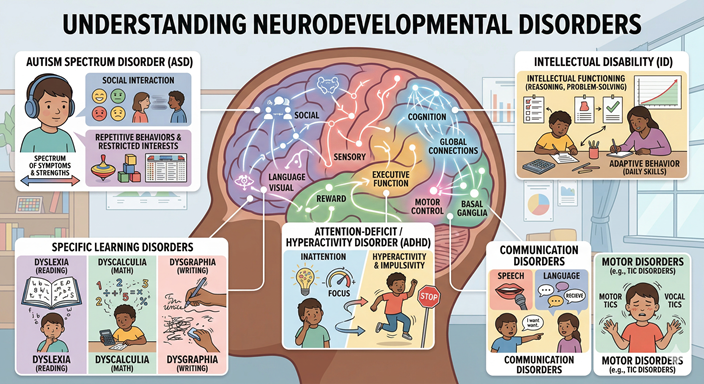
You might question whether autism, ADHD, or ADD are considered learning disabilities. It is important to clarify that while autism, ADHD, and ADD are neurodevelopmental disorders that can significantly impact learning, they are not typically classified as learning disabilities themselves. These conditions frequently coexist with learning disabilities, underscoring the necessity for precise diagnosis.
You will recognize that ADHD and ADD primarily affect attention, hyperactivity, and impulsivity, which can certainly interfere with a student’s ability to learn and perform in academic settings. However, their core diagnostic criteria center on executive function challenges rather than the specific processing deficits seen in learning disabilities like dyslexia.
You must understand that autism spectrum disorder (ASD) is characterized by challenges in social communication and repetitive behaviors. Autism is a unique developmental disorder, not a learning disability in the traditional sense. People with autism may have trouble learning or have other learning disabilities at the same time.
You should also know that while ADHD, ADD, and autism can present with academic struggles, their nature differs from those stemming directly from learning disabilities. Learning disabilities involve specific difficulties in acquiring and using academic skills like reading, writing, or math, whereas ADHD and autism impact learning through broader challenges in attention, social interaction, or executive function. Properly identifying the primary condition allows for the most effective and targeted support strategies.
Interventions and Therapeutic Modalities for Learning Disabilities
Addressing learning disabilities involves a multifaceted approach, focusing on established educational interventions and, for some, exploring alternative methods. You will find that effective support often combines tailored teaching strategies with a profound understanding of your specific needs. The goal is always to equip you with the tools to thrive academically and personally. You will encounter various established treatments designed to improve specific academic skills, such as reading, writing, and mathematics. These interventions are typically delivered by specialists and are grounded in research demonstrating their efficacy. Understanding these core approaches helps you make informed decisions about your learning journey. Some individuals also consider complementary and alternative methods, including acupuncture, homeopathy, and hypnotherapy, for learning disabilities. While these approaches exist, it’s important to understand their current standing within the broader scientific and medical communities regarding their effectiveness for learning disabilities.
Evidence-Based Educational Interventions
You will discover that effective educational interventions are typically individualized and target specific areas of difficulty. These programs often involve direct, explicit instruction in foundational skills, breaking down complex tasks into smaller, manageable steps. Many strategies focus on phonological awareness, fluency, comprehension, and mathematical reasoning. Many established programs utilize multi-sensory approaches, engaging different senses to help you process and retain information. This might involve using visual aids, kinesthetic activities, and auditory cues simultaneously to reinforce learning. These methods are designed to cater to diverse learning styles and strengthen neural pathways. Trained special education teachers, educational therapists, or learning specialists typically deliver these interventions. They continuously assess your progress and adjust strategies as needed, ensuring that the support remains relevant and effective for your evolving needs. You will receive consistent feedback and encouragement throughout the process.
Evaluating Complementary and Alternative Therapies
People often discuss the use of alternative methods such as acupuncture, homeopathy, and hypnotherapy for learning disabilities. Approaching these therapies with a critical perspective is crucial, as extensive scientific evidence currently does not support their efficacy for learning disabilities. The medical community generally prioritizes interventions with demonstrated, research-backed results. Anecdotal reports or a desire to explore all possible avenues of support often draw many individuals to these therapies. However, you should always consult your primary healthcare provider or a learning specialist before pursuing any alternative treatments. They can help you understand the potential benefits and risks in the context of your specific learning disability. Considering these alternative approaches requires you to weigh the claims against available scientific data. Although some individuals report subjective enhancements, comprehensive, controlled studies illustrating their specific effects on fundamental learning disability symptoms are predominantly absent. You deserve interventions that have a strong foundation of evidence. When you investigate complementary and alternative therapies, you will discover that the scientific community emphasizes the necessity of robust, peer-reviewed research to validate any claims of effectiveness. This includes studies with large sample sizes, control groups, and objective outcome measures to determine if these therapies truly impact learning disabilities.
Achievement and Representation in Society
Historical and Contemporary Role Models
You may be curious about the historical figures who overcame challenges. Take Leonardo da Vinci, for example, a visionary whose unique mind, now believed to have exhibited signs of dyslexia and ADHD, led to groundbreaking inventions and art during the Renaissance. His struggles with traditional learning methods did not hinder his genius, instead perhaps fueling his innovative approach to observation and creation. You can also look to more recent history, where individuals with learning disabilities have made equally profound contributions. Consider the remarkable story of Albert Einstein, who struggled with language and was thought to have dyslexia yet revolutionized physics with his theories of relativity. His challenges with conventional schooling did not prevent him from becoming one of the most brilliant minds of the 20th century. These historical examples illustrate that learning differences are not barriers to extraordinary achievement but rather can be catalysts for unique perspectives and problem-solving. Looking at contemporary figures, you observe individuals like Sir Richard Branson, founder of the Virgin Group, who openly discusses his dyslexia and how it shaped his entrepreneurial spirit. His unique learning style, which enabled him to think creatively and delegate tasks efficiently, played a crucial role in his ability to build a global empire. These diverse examples from different eras demonstrate the enduring capacity of individuals with learning disabilities to shape our world.
Challenging Stigma Through Public Success
Many public figures, by openly sharing their journeys, directly challenge the misconceptions surrounding learning disabilities. They provide tangible proof that a diagnosis does not define one’s potential or limit their ability to achieve greatness in various fields. Their stories resonate deeply, offering hope and inspiration to countless individuals and families grappling with similar challenges. You see this powerful impact in the arts, with figures like Whoopi Goldberg, a celebrated actress and comedian who has spoken about her dyslexia. Her success in Hollywood, earning an Academy Award, a Grammy, an Emmy, and a Tony Award, demonstrates that learning disabilities are no impediment to reaching the pinnacle of creative expression. Her achievements speak volumes about perseverance and talent. You can also observe examples in the political arena, where leaders with learning disabilities have risen to prominence. Their ability to connect with people, often through alternative communication styles, showcases a different kind of strength and leadership. These public successes help to dismantle stereotypes, proving that diverse learning styles can be assets in any profession. The public success of individuals like Whoopi Goldberg serves as a powerful testament to the fact that learning disabilities are not hindrances to achieving the highest levels of professional recognition and influence. Her ability to excel in a highly competitive industry, despite her dyslexia, illustrates that different ways of processing information can lead to unique strengths and innovative approaches to problem-solving.
Acupuncture for Learning Disabilities
Acupuncture is used as an additional treatment for learning disabilities and developmental disorders, especially ADHD and autism spectrum disorder (ASD), because it may help with speech, attention, and cognitive function. Studies suggest it may help with hyperactivity, social interaction, and language deficits when combined with traditional treatments.
- ADHD: Acupuncture may reduce core symptoms such as inattention and impulsivity when used alongside conventional behavioral therapy or medication. It is considered a relatively safe, low-cost option.
- Autism (ASD): Studies have found that scalp acupuncture and laser acupuncture can enhance speech ability, language comprehension, and social interaction in children with autism.
- Cognitive Function & Memory: Research suggests acupuncture can help improve learning disabilities and cognitive dysfunction by stimulating neural plasticity and improving memory.
- Techniques: Specialized techniques, including electroacupuncture and transcutaneous electrical acupoint stimulation (TEAS – a non-invasive option), are often used to target specific developmental challenges.
- Evidence Base: While some studies report positive results, many clinical trials have a high risk of bias or small sample sizes, meaning the evidence is not strong enough for it to be recommended as a standalone or standard treatment.
- Mechanism: Researchers believe acupuncture works by improving brain metabolic activity and reducing hyperactivity in areas associated with socio-emotional disturbances.
- Safety: Acupuncture is generally safe, but reported side effects in children can include irritability, bleeding, or fear of needles.
Homeopathic Treatment for Learning Disabilities
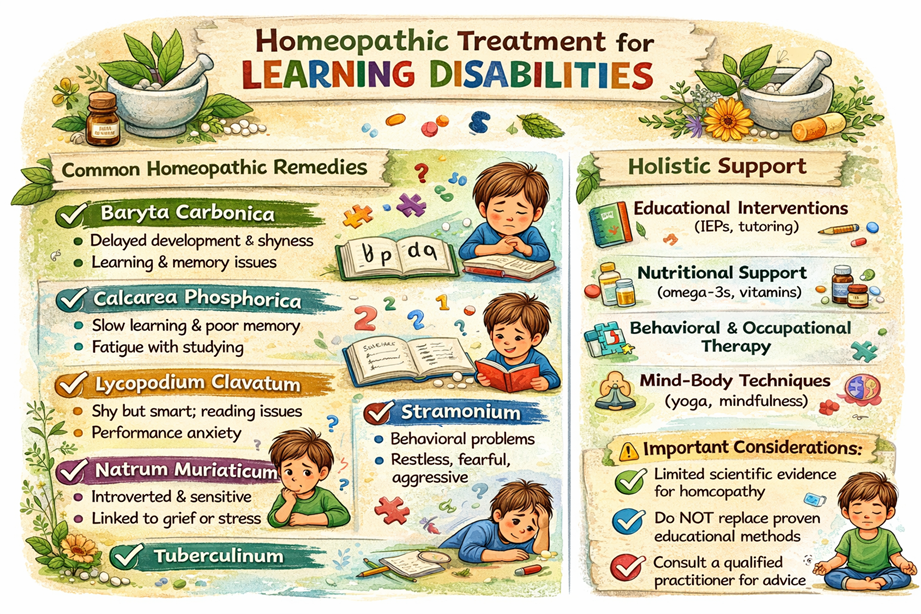
- Calcarea carbonica: Often used for “sluggish” children who may be slow to reach milestones (like walking or talking), have a large head, sweat profusely, and experience apprehension or forgetfulness.
- Lycopodium: Frequently prescribed for children with low self-confidence who are sensitive, have weak memories, and often make mistakes in spelling or writing.
- Baryta carbonica: Typically indicated for children who are late in learning to talk or read and may appear mentally or physically “tardy” in development.
- Aethusa cynapium: Used for children who experience “exam funk” or inability to think clearly under pressure
- Positive Findings: A case-control study demonstrated that the combination of homeopathic intervention and remedial education resulted in significantly earlier improvements in dyslexia and dysgraphia symptoms compared to remedial education alone.
- Limited Evidence: Many systematic reviews conclude that current evidence conclusively supports homeopathy for speech or language difficulties, and high-quality trials for conditions like autism are scarce.
- ADHD Specifics: The strongest body of evidence for homeopathic success in this area relates to Attention Deficit Hyperactivity Disorder (ADHD), which often co-occurs with learning disabilities.
- Complementary Role: Experts recommend using homeopathy as a complement to, rather than a replacement for, evidence-based treatments like Special Education or Applied Behavior Analysis (ABA).
- Professional Guidance: Always consult a registered homeopathic physician and your child’s primary doctor before starting treatment, as some extracts may interact with standard medications.
- Holistic Support: Integrating other natural approaches, such as Omega-3 fatty acid supplementation and an antioxidant-rich diet, may also support cognitive function in children with developmental delays.
Hypnotherapy for Learning Disability
Hypnotherapy for learning disabilities (LD) acts as a complementary, non-invasive tool to boost self-esteem, reduce anxiety, and improve focus, rather than curing the underlying condition. By using guided relaxation and mental imagery, it helps children and adults develop coping strategies, manage stress, and increase confidence in educational settings.
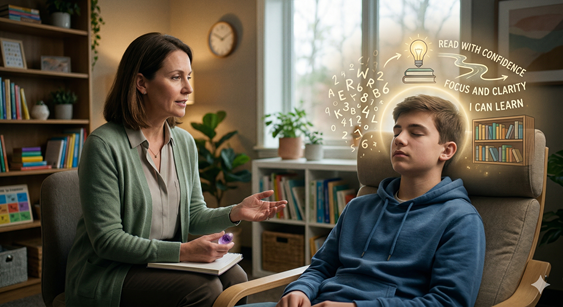
- Boosting Self-Esteem: Hypnotherapy can significantly improve self-confidence in children with learning disabilities who may feel discouraged.
- Reducing Anxiety and Overwhelm: It helps individuals relax and manage stress, breaking down large tasks into smaller, more manageable steps.
- Enhancing Focus and Memory: Hypnosis can aid in shifting from a distracted state to a more focused, productive mindset, assisting with information retention.
- Mental Rehearsal: Children can learn to visualize themselves successfully completing tasks, such as homework or tests, which reduces the fear of failure.
- Managing ADHD and Neurodiversity: Techniques can help manage impulsivity, improve behavioral regulation, and assist with sensory integration issues.
- Complementary Approach: Hypnotherapy is often used alongside, not instead of, traditional behavioral therapies or special education methods.
- Effectiveness Factors: Success depends on the age of the child, the severity of the condition, and the skill of the practitioner.
- Age Appropriateness: While effective for children and teens, it may require creative approaches for younger individuals.
Final Words
Presently, you understand that learning disabilities are not a monolithic issue; they encompass a diverse array of challenges, each requiring a tailored approach. You recognize that specific learning disabilities hinder typical learning, often manifesting as difficulties with reading (dyslexia), writing (dysgraphia), or mathematics (dyscalculia). This understanding moves beyond a simplistic view, highlighting the intricate neurological differences that underpin these conditions. You now understand that these are not just academic problems but also fundamental differences in how the brain processes information. Considering the diverse range of treatments, you should feel more informed about the proactive steps available. These interventions are not universally applicable; instead, they encompass a range of strategies tailored to address individual needs. You have learned that approaches can include specialized educational instruction, assistive technologies, and therapeutic interventions, all aimed at developing compensatory strategies and strengthening areas of weakness. Your knowledge now extends to the fact that early identification and consistent support significantly improve outcomes, allowing individuals to thrive academically and personally. You should now grasp that supporting individuals with learning disabilities is a continuous process of understanding, adapting, and advocating. You play a role in creating environments that are inclusive and accommodating, recognizing the unique strengths each individual possesses. The journey necessitates a dedication to perpetual learning and a receptiveness to the advancing methodologies and research within the discipline. Your informed perspective is invaluable in promoting a society where every person, regardless of their learning profile, has the opportunity to reach their full potential. Here are seven detailed questions and answers about learning disabilities, following your specified formatting and writing rules:
FAQ

Q: What is a learning disability?
A: A learning disability refers to a neurological condition that affects the brain’s ability to receive, process, analyze, or store information. These conditions do not indicate low intelligence; individuals with learning disabilities frequently possess average or above-average intellectual capabilities. Instead, a learning disability impacts specific academic skills, creating unexpected difficulties in areas like reading, writing, mathematics, or organization. These challenges are persistent and can interfere with academic achievement and daily life. The conditions are lifelong, but with appropriate support and strategies, individuals can learn to manage their challenges and achieve success.
Q: What are the main types of learning disabilities, and can you list some specific examples?
A: Learning disabilities primarily fall into categories based on the academic skill they affect. A specific learning disability (SLD) is the umbrella term used in educational settings to describe these conditions. The main types include:
- Dyslexia: This affects reading, making it difficult to recognize words, decode sounds, and comprehend text.
- Dysgraphia: This impacts writing, causing challenges with handwriting, spelling, grammar, and organizing thoughts on paper.
- Dyscalculia: This condition affects mathematical abilities, leading to difficulties with number sense, calculations, and problem-solving.
- Auditory Processing Disorder (APD): This affects how the brain processes sounds, making it challenging to distinguish between similar sounds or understand spoken language in noisy environments.
- Nonverbal Learning Disability (NVLD): This primarily affects nonverbal skills, such as visual-spatial processing, motor skills, and social interaction. Individuals with NVLD may struggle with interpreting body language or understanding social cues.
These are some of the most recognized specific learning disabilities.
Q: Is dyslexia a learning disability? What about autism, ADHD, and ADD?
A: Yes, dyslexia is a specific learning disability. It is one of the most common learning disabilities, directly impacting reading and language processing. Autism Spectrum Disorder (ASD) is a developmental disability, not a learning disability, though it can significantly affect learning. Individuals with autism may have co-occurring learning disabilities or experience learning challenges due to their communication and social differences. Attention-Deficit/Hyperactivity Disorder (ADHD) and Attention-Deficit Disorder (ADD, which is an older term for a presentation of ADHD) are neurodevelopmental disorders that affect attention, impulsivity, and activity levels. They are not classified as learning disabilities themselves, but they frequently co-occur with learning disabilities. ADHD symptoms like inattention can make learning more difficult, and many individuals with ADHD also have a specific learning disability.
Q: Can you describe what a nonverbal learning disability (NVLD) entails?
A: A nonverbal learning disability (NVLD) is a specific learning disability characterized by a significant discrepancy between strong verbal skills and weaker nonverbal skills. Individuals with NVLD often excel in areas requiring verbal expression, memorization of facts, and reading comprehension. However, they face challenges with tasks that rely on visual-spatial processing, motor coordination, and social understanding. This can manifest as difficulty with puzzles, understanding maps, handwriting, or sports. Socially, they may struggle to interpret body language, facial expressions, and social cues, leading to misunderstandings in social situations. Organizational skills and adapting to new situations can also be areas of difficulty for individuals with NVLD.
Q: Are there any famous people who have learning disabilities?
A: Many successful individuals throughout history and in contemporary society have had learning disabilities. Their achievements demonstrate that a learning disability does not limit one’s potential. Some notable examples include:
- Many historians believe that the renowned physicist Albert Einstein had dyslexia, which caused him to struggle with language and conventional schooling.
- Whoopi Goldberg: The award-winning actress and television personality has openly discussed her experiences with dyslexia.
- Richard Branson: The founder of the Virgin Group attributes some of his entrepreneurial success to his dyslexia, which he says encouraged him to think differently.
- Steven Spielberg: The acclaimed film director disclosed in his 60s that he has dyslexia, which he believes influenced his visual storytelling abilities.
- Tom Cruise: The actor has spoken about his struggles with dyslexia and how he learned to manage it.
These individuals, among many others, have achieved outstanding success by embracing their unique strengths and developing strategies to overcome their challenges.
Q: What are the primary treatments and interventions for learning disabilities?
A: The primary approach to addressing learning disabilities involves specialized educational interventions and support tailored to the individual’s specific needs. There is no “cure” for a learning disability, but effective strategies help individuals develop compensatory skills and learn more effectively. Key interventions include the following:
- Individualized Education Programs (IEPs): These legally mandated plans outline specific educational goals, accommodations, and services for students with learning disabilities in public schools.
- Specialized Instruction: This involves teaching methods designed to address specific learning challenges, such as multisensory approaches for dyslexia or explicit instruction in math concepts for dyscalculia.
- Accommodations: These are adjustments to learning environments or tasks that help individuals access information and demonstrate their knowledge, such as extended time on tests, audiobooks, or assistive technology.
- Assistive Technology: Tools like text-to-speech software, speech-to-text software, graphic organizers, and spell checkers can significantly aid individuals with learning disabilities.
- Therapy: Occupational therapy can help with fine motor skills (relevant for dysgraphia), and speech-language therapy can address language processing difficulties.
Early identification and intervention are highly beneficial for positive outcomes.
Q: Are alternative therapies like acupuncture, homeopathy, or hypnotherapy effective for learning disabilities?
A: Scientific evidence does not support the effectiveness of acupuncture, homeopathy, or hypnotherapy as treatments for learning disabilities. Learning disabilities are neurological conditions requiring evidence-based educational and therapeutic interventions. These alternative therapies are not supported by mainstream medical and educational groups as a way to directly address the main problems that come with learning disabilities. While some individuals might report subjective benefits from these practices for general well-being or stress reduction, there is no clinical data to show they improve reading, writing, math skills, or other specific deficits associated with learning disabilities. Families seeking support for learning disabilities should prioritize interventions backed by scientific research and recommended by qualified educational and medical professionals.
Natural Remedies to Learning Disabilities in Philadelphia
At the Philadelphia Holistic Clinic, we have specialists who may help you with natural treatments for learning disabilities. The available natural remedies for LD at the clinic include acupuncture, homeopathy, hypnotherapy, herbal medicines, and other natural approaches
Contact Philadelphia Holistic Clinic at (267) 403-3085 or use an online scheduling system to schedule your appointment for an initial evaluation to discuss which alternative treatment for learning disabilities is best for you.