Blood in Stool
Blood in stool, also known as rectal bleeding, melena, or hematochezia. Blood in your stool can range from a visible streak on toilet paper to blood mixed into the stool or bleeding too slight to see. Its appearance offers useful clues, but it cannot identify the cause on its own. Bright red blood, dark blood, clots, and occult blood each warrant attention in context.
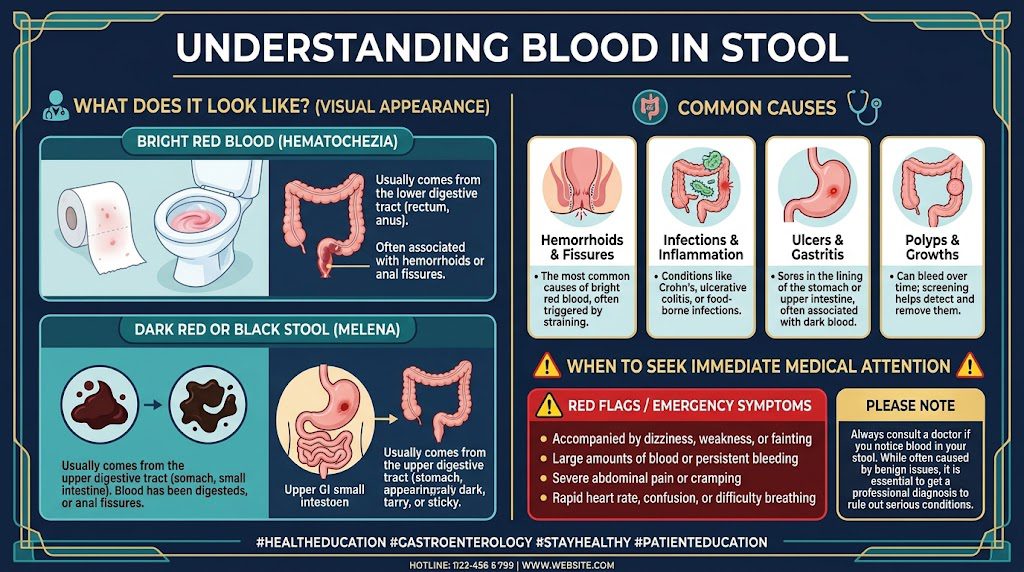
Clinicians call bright red blood in stool hematochezia; it usually comes from the lower digestive tract. Black, tarry, foul-smelling stool is called melena and results from digested blood, usually from the upper digestive tract. These terms describe patterns, not diagnoses, so your symptoms and medical history also matter. 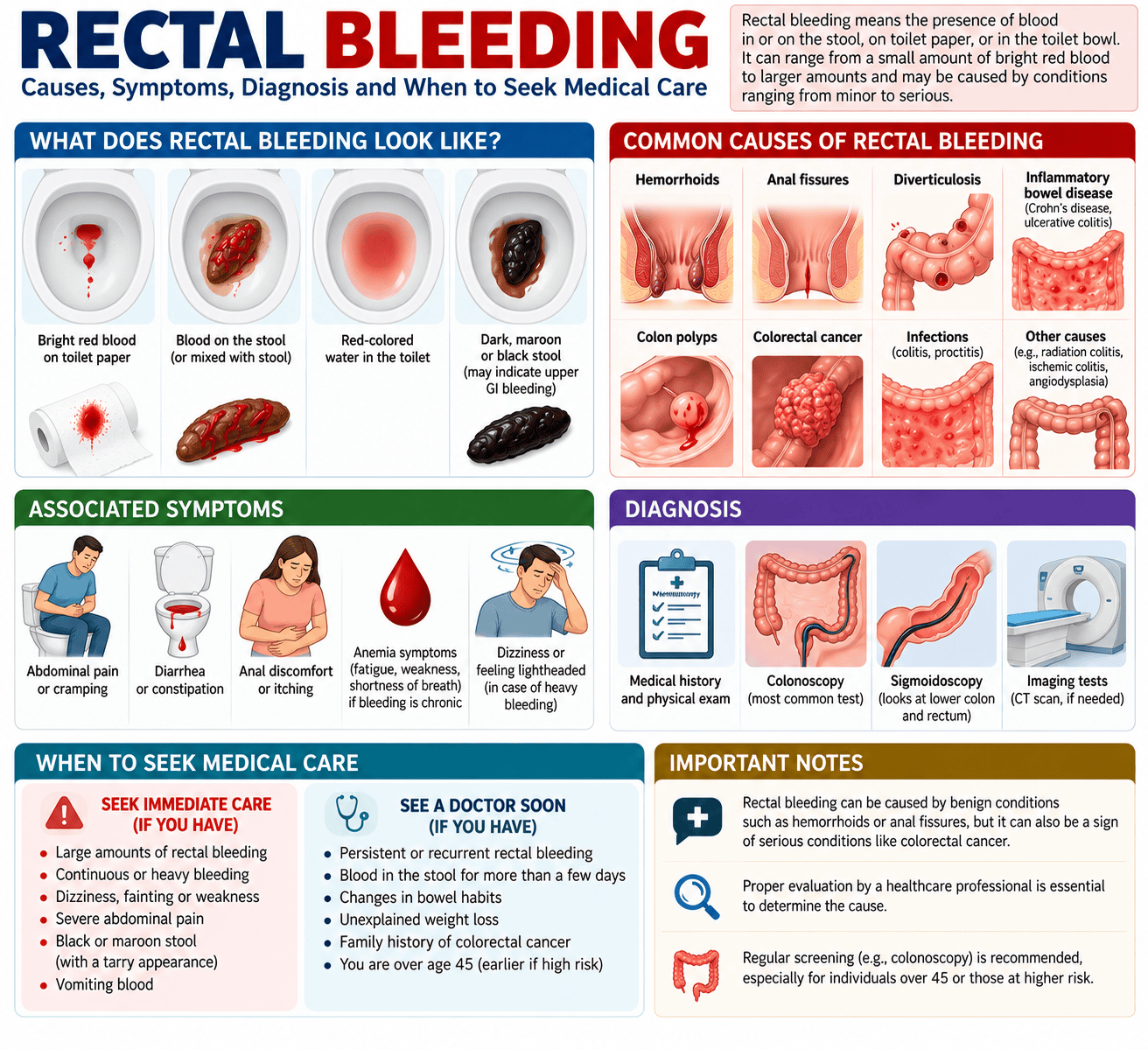
Even a small amount of blood can feel alarming, while some serious bleeding is not visible. Tell your healthcare professional what you noticed, including the color, amount, and whether the stool was tarry or contained clots. Such details give them a clearer starting point for evaluating the bleeding.
Causes of Blood in Stool
Blood in or on stool can come from anywhere along the digestive tract, and its appearance does not identify the cause by itself. Bright red blood often originates near the anus or rectum, while darker or black, tarry stool can reflect bleeding higher in the gastrointestinal tract. Causes range from minor irritation to conditions that need prompt assessment, so the amount, timing, and accompanying symptoms matter.
Straining with constipation can produce an anal fissure, a small tear that often causes sharp pain during a bowel movement, or aggravate hemorrhoids, which may bleed with little discomfort. Inflammation, infection, diverticular disease, and colorectal polyps are other possibilities; colorectal cancer is less common but must be considered, particularly when bleeding persists or bowel habits change. Medicines such as anticoagulants can increase bleeding or make an existing source more apparent.
Alcohol is not a single, direct explanation for every episode of rectal bleeding. Heavy drinking can irritate the gastrointestinal tract and, over time, contribute to liver disease and enlarged veins that may bleed. A small amount of bleeding can occur after colonoscopy, especially if a polyp was removed, but heavy or continuing bleeding warrants urgent medical advice. Radiation used to treat prostate cancer can inflame and damage rectal tissue, leading to rectal bleeding during or after treatment.
Common and Less Common Causes
Hemorrhoids and anal fissures are frequent causes of bright red blood, often noticed on toilet paper or coating the stool. Hemorrhoids are swollen veins in or around the anus; fissures are tears in the anal lining and commonly hurt during bowel movements. Constipation and repeated straining can contribute to both. Even when these causes seem likely, ongoing bleeding should not be attributed to them without appropriate clinical evaluation.
Diverticula, small pouches in the colon wall, can bleed, sometimes without pain. Colitis, including inflammatory bowel disease or infection, can cause blood in diarrhea, cramps, or urgency. Polyps may bleed intermittently and are often found during colonoscopy, where they can be removed for examination. A biopsy or polyp removal can leave a small amount of blood afterward, but the timing and volume matter.
Less common causes include colorectal cancer, reduced blood flow to the colon (ischemic colitis), and abnormal blood vessels. After prostate cancer radiation, inflammation of the rectum, known as radiation proctitis, can cause bleeding. Alcohol use can contribute indirectly through gastrointestinal irritation or advanced liver disease, which can produce bleeding varices. Other factors worth reporting to your clinician include:
- Blood-thinning medicines, including prescribed anticoagulants
- Recent colonoscopy, biopsy, or polyp removal
- Radiation treatment directed at the prostate
- Heavy alcohol use or known liver disease
Blood Clots and Painless Bleeding
Passing clots can mean that bleeding is more than a trace, although clot size alone cannot reveal its source. A sudden, painless episode of bright red blood with clots can occur with diverticular bleeding or bleeding from an abnormal blood vessel in the colon. Hemorrhoids can also bleed, but clinicians assess the full pattern, including whether blood is mixed into the stool, appears in the bowl, or recurs.
Painless bleeding does not rule out a serious cause. Polyps, colorectal cancer, diverticular disease, and radiation-related rectal injury can bleed without causing sharp anal pain. If you take anticoagulants or have a bleeding disorder, a source that might otherwise cause limited bleeding can produce more noticeable blood. Report the medicines you use, including aspirin and nonprescription products, during evaluation.
Heavy bleeding, repeated clots, dizziness, fainting, weakness, or shortness of breath calls for urgent medical care, particularly if stool is black and tarry or you feel unwell. After a colonoscopy, contact the endoscopy team promptly for substantial bleeding or bleeding that continues, especially after polyp removal. Radiation proctitis can appear during prostate cancer treatment or later, so tell your oncology team when rectal bleeding begins and whether it is accompanied by diarrhea or urgency.
Symptoms and Appearance of Rectal Bleeding
Blood in stool can appear on toilet paper, streak the stool’s surface, drip into the bowl, or mix throughout a bowel movement. You may also notice rectal bleeding without pain, or experience anal soreness, abdominal discomfort, diarrhea, constipation, or a change in bowel habits. The amount and appearance provide useful clues, but they cannot identify the cause on their own.
Color often reflects how long blood has been in the digestive tract. Bright red blood usually comes from lower down, while dark red or maroon blood can be more mixed with stool and may originate higher in the colon. Black, tarry stool, called melena, can indicate bleeding farther up the digestive tract. Iron supplements and some foods can also darken stool.
Small amounts of blood may be visible, while occult blood is hidden and detectable only through stool testing. Clots can appear as dark or bright red, jelly-like material, and heavier bleeding may color the toilet water. The table summarizes these visible patterns; a clinician interprets them alongside your symptoms and medical history.
| Appearance | Common description | What you may notice |
|---|---|---|
| Bright red | Fresh-looking blood | On paper, stool, or in the bowl |
| Dark red or maroon | Blood mixed with stool | Streaks or discoloration within stool |
| Black, tarry | Melena | Sticky, unusually dark stool |
| Occult | Not visible to the eye | Found through stool testing |
| Clots | Gel-like collections of blood | Red or dark pieces passed with stool |
Bright Red Blood and Hematochezia
Bright red blood in or on stool is called hematochezia. You may see it as a thin streak on the stool, a smear on toilet paper after wiping, or drops in the toilet bowl. Because fresh blood often comes from the anus, rectum, or lower colon, hemorrhoids and anal fissures are common possibilities, though appearance alone cannot establish which condition is responsible.
Rectal bleeding from a fissure often occurs with sharp pain during or after a bowel movement, particularly when stool is hard. Internal hemorrhoids can bleed bright red without pain, while external hemorrhoids may cause tenderness or a lump near the anus. Bleeding mixed through stool, recurring episodes, or bleeding accompanied by a change in bowel habits deserves medical assessment rather than assumption that hemorrhoids are the cause.
Large amounts of red blood, repeated passage of clots, or bleeding with dizziness, weakness, fainting, or shortness of breath calls for urgent care. A small streak after straining differs from ongoing blood loss, but the distinction is not always clear at home. Note whether blood coats the stool or is mixed into it, and tell your clinician about pain, bowel changes, and the number of episodes.
Dark Blood, Melena, and Occult Blood
Dark red or maroon blood can appear when blood has mixed with stool or traveled through more of the colon before passing. Black, sticky, tar-like stool is known as melena and often signals bleeding from the upper digestive tract, such as the stomach or small intestine. Melena can have a strong, unusual odor; however, iron supplements and some medicines or foods can also make stool look dark.
Occult blood is not visible, so you may have no obvious sign of bleeding. A stool test can detect small quantities that are hidden from view, sometimes before you notice any change in stool color. Your clinician may recommend testing based on symptoms, medical history, or screening needs. A negative visual check at home does not rule out occult blood, since it requires laboratory or point-of-care testing.
Clots may accompany either bright or darker bleeding and can look like soft, jelly-like pieces. Their size and color do not reliably locate the source, and passing repeated clots or a large quantity of blood warrants urgent assessment. Seek prompt medical attention for black, tarry stool, especially with weakness, lightheadedness, abdominal pain, or vomiting blood, and report medicines such as iron or bismuth that can alter stool color.
When Blood in Stool May Be Serious
Bright red blood often comes from a source near the anus, such as a hemorrhoid or a small anal fissure, but its color alone cannot establish that the cause is minor. A small streak on toilet paper after straining differs from repeated bleeding, blood mixed through the stool, or clots. If rectal bleeding is new, persistent, or unexplained, arrange a medical assessment rather than relying on appearance to judge its seriousness.
Blood clots, a large amount of blood, or bleeding that continues deserve prompt medical attention. Seek emergency care if bleeding is heavy or accompanied by fainting, marked weakness, confusion, shortness of breath, or severe abdominal pain. These symptoms can signal significant blood loss or another urgent condition. Do not drive yourself if you feel faint or unsteady; ask someone to take you or contact emergency services.
Even without severe symptoms, recurring blood in stool needs evaluation, particularly if you also notice a change in bowel habits, unexplained weight loss, or unusual fatigue. A clinician can assess the bleeding and decide whether examination or testing is needed. Report any blood-thinning medicines, such as warfarin, because they can affect bleeding risk, and note whether blood appears on the paper, in the bowl, or mixed with stool. 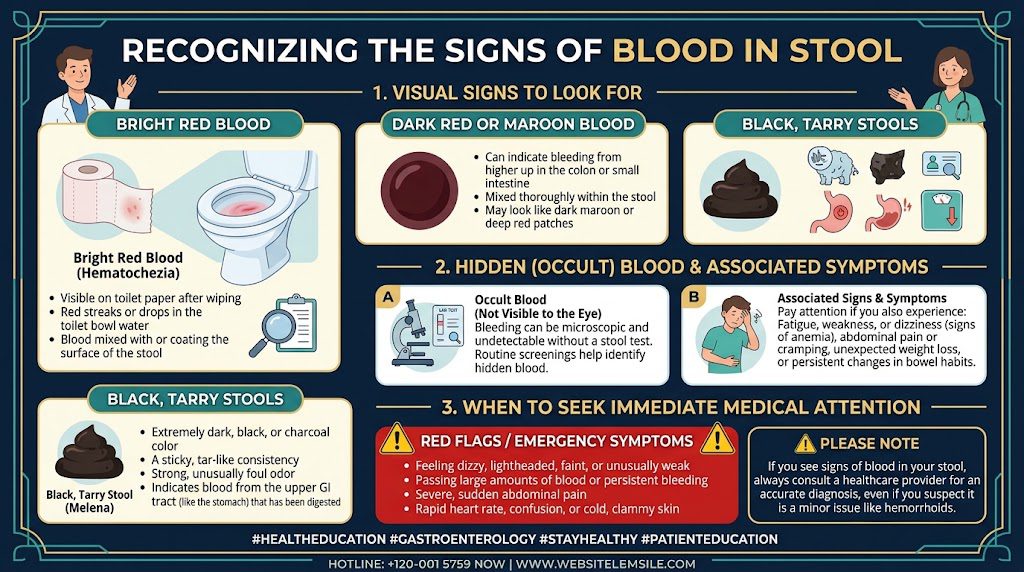
Warning Signs
Heavy bleeding that fills the toilet bowl, repeated passage of clots, or bleeding that does not stop warrants urgent assessment. Call emergency services if you become faint, collapse, feel confused, or develop cold, clammy skin. These signs can accompany substantial blood loss, even when the bleeding began as bright red blood. Tell responders when the bleeding started and whether it has continued.
Severe abdominal pain, a swollen abdomen, fever, or vomiting alongside rectal bleeding also calls for prompt medical care. Black, tar-like stool can indicate bleeding higher in the digestive tract, while maroon stool can reflect bleeding from farther inside the bowel. A sudden change in stool color does not identify the cause by itself, but it gives a clinician useful information about the pattern.
Arrange for timely medical review if bleeding keeps returning, if you see blood mixed into the stool, or if bowel habits change and remain altered. Unexplained weight loss, persistent tiredness, or a history of bowel disease provides important context that you should not overlook. If you are taking an anticoagulant or antiplatelet medicine, please mention it promptly; do not stop a prescribed dose without guidance from your managing clinician.
- Record whether the blood is bright red, maroon, or black.
- Note how often bleeding occurs and how much you see.
- Track associated pain, fever, dizziness, or bowel changes.
- Bring a current list of medicines and supplements.
What to Report to a Healthcare Professional
Describe exactly where you see blood: on toilet paper, coating the stool, mixed through it, or in the toilet bowl. Mention its color and whether you have passed clots, and estimate the amount using plain descriptions, such as a few streaks or enough to discolor the water. State when the first episode occurred, how often it has happened, and whether the bleeding is increasing.
Explain any symptoms that occur with the bleeding, including pain during a bowel movement, abdominal discomfort, diarrhea, constipation, fever, dizziness, weakness, or shortness of breath. Tell the clinician about changes in stool frequency or shape and any unintentional weight loss. Include relevant medical history, such as prior hemorrhoids, anal fissures, inflammatory bowel disease, or previous episodes of gastrointestinal bleeding.
Bring the names and doses of all medicines you use, especially warfarin and other blood thinners, as well as aspirin or anti-inflammatory drugs. Report supplements too, along with any recent medication changes. Mention a family history of colorectal cancer or bowel disease if applicable. If you have already sought care for this episode, share the date, tests performed, and any results you received.
Medical Evaluation and Diagnosis for Rectal Bleeding
Visible red blood, maroon stool, or black, tarry stool gives your clinician useful clues, but appearance alone cannot identify the source. You will be asked when bleeding began, how often it occurs, whether it coats the stool or is mixed through it, and whether pain, bowel changes, dizziness, or fatigue accompany it. Bring details about medicines such as anticoagulants and your personal or family history of bowel disease.
Occult blood is not apparent by sight and is detected through stool testing, sometimes before you have symptoms. Your clinician will interpret a positive result alongside your age, symptoms, prior screening, and risk factors rather than treating the test as a diagnosis. A recent colonoscopy, including its date and findings, can affect which follow-up examination is appropriate; cancer treatment, including chemotherapy or radiation, also matters because it can affect bleeding risk and bowel tissue.
Assessment may include a physical examination, blood tests for anemia, and procedures to locate the source. The next step depends on the amount and pattern of bleeding and your overall health. Seek urgent care for heavy bleeding, faintness, or severe weakness, and tell the care team about recent procedures or cancer therapy. For further perspective on visible bleeding, see How Worried Should You Be if You See Blood in Your Stool?
Tests for Rectal Bleeding
During an office visit, your clinician may inspect the anal area and perform a digital rectal examination, using a gloved finger to assess for tenderness, masses, or blood. An anoscopy or sigmoidoscopy can examine the anal canal and lower rectum, where clinicians may find hemorrhoids, fissures, and other sources. The choice depends on your symptoms, examination findings, and screening history.
Colonoscopy examines the colon using a flexible camera and can identify inflammation, polyps, or tumors; clinicians can also take tissue samples or remove some polyps during the procedure. Your clinician will ask about the date and results of a recent colonoscopy, since that information informs whether another examination is needed and when. Preparation, sedation, and timing are discussed according to your medical circumstances.
Blood tests, including a complete blood count, can show whether ongoing blood loss has contributed to anemia. If bleeding is substantial or your condition is unstable, hospital-based evaluation may involve imaging or other procedures to locate active bleeding. Tell the team about blood thinners, prior bowel surgery, and cancer treatment, including radiation to the pelvis, because each can affect test selection and interpretation.
Evaluation of Occult Blood
Fecal occult blood testing detects blood that is not visible in the stool. Common screening options include the fecal immunochemical test (FIT), which detects human blood, and guaiac-based fecal occult blood testing, which uses a chemical reaction. Follow the kit instructions carefully, since collection and handling requirements differ between tests.
A positive stool test does not establish a cancer diagnosis or pinpoint where bleeding began. Your clinician will review the result with your symptoms, medical history, and previous screening; colonoscopy is commonly used to investigate a positive screening result. Do not dismiss a positive result because you feel well, and report any visible bleeding even if a stool test was previously negative.
Occult blood can arise from several causes, including polyps, inflammation, ulcers, or cancer, and interpretation depends on context. Mention a recent colonoscopy and its findings, as well as current or past cancer treatment, when discussing follow-up. If treatment has affected your bowel habits or blood counts, your oncology and primary care teams may coordinate the evaluation and determine whether additional testing is warranted.
| Evaluation step | What it assesses | Relevant context |
|---|---|---|
| Digital rectal examination | Anal and lower rectal findings | Pain, visible blood, or a suspected local source |
| Anoscopy or sigmoidoscopy | Anal canal and lower rectum | Symptoms and examination findings |
| Colonoscopy | Colon lining, with sampling or polyp removal when appropriate | Date and findings of any recent colonoscopy |
| FIT, or guaiac stool test | Blood not visible in stool | Positive results generally require clinical follow-up. |
| Complete blood count | Anemia associated with blood loss | Bleeding history and cancer treatment |
Western Treatments for Blood in Stool
Your treatment plan depends on where the bleeding starts, how much blood you lose, and what testing reveals. A clinician may use blood tests, stool tests, imaging, or endoscopy to identify the cause before choosing medication, a procedure, or surgery. Heavy bleeding, dizziness, fainting, or severe abdominal pain requires urgent medical assessment, especially when blood clots appear in the stool.
For a fissure or hemorrhoid, treatment often focuses on easing bowel movements and reducing irritation; infections may require targeted medication, while inflammatory bowel disease calls for disease-specific care. Polyps or suspicious growths found during colonoscopy can be removed or sampled. If a stomach or intestinal ulcer is bleeding, endoscopic treatment can stop the source, and prescribed acid-suppressing medicine may support healing.
Occult blood, which is not visible to you, needs follow-up even when you feel well. A positive stool test is not a diagnosis: your clinician may recommend colonoscopy to look for polyps, cancer, inflammation, or another source. Blood clots can signal active or substantial bleeding, so their presence, amount, and accompanying symptoms guide decisions about urgent evaluation and treatment.
Treatment for Visible Bleeding
Bright red blood on toilet paper or coating stool often comes from hemorrhoids or an anal fissure, but appearance alone cannot confirm the cause. Your clinician may examine the anus and rectum, then recommend measures such as fiber, adequate fluids, stool softeners, or prescription creams when appropriate. Persistent hemorrhoids can be treated with office procedures, including rubber band ligation, while severe cases sometimes require surgery.
Bleeding that is heavy, recurrent, or accompanied by clots may need prompt care in an emergency department. Clinicians assess your blood pressure and pulse, check blood counts, and may give intravenous fluids or blood products if blood loss is significant. Colonoscopy can identify a bleeding vessel, ulcer, polyp, or other lesion; endoscopic clips, heat treatment, or injected medication can stop bleeding at the site.
When diverticular disease, inflammatory bowel disease, or infection is responsible, your treatment targets that diagnosis rather than the blood itself. Antibiotics are used for certain bacterial infections, while inflammatory bowel disease may require anti-inflammatory or immune-modifying medicines. A tumor may need removal, surgery, or cancer treatment, depending on its location and findings. Please inform your clinician about any blood-thinning medicines you are taking, as they can affect bleeding and treatment choices.
Treatment for Occult Blood and Clots
A stool test detects occult blood, even though you cannot see it. A positive result requires follow-up, often with colonoscopy, because polyps, colorectal cancer, ulcers, and inflammation can all cause hidden bleeding. If colonoscopy identifies a polyp, the clinician can often remove it during the procedure and send it for laboratory examination. Treatment then depends on the tissue findings and the source of blood loss.
Blood clots in stool can accompany substantial or ongoing bleeding and warrant urgent medical evaluation, particularly with weakness, fainting, rapid heartbeat, or severe pain. In the hospital, your care may include intravenous fluids, blood tests, and colonoscopy or imaging to locate the source. If bleeding continues, an endoscopist may use clips or thermal therapy; a radiologist can sometimes block the responsible blood vessel through catheter-based embolization.
Specific follow-up depends on the cause and your overall health. Iron deficiency from repeated occult blood loss may be treated with iron while clinicians investigate and address the source of bleeding. If you take anticoagulants or antiplatelet medicines, do not stop them on your own; your prescriber weighs clotting risk against active bleeding. A clinician may also arrange repeat testing or surveillance colonoscopy after removal of certain polyps.
- Bring a current medication list to urgent care or an endoscopy appointment.
- Report whether clots are repeated, large, or mixed throughout the stool.
- Ask how and when you will receive biopsy or polyp pathology results.
Holistic and Home Approaches to Blood in Stool
Home care can support comfort while you arrange assessment, but it cannot identify why blood is present or rule out serious disease. Bright-red streaks after hard stools, for instance, can accompany an anal fissure, while dark or tarry stool can signal bleeding higher in the digestive tract. Track the stool’s appearance, when bleeding occurs, and any pain or bowel changes so you can give your clinician a clear history.
Hydration, gradual increases in dietary fiber, and avoiding straining can ease constipation, a common contributor to hemorrhoids and fissures. Add fiber-rich foods such as oats, beans, fruits, and vegetables, and follow product directions if you use a fiber supplement. A warm sitz bath may soothe anal discomfort, but persistent, recurrent, or heavy bleeding needs medical evaluation rather than home treatment alone.
Do not stop prescribed medicines, including blood thinners, without speaking with the prescriber, and tell your clinician about supplements or nonprescription products. Seek urgent care for heavy bleeding, faintness, severe abdominal pain, or black, tarry stool. For general background on causes and treatment, see Blood in Stool: Causes and Treatment – Digestive Disorders. 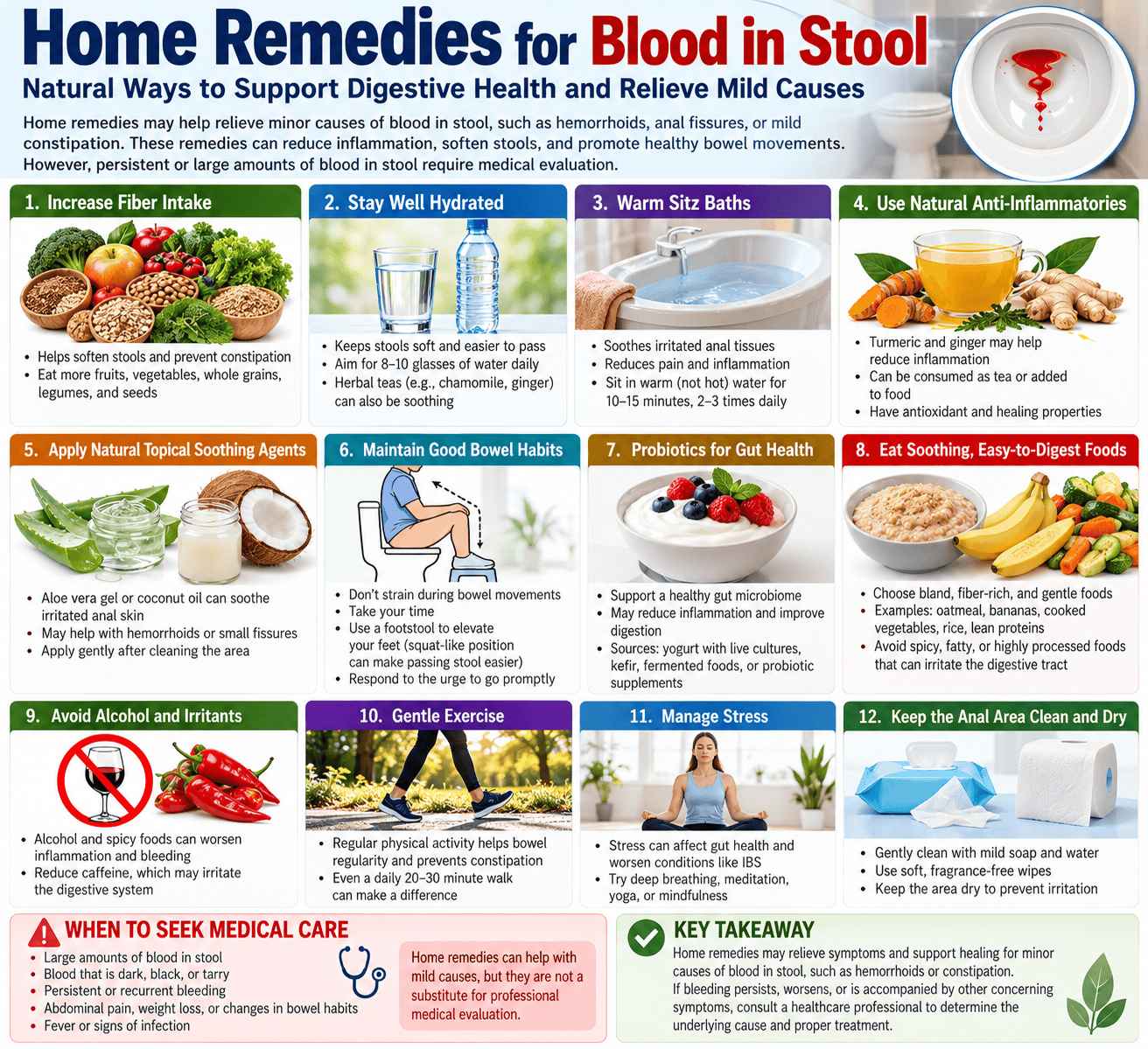
Natural and Home Remedies for Blood in Stool
Fiber from food can soften stool and reduce straining when constipation contributes to rectal irritation. Choose foods such as pears, prunes, lentils, or whole-grain oats, and increase portions gradually with adequate fluids to limit gas or bloating. A clinician can advise whether a supplement such as psyllium fits your health conditions and medicines; follow its label and take it with sufficient water.
For soreness associated with hemorrhoids or a fissure, sit in comfortably warm water for about 10 to 15 minutes, then pat the area dry rather than rubbing. Avoid inserting herbal preparations, essential oils, or other substances into the rectum, since they can irritate tissue and delay diagnosis. Keeping a brief record of bleeding, stool consistency, pain, and bowel frequency gives your clinician practical details.
Home measures are not a substitute for evaluation, especially if bleeding returns, continues, or occurs with fatigue, weight loss, fever, or a change in bowel habits. A clinician may need to examine you or order tests to determine the cause. Do not assume that visible blood is from hemorrhoids, and seek urgent care for substantial bleeding, dizziness, fainting, or black, tarry stool.
Homeopathic Remedies for Rectal Bleeding
Homeopathic remedies are proven to stop gastrointestinal bleeding or treat its underlying cause. Remedies are often selected by homeopathic practitioners according to a person’s reported symptoms, but that practice does not establish whether bleeding comes from hemorrhoids, an ulcer, inflammatory bowel disease, or another condition. You shouldn’t use homeopathy as a replacement for examination, diagnosis, or treatment recommended by a licensed clinician.
Tell your clinician and pharmacist what you take, including pellets, drops, and combination products, so they can assess possible interactions and avoid confusion during care. Do not delay an appointment to try a remedy, particularly when blood is mixed into stool, bleeding recurs, or you have abdominal pain or weakness.
If you choose to use a homeopathic product alongside medical care, verify its ingredients and discuss it with your clinician before starting. Keep the package available and note when you took it and any reactions. Urgent symptoms, including heavy bleeding, fainting, severe pain, or black, tarry stool, require prompt medical attention rather than a homeopathic consultation.
Anal fissures that are mild and in their early stages may benefit from homeopathic treatments. If someone has had an anal fissure for a few years, homeopathy may or may not be able to treat it. In cases of significant fissures, homeopathic therapy is ineffective. Surgery may be required to treat your anal fissure. Thus, always seek medical advice.
| Approach | Use | Important limit |
|---|---|---|
| Fiber-rich foods | Support softer stools when constipation is present. | Increase gradually and drink fluids. |
| Warm sitz bath | Soothe anal discomfort | Does not diagnose or stop all causes of bleeding |
| Homeopathic products | Optional complementary use | Not proven to treat bleeding; disclose use to your clinician. |
| Medical evaluation | Identify the source and guide treatment. | Seek urgent care for heavy bleeding or faintness. |
To wrap up
Blood in your stool is a sign, not a diagnosis: bright red streaks, dark or tarry stool, and blood mixed through stool can point to different causes. Hemorrhoids and anal fissures are among the possibilities, but inflammation, infection, polyps, and colorectal cancer also require consideration. Your symptoms and the blood’s appearance provide useful clues, yet they cannot establish the cause on their own. A healthcare professional can assess your history and determine whether examination, stool testing, blood tests, or further investigation is appropriate.
Urgent assessment matters if you have heavy bleeding, black tarry stool, faintness, severe abdominal pain, or weakness. For less urgent bleeding, arrange medical advice rather than assuming it is hemorrhoids or relying on home remedies. Treatment depends on the cause: a clinician may recommend medication, treat a fissure or hemorrhoid, or investigate another condition. Fluids, fiber, and avoiding straining can support bowel health, but they do not replace evaluation when blood appears.
For practical guidance on the next steps, read Blood In Your Poop? Don’t Panic, Here’s What To Do. Record when bleeding occurs, its color and amount, changes in bowel habits, and any accompanying pain or fatigue; share those details during your appointment. Prompt assessment gives you a clearer explanation of the bleeding and a treatment plan matched to its cause.
Natural Treatment for Rectal Bleeding in Philadelphia
Natural treatment for anal rectal bleeding is effective, safe, and affordable; however, this condition requires professional care, and if you choose to treat your bleeding naturally, contact Philadelphia Homeopathic Clinic at (267) 403-3085 to schedule an appointment for an initial comprehensive holistic evaluation that includes a regular examination as well as computerized testing, iridology, pulse diagnostics, etc. Contact us at (267) 403-3085