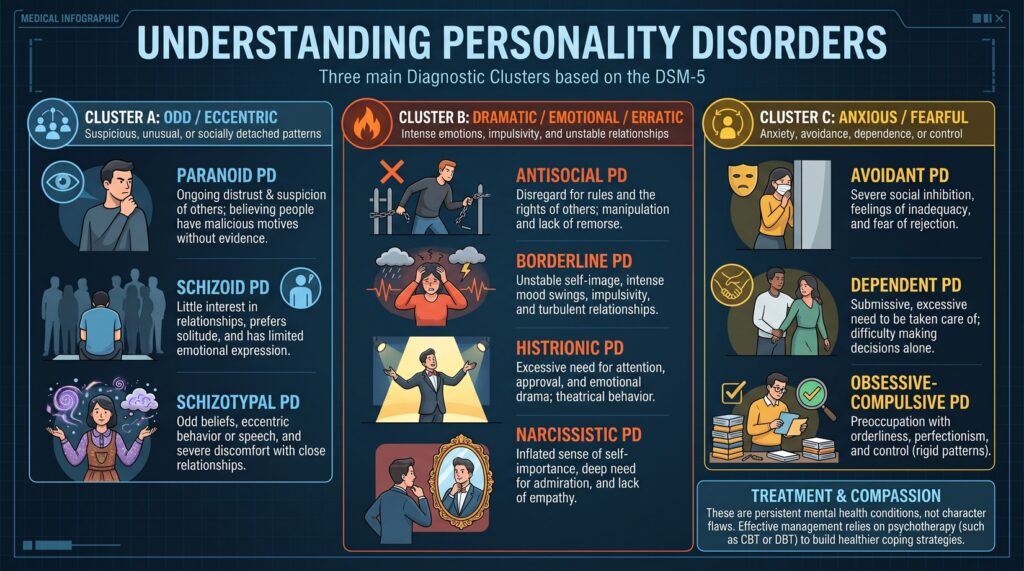
Personality Disorders
Patterns in how you understand yourself, relate to others, and respond to stress can become persistent enough to disrupt work, relationships, or daily routines. Personality disorders describe enduring patterns of thought and behavior that differ from cultural expectations and cause significant distress or difficulty functioning. They are not simply difficult habits, and a diagnosis requires assessment by a qualified mental health professional.
You may notice manifestations such as intense fear of rejection, distrust, impulsive decisions, or a strong need for control, though experiences vary by person and diagnosis. Causes are not fully understood; inherited traits, early experiences, and environmental influences can contribute. Symptoms often emerge by adolescence or early adulthood, and a clinician considers their duration, impact, and context rather than relying on one behavior.
Care is tailored to your needs and commonly centers on psychotherapy, with medication sometimes used for specific symptoms or co-occurring conditions. Acupuncture, homeopathy, and hypnotherapy are sometimes promoted as holistic techniques, but evidence for treating personality disorders is limited, and they should not replace established mental health care. Discuss any complementary treatment with your clinician, especially if you are also taking medication.
Key Takeaways:
- Personality disorders involve enduring patterns of thinking, feeling, and relating to others that differ from cultural expectations and can disrupt daily life.
- Assessment focuses on the pattern’s duration, impact, and presence across situations; a qualified mental health professional also considers other conditions and life circumstances.
- Symptoms vary by diagnosis. Borderline personality disorder, for example, can involve intense emotional shifts and unstable relationships, while avoidant personality disorder often involves fear of criticism and social withdrawal.
- Psychotherapy is a central part of care. Treatment plans are tailored to the person’s symptoms, goals, and circumstances, and medication may be used for specific co-occurring symptoms rather than to treat the underlying personality pattern.
- Holistic treatments for personality disorders should complement, not replace, evidence-based mental health care. Acupuncture and homeopathy are not established treatments for personality disorders, and evidence does not show that hypnotherapy can resolve them.
- Consistent appointments, a written safety plan when needed, and coordination among therapists, prescribers, and primary care clinicians can support continuity of care.
Understanding Personality Disorders
Enduring Patterns of Experience and Behavior
A personality disorder is a persistent pattern of inner experience and behavior that differs markedly from cultural expectations and affects how you interpret yourself, relate to other people, and respond to everyday situations. These patterns extend across settings, rather than appearing only during a brief crisis. They typically emerge by adolescence or early adulthood, though recognition may come later, after repeated difficulties at work, in relationships, or with emotional regulation.
Impact on Daily Life
For a pattern to qualify as a disorder, it must cause significant distress or interfere with important areas of functioning. You might notice recurring conflict, unstable relationships, difficulty adapting to change, or a rigid response to stress. The pattern is not simply an unusual preference or a temporary reaction; clinicians assess its duration, consistency, effects, and fit with a person’s cultural context. Substance use, medical conditions, and other mental health concerns also matter in that assessment.
Features Clinicians Assess
Diagnosis relies on a comprehensive clinical evaluation, not a single questionnaire or isolated behavior. A mental health professional considers your developmental history, current circumstances, relationships, and the ways patterns appear across different contexts. Your account is central, and information from records or trusted people may add context when appropriate and with consent. General features clinicians examine include:
- Self-image and sense of identity
- Emotional range and regulation
- Impulse control and decision-making
- Interpersonal boundaries and trust
Types and Symptoms of Personality Disorders
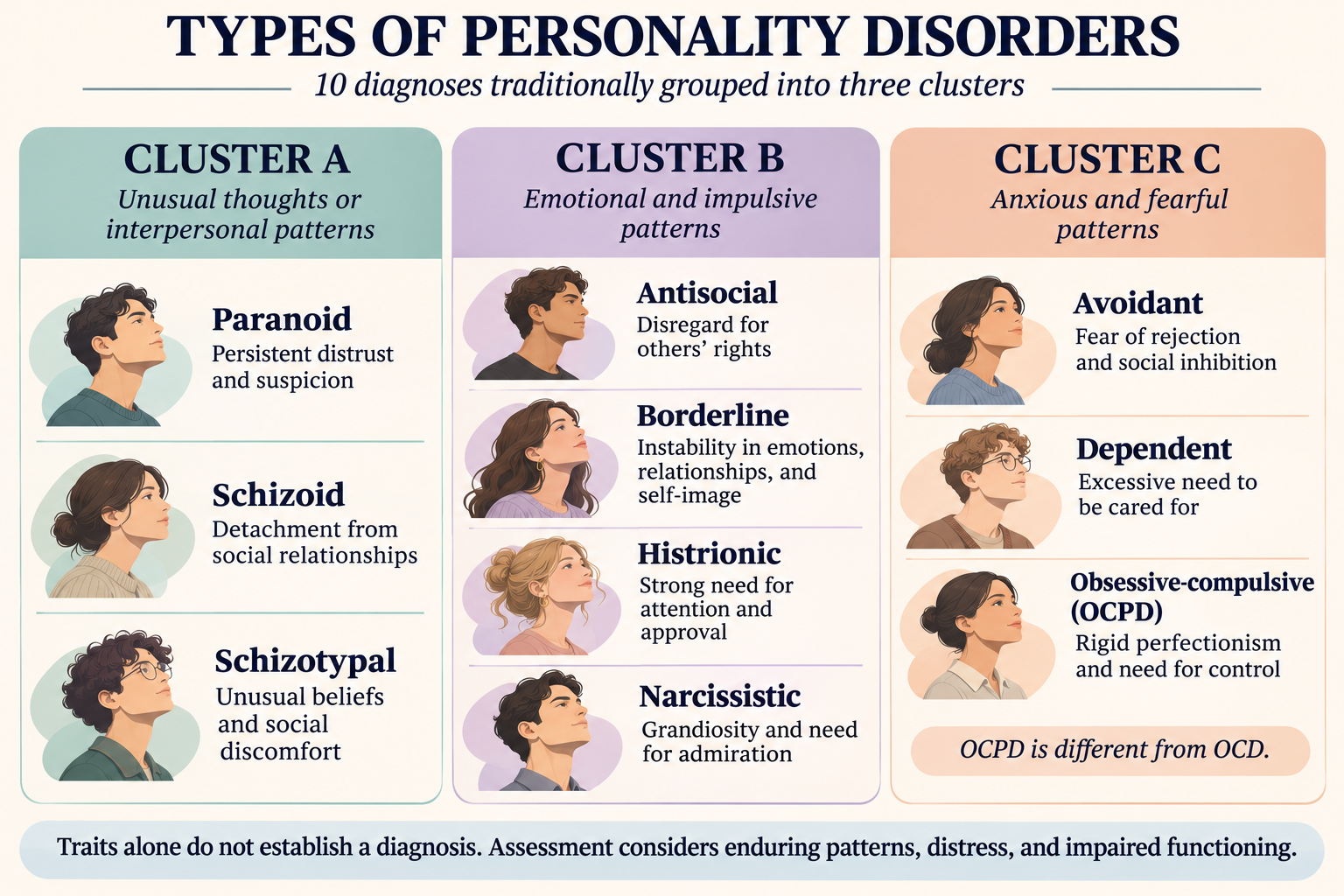
Recognized diagnoses describe enduring patterns in how you interpret events, manage emotion, relate to others, and control impulses. Clinicians group several personality disorder types into three clusters, which organize shared features rather than rank severity. A diagnosis depends on a persistent pattern across situations, not one difficult relationship or a temporary reaction to stress.
Symptoms differ among people with the same diagnosis, and traits can overlap across categories. Your experiences are assessed in context, including their duration and effects on work, relationships, and daily responsibilities. The labels describe patterns that require clinical evaluation; they do not, by themselves, explain a person’s character or predict every choice.
Cluster names offer a concise map of the recognized conditions: odd or eccentric patterns, dramatic or impulsive patterns, and anxious or fearful patterns. The distinctions become clearer through characteristic examples, such as suspicious interpretations, unstable relationships, or rigid standards. A clinician looks at the complete pattern rather than relying on a single symptom.
Cluster A: Odd or Eccentric Patterns
Paranoid personality disorder involves persistent distrust, so you may interpret an ordinary remark as a hidden insult or doubt a colleague’s loyalty without clear evidence. Schizoid personality disorder is marked by detachment from social relationships and a limited outward range of emotion; you may prefer solitary activities and show little interest in praise or criticism. Both patterns can affect closeness, but the central feature differs: suspicion in one, social distance in the other.
Schizotypal personality disorder combines social discomfort with unusual beliefs, perceptual experiences, or speech that others find hard to follow. You might attach special meaning to coincidences, hold superstitious ideas with unusual intensity, or dress in a way that seems markedly eccentric for the setting. These traits are not the same as a psychotic disorder, although unusual perceptions and beliefs warrant careful assessment when they become severe or disruptive.
Across cluster A personality disorders, people often find relationships difficult because they experience trust, emotional expression, and conventional social cues differently. A person with schizoid traits may keep a small social circle by choice, while someone with paranoid traits may want connection but fear betrayal. Schizotypal traits can involve both a wish for contact and anxiety about interaction, alongside distinctive communication, such as tangential answers during conversation.
Cluster B: Dramatic or Impulsive Patterns
Borderline personality disorder features marked instability in relationships, self-image, and emotion, along with impulsivity. You may react intensely to perceived rejection, shift quickly between idealizing and criticizing someone, or act rashly during distress. Some people experience chronic emptiness, anger that is difficult to regulate, or recurrent self-harm and suicidal behavior. These symptoms vary, and self-harm or suicidal thoughts require prompt clinical attention.
Antisocial personality disorder involves a persistent disregard for other people’s rights and for social rules. You may repeatedly deceive others, behave aggressively, act recklessly, or show little remorse after causing harm. Histrionic personality disorder is characterized by strong attention-seeking and pronounced emotional expression; someone with this pattern may feel uncomfortable outside the center of attention or use dramatic gestures in ordinary interactions. The outward intensity can resemble other cluster B presentations, but its characteristic pattern differs.
Narcissistic personality disorder centers on grandiosity, a strong need for admiration, and difficulty recognizing others’ feelings. You may expect special treatment, exaggerate achievements, or respond to criticism with anger or shame. These patterns are not simply confidence or ambition; they persist across contexts and strain relationships. Within cluster B personality disorders, impulsivity, attention-seeking, disregard for others, and admiration-seeking are distinct features, even when more than one pattern appears in a person’s behavior.
Cluster C: Anxious or Fearful Patterns
Avoidant personality disorder involves social inhibition, feelings of inadequacy, and strong sensitivity to criticism or rejection. You may want close relationships but avoid joining a team, speaking in a meeting, or accepting an invitation because embarrassment feels likely. This differs from a preference for solitude: the person often desires connection but holds back because of fear. Repeatedly declining a work presentation despite wanting advancement can illustrate the pattern.
Dependent personality disorder is marked by an excessive need for care and reassurance. You may struggle to make everyday decisions without advice, avoid disagreeing for fear of losing support, or feel unable to manage alone after a close relationship ends. The pattern extends beyond ordinary cooperation; it can lead someone to remain in an unsatisfying relationship because separation feels unmanageable or to transfer responsibility for major choices to another person.
Obsessive compulsive personality disorder involves pervasive preoccupation with order, perfectionism, and control, often at the expense of flexibility and efficiency. You may spend so long refining a report that it misses a deadline or insist that household tasks follow a precise method. Unlike obsessive compulsive disorder, this personality pattern centers on enduring standards and control rather than intrusive obsessions and ritualized compulsions. In cluster C personality disorders, fear and anxiety shape behavior in different ways: avoidance, reliance on others, or rigid rule-following.
Common Signs of Personality Disorders and Differences
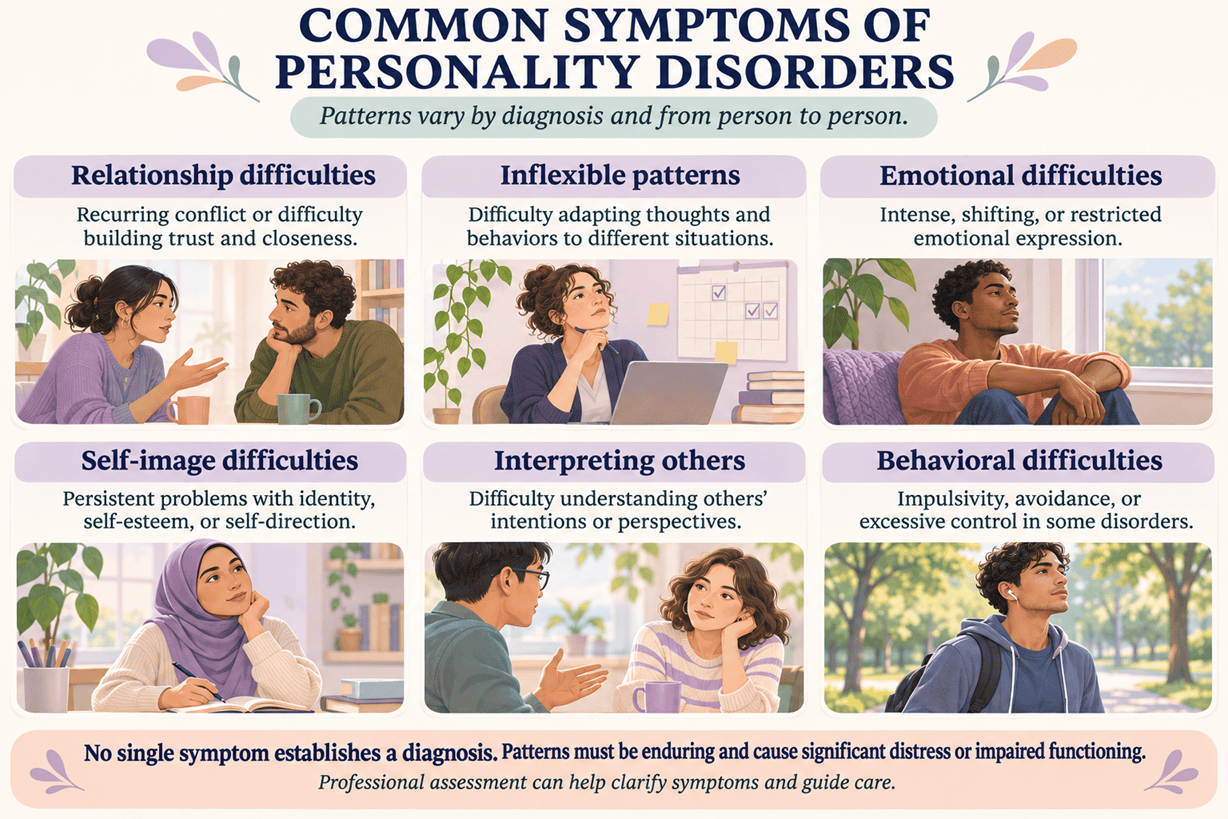
Across diagnoses, a defining sign is a stable pattern that appears in more than one area of life and creates meaningful difficulty. You may notice repeated conflict at work and at home, persistent trouble sustaining friendships, or a response to criticism that disrupts ordinary responsibilities. A single episode, such as an angry argument or a period of withdrawal, does not establish a personality disorder without the broader pattern.
Differences often lie in the motive behind similar behavior. Someone who avoids a party may fear humiliation, prefer solitude, or suspect other guests’ intentions; those explanations point toward different features. Likewise, controlling a shared project may reflect perfectionistic standards, while demanding praise may reflect a need for admiration. Clinicians assess the person’s history, relationships, emotional responses, and functioning rather than infer a diagnosis from one visible action.
Symptoms can overlap, and a person may show traits associated with more than one diagnosis. The table distinguishes common patterns by their central feature, not by every possible symptom or a person’s full clinical presentation. Labels such as “multiple personality disorder” and “split personality disorder” are not current names for these conditions; dissociative identity disorder is a separate diagnosis.
| Pattern | Commonly associated diagnosis | Characteristic feature |
|---|---|---|
| Suspicion or social detachment | Paranoid or schizoid personality disorder | Mistrust, or limited interest in close relationships |
| Unusual beliefs and social discomfort | Schizotypal personality disorder | Eccentric thinking, perception, or communication |
| Unstable emotion or impulsivity | Borderline personality disorder | Rapid shifts in relationships, self-image, or mood |
| Fear of rejection | Avoidant personality disorder | Social withdrawal despite wanting connection |
| Perfectionism and control | Obsessive compulsive personality disorder | Rigid standards that interfere with flexibility |
Holistic Management for Personailty Disorders
Care That Accounts for the Whole Person
Your care plan should address more than personality-related symptoms. A clinician can work with you to identify goals involving emotional regulation, daily routines, physical health, relationships, and practical stressors such as housing or employment. A psychiatrist, therapist, and primary care clinician may coordinate treatment, with your consent, so that changes in mood, sleep, medication, or functioning are considered together. Clear priorities make progress easier to track, such as attending appointments consistently or using a written plan during conflict.
Build Structure Around Treatment
Steady, collaborative care provides a framework for managing personality disorder symptoms over time. You and your therapist can agree on specific goals, review what is working, and adjust the plan when life circumstances change. Medication may be considered for particular symptoms or co-occurring conditions, while psychotherapy remains central to addressing enduring patterns in emotions, thinking, and relationships. A shared crisis plan can name early warning signs, trusted contacts, and the steps you will take if distress escalates.
Coordinate Everyday Support
Support outside appointments should reinforce, not replace, professional care. You can ask a trusted person to help with practical tasks, such as arranging transportation to therapy, while keeping boundaries and privacy explicit. Routine sleep and meals, manageable activity, and reduced substance use are relevant parts of a broader plan, tailored to your health and circumstances. Useful elements to discuss with your care team include:
- How often you will review treatment goals
- Who to contact during a crisis
- How family or supporters may participate
Complementary Approaches to Care
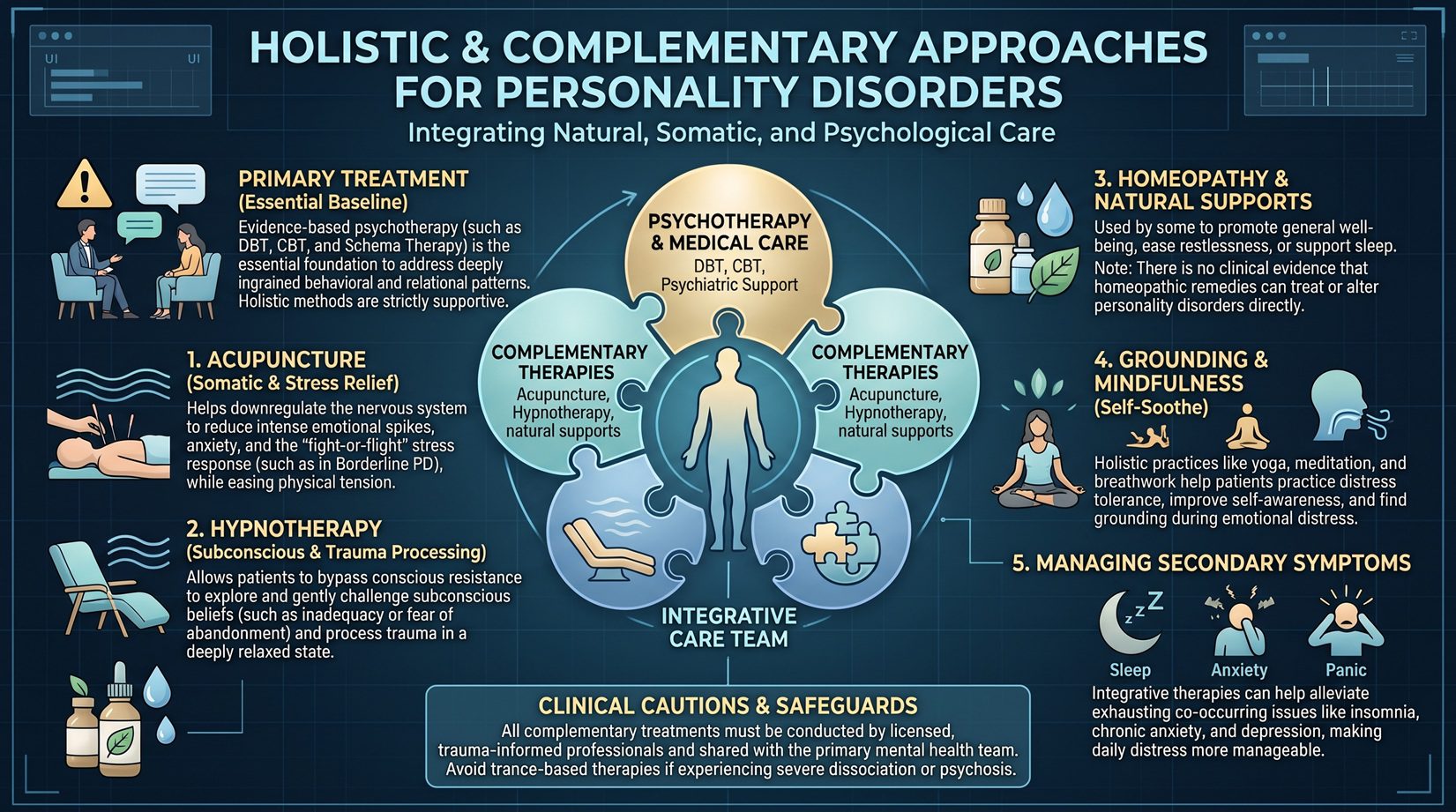
Complementary methods are sometimes used alongside established mental health care, with the aim of addressing distress, sleep problems, or physical tension. They do not change a personality disorder diagnosis or replace psychotherapy, medication when prescribed, or support during a crisis. Your response can differ by method, practitioner, and personal circumstances, so claims of cure or guaranteed improvement are not supported.
Before you begin a complementary treatment, tell your mental health clinician what it involves and what outcome you hope to track. A qualified practitioner should explain the method, discuss foreseeable risks, and avoid asking you to stop prescribed treatment. Clear boundaries matter: sessions should be voluntary, confidential, and paced so you can pause if distress rises.
Evidence varies across these approaches, and research specifically involving personality disorders is limited. You can treat symptom changes as observations rather than proof that a method addresses the underlying condition. Recording sleep, anxiety, discomfort, and any unwanted effects before and after sessions gives you concrete details to discuss with your clinician.
| Approach | What a session involves | Key consideration |
|---|---|---|
| Acupuncture | Needles placed at selected points | Use a licensed practitioner with sterile, single-use needles |
| Homeopathy | Highly diluted preparations selected by a practitioner | Evidence for treating personality disorders is lacking. |
| Hypnotherapy | Guided focus and relaxation with a trained therapist | It is not a substitute for evidence-based mental health care. |
Acupuncture for Personality Disorders
Acupuncture uses fine needles inserted at specific points, often during a session in which you remain seated or lie comfortably. Some people seek it for muscle tension, pain, or stress, symptoms that can accompany emotional distress. Evidence does not establish acupuncture as a treatment for personality disorders themselves, so claims that it changes enduring patterns of thought or behavior should be viewed cautiously.
Before an appointment, describe your health conditions, medications, and any concern about needles. A licensed acupuncturist should explain the procedure, use sterile single-use needles, and ask for your consent before treatment. Mild soreness, temporary bleeding, or bruising can occur; infection or fainting is less common but possible. Tell the practitioner promptly if you feel unwell during a session.
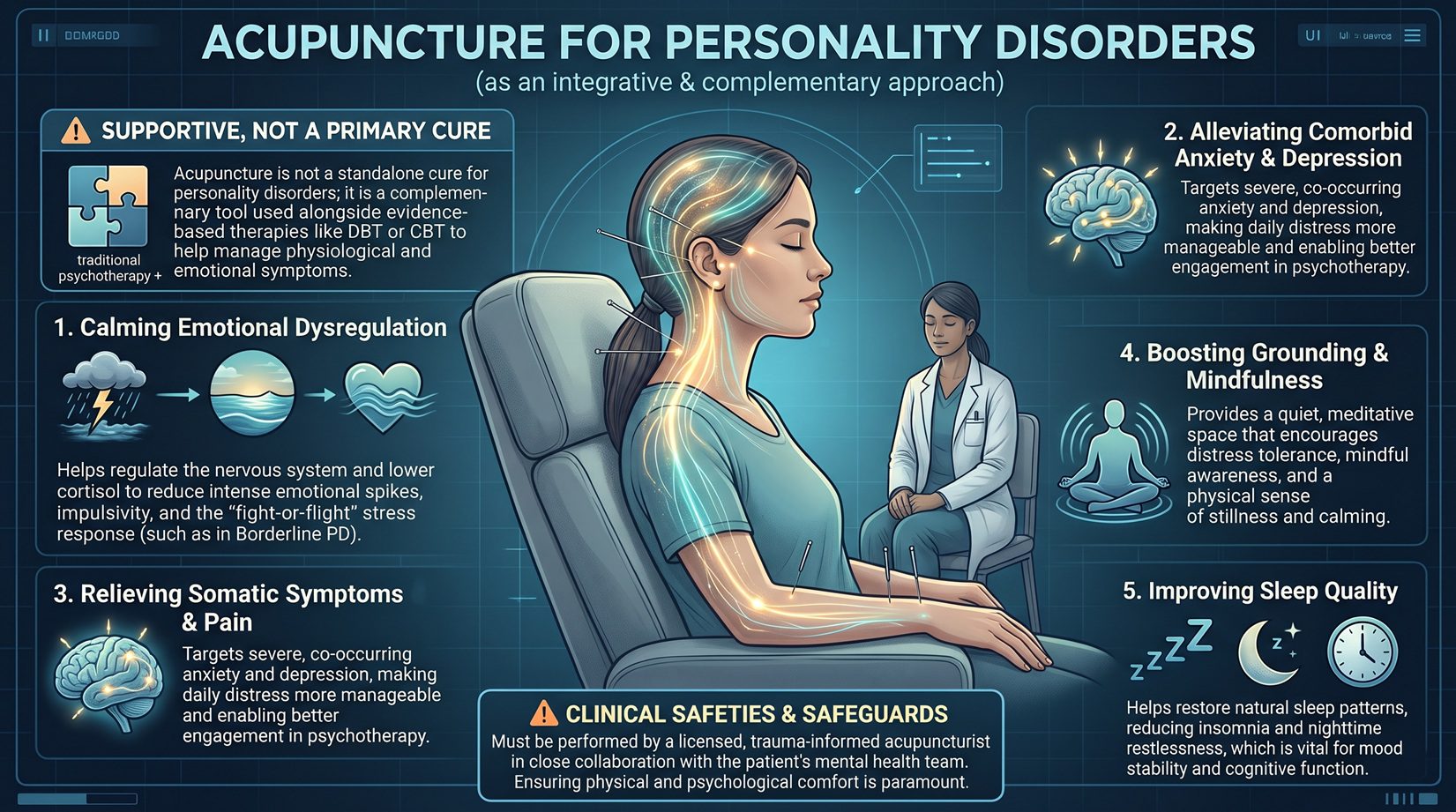
For acupuncture for personality disorders, the reasonable aim is limited symptom support rather than a cure. You can note whether tension, sleep, or anxiety changes after sessions, while continuing prescribed therapy and discussing any changes with your clinician. Avoid practitioners who promise to resolve a diagnosis or advise you to stop medication. A treatment record can include the date, points treated, discomfort, and symptoms afterward.
Homeopathy for Personality Disorders
Homeopathy is based on the use of highly diluted substances selected according to a practitioner’s interpretation of symptoms. Its central claims have not been shown to provide a specific, reliable treatment for personality disorders, and there is no sound basis for treating it as a replacement for established mental health care. A consultation may involve detailed questions about mood, sleep, and personal history, but that discussion is not equivalent to clinical assessment.
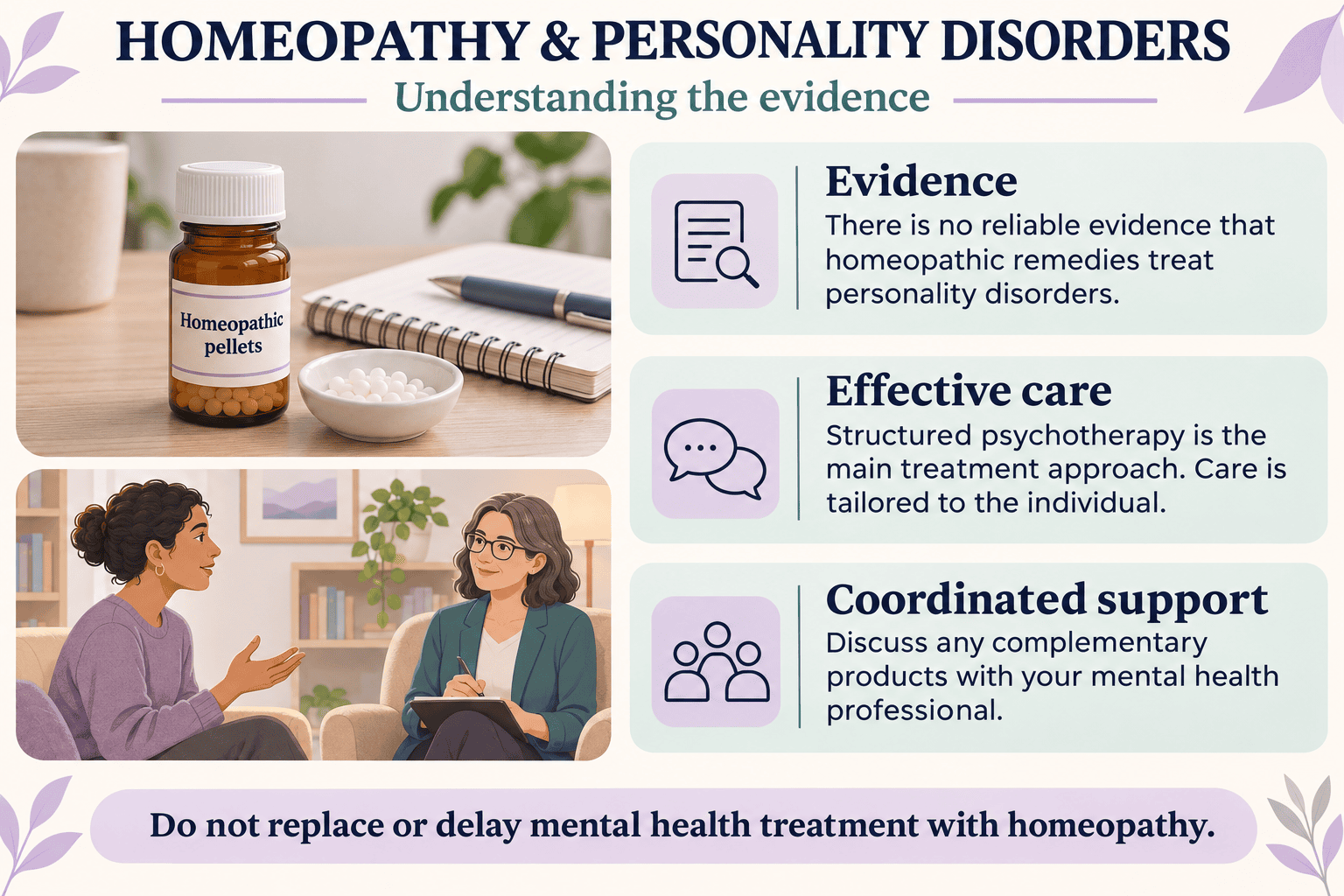
Products labeled homeopathic differ in ingredients and dilution, and some products may contain measurable active substances or contaminants. Tell your clinician and pharmacist what you are taking, particularly if you use prescribed medication or have a medical condition. Do not delay psychotherapy, stop medication, or rely on homeopathy during a crisis. A practitioner should not guarantee recovery or discourage you from seeking conventional care.
If you choose to use a product, keep its packaging and record the dose and timing so a clinician can review it. Pay attention to concrete changes, such as new side effects or worsening distress, rather than interpreting a temporary fluctuation as proof of effectiveness.
Hypnotherapy for Personality Disorders
Hypnotherapy is rarely used as a standalone or primary treatment for personality disorders, but it is increasingly explored as a complementary, integrative tool to assist traditional therapies (such as Cognitive Behavioral Therapy (CBT) or Dialectical Behavior Therapy (DBT)).
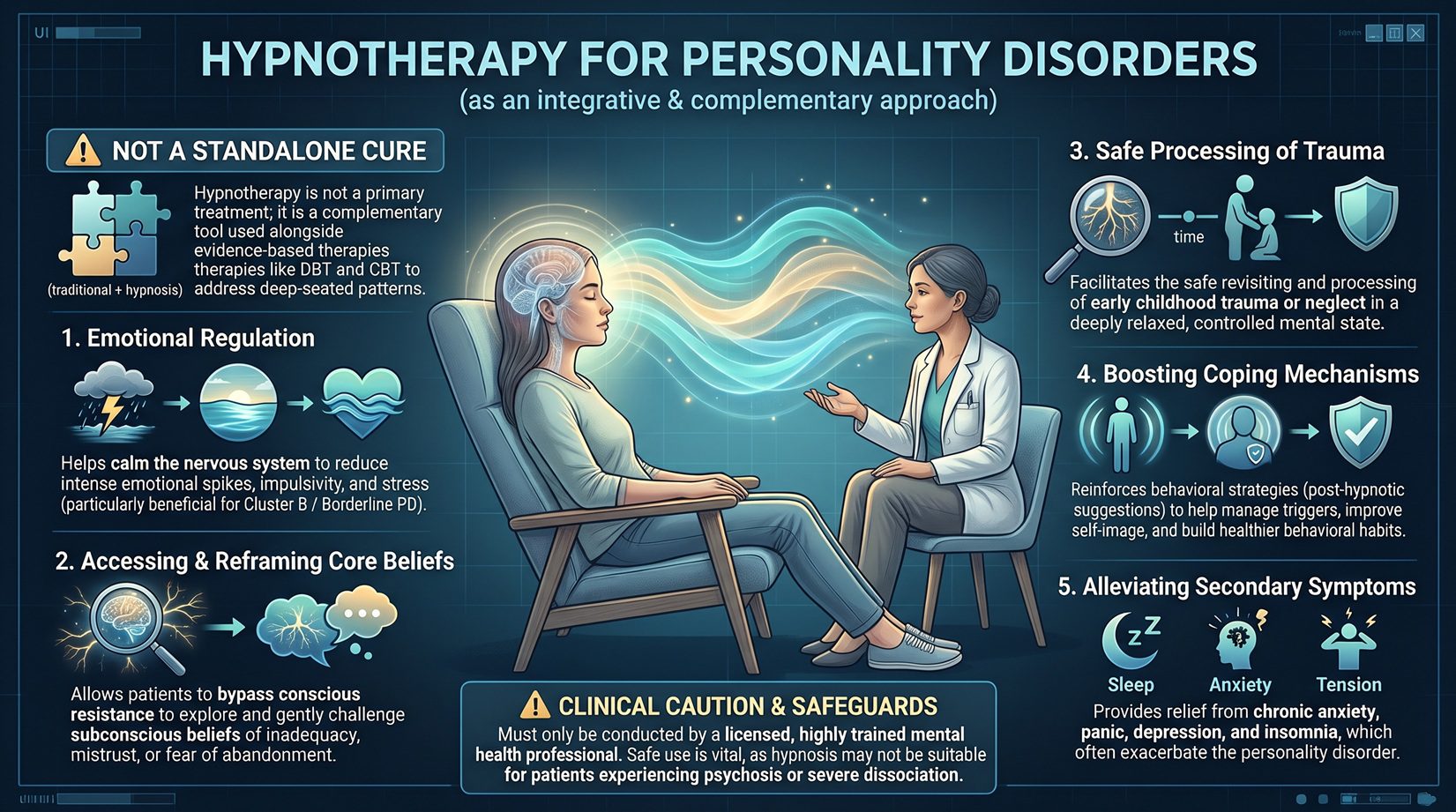
Hypnotherapy can make therapeutic interventions more impactful because it bypasses conscious resistance to access the deeply ingrained, subconscious patterns of thinking and relating that are characteristic of personality disorders.
Recent clinical studies have shown that approaches like “Mindful Hypnotherapy” can be effective in reducing symptoms of certain personality disorders, particularly Cluster B types like histrionic, narcissistic, and antisocial personality disorders.
Here is how hypnotherapy is applied to support the management of personality disorders:
1. Managing Severe Emotional Dysregulation
Calming the Nervous System: Conditions like Borderline Personality Disorder (BPD) are characterized by rapid, intense emotional spikes [1.1.14]. Hypnotherapy utilizes deep relaxation techniques to lower the physiological response to stress, helping patients develop better “emotional brakes.”
Enacting “Post-Hypnotic” Coping Mechanisms: Therapists can implant subconscious cues (e.g., imagining a calm space or taking a specific breath) that the patient can instinctively trigger when they feel anger, anxiety, or an urge to act impulsively.
2. Challenging Subconscious Believes and Self-Image
Reframing Negative Self-Talk: People with BPD or Avoidant Personality Disorder often hold deep-seated, subconscious beliefs of being “unlovable” or “inadequate.” In a suggestible, hypnotic state, these core beliefs can be challenged and reframed with positive self-affirmations.
Softening Ego Defense Mechanisms: For disorders with high resistance to change, such as Narcissistic or Obsessive-Compulsive Personality Disorders, hypnosis can quiet the conscious ego, allowing patients to safely examine vulnerable, repressed emotions (like fear of failure or inadequacy) without becoming defensive.
3. Safe Processing of Past Trauma
Age Regression and Memory Reconsolidating: Since many personality disorders stem from childhood trauma or neglect, hypnotherapy can allow a patient to revisit and “re-parent” those painful early memories in a safe, deeply relaxed mental environment, helping resolve the chronic fear of abandonment or mistrust.
4. Reducing Associated Symptoms
While hypnotherapy may not cure a personality disorder directly, it is highly effective at treating the exhausting secondary symptoms, such as chronic anxiety, panic, depression, and sleep disturbances, which worsen the disorder.
Crucial Considerations & Safeguards
Complementary Only: Hypnotherapy should only be used alongside evidence-based treatments like DBT, Schema Therapy, or CBT, and always under the guidance of a highly trained, licensed mental health professional.
The Risk of Dissociation & Psychosis: For some personality disorders (particularly those involving paranoia, magical thinking, or dissociative traits like Cluster A or severe borderline), inducing trance states must be handled with extreme caution, as it can sometimes blur the lines between reality and internal imagery.
Hypnotherapy involves guided attention and relaxation, sometimes paired with suggestions or imagery. A trained clinician may use these techniques to address a specific concern, such as anxiety or a stressful response, but hypnosis does not remove or cure a personality disorder. Its usefulness depends on the person, the therapist’s training, and the concern being addressed; claims of guaranteed personality change are not credible.
Before starting, ask the hypnotherapist about credentials, experience with mental health concerns, and the planned focus of sessions. You should remain able to stop, speak, or decline a suggestion, and the practitioner should not claim to recover hidden memories or impose interpretations of your past. Discuss hypnosis with your treating clinician, especially if you experience dissociation, psychosis, or significant difficulty distinguishing imagery from events.
People asking, “Can hypnotherapy get a person out of their personality disorders?” should know that hypnosis is not an established cure. Hypnosis for personality disorders may be considered only as an adjunct for a clearly defined symptom, with progress reviewed in ordinary clinical care. A useful session goal might be rehearsing a calming response to a known trigger, followed by a review of distress and functioning rather than a promise of diagnostic change.
Final Words
Understanding personality disorders means recognizing enduring patterns in how you think, feel, relate to others, and respond to stress, rather than treating a diagnosis as a complete account of who you are. Causes are complex and can involve temperament, development, relationships, and life experiences; no single factor explains every person’s symptoms. A qualified mental health professional assesses these patterns over time, including their effects on work, relationships, and daily functioning, before recommending care.
Management is most effective when it is individualized and grounded in an ongoing relationship with a licensed clinician. Psychotherapy, including approaches such as dialectical behavior therapy for borderline personality disorder, can build skills in emotion regulation, communication, and distress tolerance. Medication does not treat personality patterns directly, but a prescriber may address co-occurring depression, anxiety, or sleep problems. You can also discuss acupuncture, homeopathy, or hypnotherapy as complementary options, while recognizing that evidence for treating personality disorders with these techniques is limited and they should not replace established care.
Progress often involves setbacks, practical adjustments, and clear goals, such as reducing self-harm risk, handling conflict more safely, or keeping appointments. You can work with your treatment team to review what is helping, identify adverse effects, and involve trusted supports with your consent. If you face immediate danger or thoughts of suicide, contact local emergency services or a crisis service; otherwise, bring specific concerns to your next clinical appointment.
FAQ

How much does treatment for a personality disorder cost?
The cost depends on the type of care, provider, location, and insurance coverage. Psychotherapy and psychiatric appointments may have different fees, so ask providers about charges and check whether your insurance covers treatment before starting.
How long does treatment for a personality disorder take?
Treatment often takes months or longer, depending on a person’s needs and progress. There is no fixed timeline, and ongoing therapy or follow-up may help maintain gains and address changes in symptoms or circumstances.
What are the risks of using acupuncture, homeopathy, or hypnotherapy for personality disorders?
The main risk is relying on these methods instead of evidence-based mental health care. Acupuncture can cause minor side effects such as soreness, while hypnotherapy may not suit everyone; discuss any complementary treatment with a qualified clinician, and do not assume homeopathy treats the disorder.
What mistakes should I avoid when seeking help for personality disorder symptoms?
Avoid self-diagnosing, stopping prescribed treatment without medical advice, or expecting a quick cure. A qualified mental health professional can assess symptoms and recommend care, since personality disorder diagnoses require a broader evaluation than a checklist alone.
Are there alternatives to medication for personality disorders?
Psychotherapy is a common treatment and may be used with or without medication. The right plan depends on symptoms and other health needs; medication may help with particular symptoms or co-occurring conditions, but it does not by itself change personality patterns.
Are holistic treatments for personality disorders worth trying?
Complementary methods may support wellbeing for some people, but they are not established substitutes for professional treatment. If you consider acupuncture, homeopathy, or hypnotherapy, discuss it with your care team and continue recommended therapy or medication unless your clinician advises otherwise.
Can hypnotherapy get a person out of a personality disorder?
Hypnotherapy is not a proven cure for personality disorders and should not replace established mental health care. Its suitability depends on the person and the practitioner, so discuss possible use as a complementary approach with a qualified clinician.
Holistic treatment for personality disorders in Philadelphia
Any form of personality disorder is a tricky condition to deal with, and it can prevent you from living a healthy and fulfilling life. Symptoms can be difficult to deal with, and no cure exists currently. However, a comprehensive and effective treatment plan can significantly reduce symptoms and prevent future episodes. The above-listed natural treatments for personality disorders can provide remarkable results. However, there is no single treatment plan; you may need to try several before finding the right one.
At the Philadelphia Holistic Clinic, a team of holistic professionals (acupuncturists, psychologists, leech therapists, homeopaths, and hypnotherapists) work under the strict supervision of medical doctor Victor Tsan, who has extensive academic and clinical experience in natural treatments for personality disorder.
For professional treatment, contact Philadelphia Holistic Clinic at (267) 403-3085 to schedule your comprehensive, holistic evaluation and start your journey to recovery.